
When To Trade Your Chess Queen
Knowing when to trade your chess queen is a critical decision that even advanced chess players sometimes get wrong. Because every position on a chessboard is unique, it’s not always easy to judge when trading queens will pay off.
While there are no hard-and-fast rules for when to trade queens in chess, some key principles can help you make a decision that will irreversibly alter the course of the game.
Here, we’ll look at instances where trading queens is beneficial and how to force an advantageous queen swap. You'll also learn when exchanging your queen for other pieces is worthwhile, and when it's ill-advised.
First and Foremost: Trade Queens When You’re Ahead on Material
The most common reason to trade chess queens is to simplify the game when you have a material advantage. Whether you’re up by two pawns or two pieces, you’ll generally want to trade pieces to reach a winning endgame.
The trouble is, an opponent down material will do everything they can to avoid losing their queen! That’s why you might need to find a way to force a queen trade. In the example below, Black is up a knight and wants to trade queens. Can you find a way to force a queen exchange?
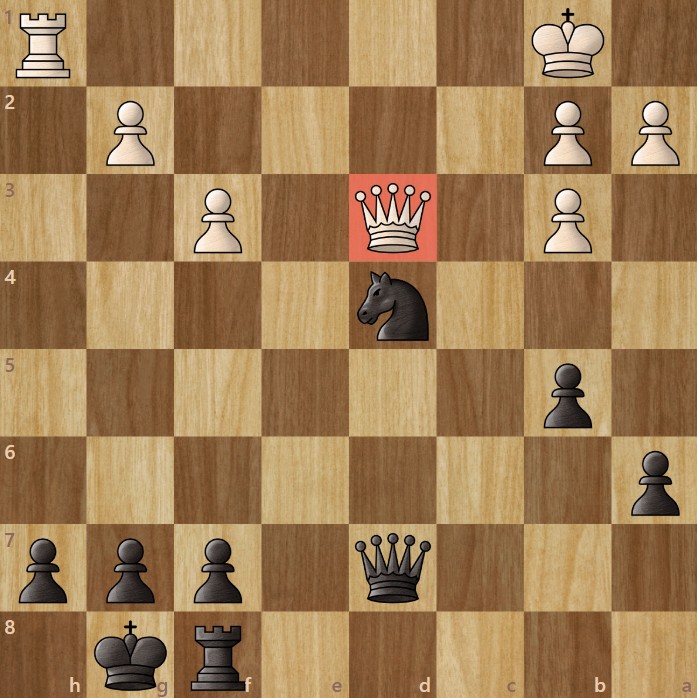
Answer: ...Qf5! By pinning White’s queen to the king, Black prevents her from escaping. A queen trade is forced.
Notice how eliminating the enemy queen also protects Black against dangerous threats. White was threatening checkmate on h7, but without a queen, further attacks won’t come easily. This highlights another key advantage of swapping off queens: by removing your opponent’s most powerful attacking piece, you minimize their chances of mounting serious threats.
Black now enters a queenless endgame with an extra piece and should win easily from here.

The Harrwitz Series Timeless Chess Pieces- 3.5" King

Super Deluxe Tournament Director Kit

Large Wedge Chess Clock Carrying Bag
Trade Queens to Protect an Unsafe King
In the previous example, we saw how trading queens can also neuter an opponent’s attacking arsenal. In some cases, exchanging queens for this purpose alone might save the game.
In the example below, both sides are equal in material. Yet Black’s king is exposed and under attack. Black wants to trade queens to remove White’s most dangerous piece and finds a clever way to do it! By playing Qc4, Black traps White’s queen and forces a trade.
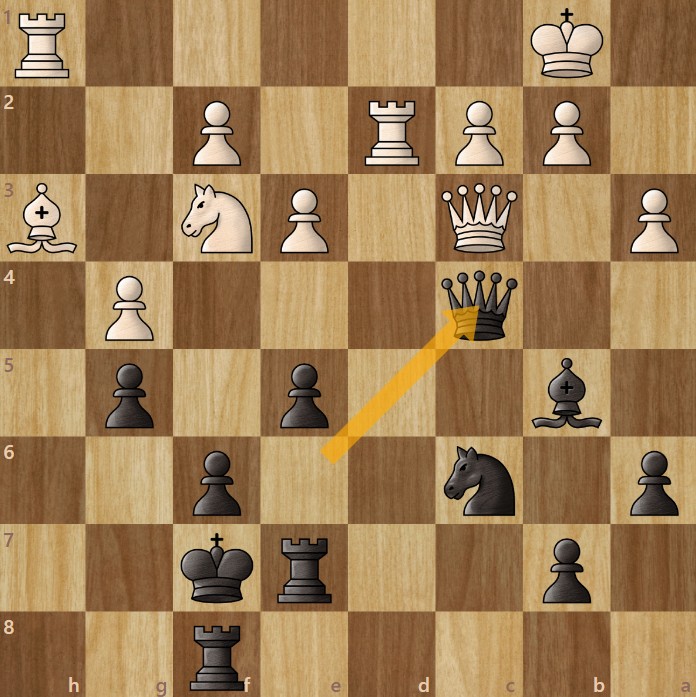
While this strategy alone doesn’t guarantee king safety, Black will have much better chances of avoiding a mating attack without White’s queen on the board. To further reduce threats, Black may also try to trade rooks, which can become especially dangerous on the open h-file.
When to Trade Queens in the Opening
In the game’s early stages, it can often be advantageous to trade queens from their d1 and d8 starting squares. If your opponent recaptures with their king, they’ve lost castling rights, leaving their king vulnerable in the middle of the board. If they recapture with a knight, their knight effectively becomes undeveloped on the back rank. In either case, they often have attacking opportunities to gain an easy advantage out of the gate.
In the example below from the Smith Morra Gambit, White has just played 7. e5, provoking Black to capture the pawn and open the d-file. Is it worth Black capturing the seemingly free pawn?

If Black captures (7...dxe5), White can trade queens on d8. Whether Black recaptures with the king or knight, White’s knights are poised to attack f7 and c7 on the next move. Lagging in development and facing potential central rook attacks, Black could find themselves in deep trouble quickly! Even with perfect defense, White can seize the upper hand.
This example reminds us how treacherous early queen trades can be. Always look for chances to provoke your opponent into opening the d-file for a favorable queen swap. And when defending, remember to guard against it!
Are Two Rooks Worth More Than a Queen?
Sometimes you may have the chance to trade two rooks for a queen, or a queen for two rooks. So which are more valuable? Standard scoring gives a queen 9 points, while each rook is worth 5. That means that two rooks should be worth one point more than a queen, right?
As always in chess, the answer depends on the game's context. Rooks excel when they have open lines to dominate the board—making them exceptionally powerful in the endgame. When there are still many pieces on the board, however, a rook’s value drops dramatically. Obstructed ranks and files can leave rooks struggling to make an impact.

The Collector Series Luxury Chess Pieces - 4.0" King

The Camaratta Signature Master Chess Table

LIMITED EDITION - DGT 3000 Digital Chess Clock
The queen, however, is much more agile. Because she can move like a rook and bishop combined, she's extremely dangerous throughout the game. Queens also excel at forks, pins, and skewers that can win undefended enemy pieces and pawns.
In summary, a queen may be more valuable than two rooks in the middlegame, especially when a mating attack is on the cards. Even in the endgame, a queen might outplay two rooks when there are many undefended pawns and pieces, and tactical chances to win them. In most other cases, two rooks tend to be more valuable than a queen. It’s a trade to weigh up very carefully before you commit!
In the example below, White has just opened the e-file with a pawn capture (exd6). Would you trade your queen for Black’s two rooks or simply recapture the pawn with your queen?
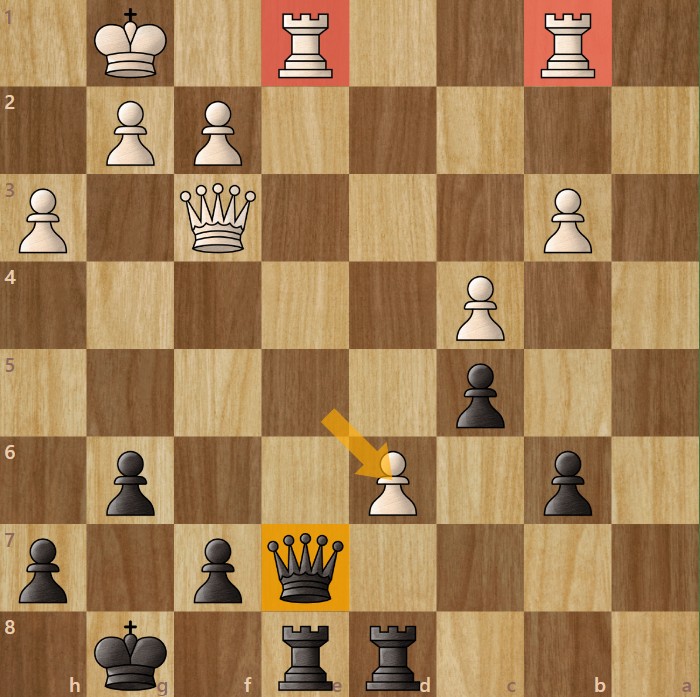
Answer: Black's best move is to trade the queen for two rooks. After the trade, White will be in check, meaning Black can pick up the loose pawn with its rook anyway. After the trades, each side will have five pawns, but on the open board, Black’s two rooks will be worth more than White’s queen.
When Should I Trade My Queen for a Rook and a Bishop or Knight?
Going back to relative piece value calculations, a rook and a minor piece (a knight or bishop) total eight points (5+3 = 8). This is one point less than a queen’s relative value of nine points. In most instances, then, a queen is worth more than a rook and minor piece and shouldn’t be traded. But once again, there are always exceptions!
When a minor piece and rook pose a serious threat, or when a trade is needed to create effective counterplay, it might pay to trade your queen. A more common scenario, however, is an endgame where trading a queen for a rook and minor piece helps to win pawn promotion and queening.
In the example below, it’s White to play. Can you find the best move?
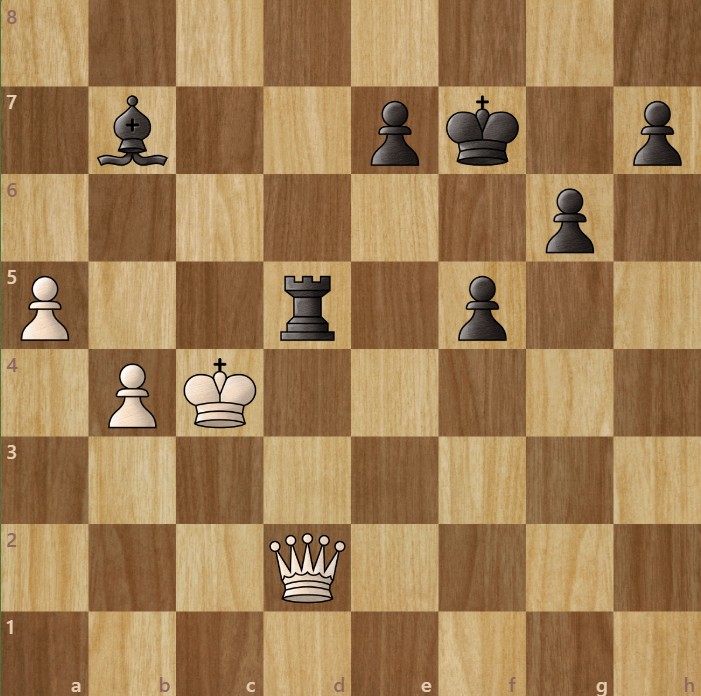
Answer: Qxd5+! By trading the queen for a rook and bishop, White enters a winning king-and-pawn endgame. Although Black has more pawns on the board, White’s advanced pawns mean they’ll promote first. White will ultimately win through this queen-sacrifice tactic!
In similar situations, it can also be worth trading a queen for a single rook or even a minor piece to secure a pawn promotion. Remember, you can justify any sacrifice if it secures a winning pawn endgame!

The Broadbent Series Chess Pieces - 3.0" King

The House of Staunton *NEW* Fitted Coffer Chess Box - Red Burl

DOWNLOAD - Chess King Learn Beginners 6 - Forever Pack All Platforms
When to Trade Your Chess Queen: Key Takeaways
Knowing when to trade queens, and when not to, is often the most important chess trade evaluation. Queen trades are most typically advantageous when:
- You are ahead on material
- You want to enter a winning endgame
- Your king is in danger
- You can force your opponent to lose castling rights or create development problems in an opening
Additionally, a queen trade against two rooks is usually advantageous, whereas a queen trade against a rook and a bishop is usually only advisable when it leads to a winning king-and-pawn endgame.
The most important thing to consider before any type of queen trade, however, is context. Rather than following a fixed rule, ask yourself whether trading your queen will truly pay off in your position. A queen trade can never be undone, so think twice before you commit!