
Long Range Control With a Bishop Fianchetto
Controlling a chess board can seem like a daunting task, especially for a beginner. In order to control the board, you need to control squares. That’s why we like to put rooks on open files, for instance, because from the open files they control more squares. Similarly, bishops control more squares when they are on the longest possible diagonals. Another term for that diagonal is the fianchetto.

What is a Fianchetto
Take a look at this example below. Both bishops here have been developed to the long diagonals. This is called “fianchettoing” your bishops.
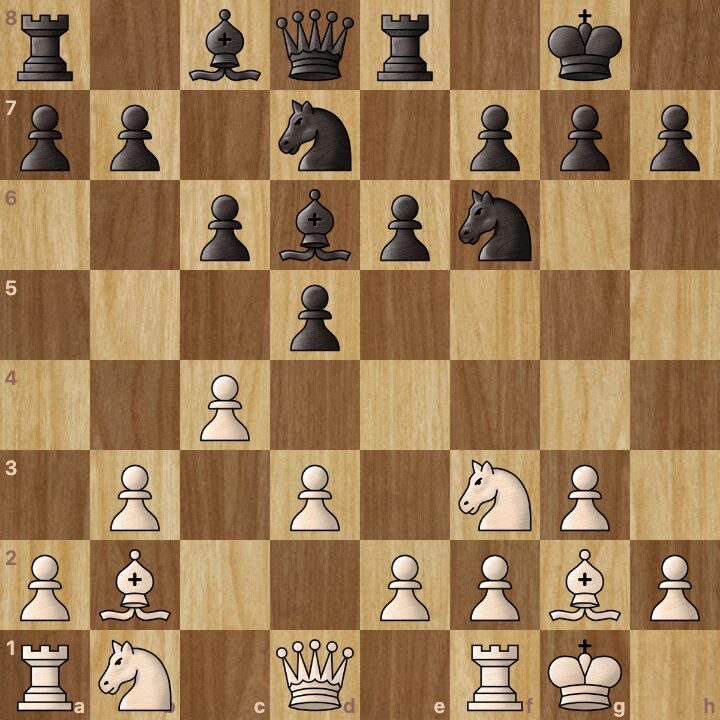
This can be done as part of a specific opening or as an alternate way to develop your bishop if needed. You can also put your bishops on the long diagonals later in the game to control as many squares as possible with your bishop.
Why is it Useful?
No matter your chess personality, Chess is a game all about controlling squares. Good pieces are good because they control more squares. Consider a knight. You might have heard the saying, “knights on the rim are dim.” That’s because a knight on the side of the board controls half as many squares as a knight more towards the center of the board. A bishop on the long diagonal is like a knight on a good square. It controls more squares!

The *NEW* Austrian Coffeehouse Series Chess Pieces - 4.0" King

DGT 3000 Digital Chess Clock

The Camaratta Signature Championship Chess Table - Dark Brown
Open Position VS Closed Position
Is a fianchetto always a good thing? Take a look at the position below. Is this bishop on b2 in a good position just because it is on the long diagonal?
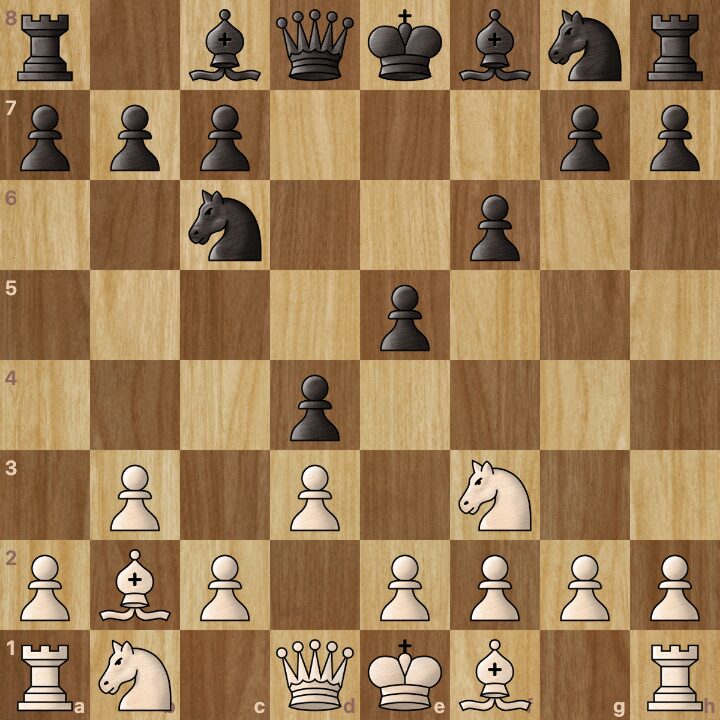
Closed positions are often bad for bishops in general; a closed down long diagonal is kind of like a closed file for a rook. It may have some potential on that square, but it’s not in the strongest position due to the closed nature. An open position, though, is one where pawns are not blocking the middle of the board. Bishops like open positions, and the long diagonals are extra useful when the position is open. If the pawns in the middle of the board have already been traded, your fianchetto may be very powerful.
Best Case Scenario
The best-case scenario for a fianchetto is that the bishop is pointing towards the enemy king! Look at this position below, see how helpful the long-range bishop is when pointed towards their king. A fianchetto bishop immediately becomes one of the attacker's best pieces in a position like this. Often, beginners will fully forget that a bishop is even involved in an attack. The last thing you want to happen is to see your opponent play a move that you thought wasn’t possible, but that was supported by a secret bishop all the way across the board.

The Fischer Spassky Series Chess Pieces - 6.0" King

DOWNLOAD - CHESSBASE '26 - Premium Package

The Millennium King Competition Chess Computer
Avoid Trading Away Your Fianchetto
Because this is such a valuable piece, you should avoid trading off your fianchetto. Especially if you have a fianchetto on the same side as your king, you now have some weak squares near your king, and trading away that bishop could lead to permanent problems and weaknesses in your position.
Dealing with Your Opponent’s Fianchetto
So what do you do if your opponent has a fianchetto? First, don’t panic. This is pretty common at most levels. Depending on how useful their fianchetto is, you can try to do a few things. First, I often look to close down the position and shut out my opponent's bishops when they allow me. You could also try to trade off their bishop if it's bothering your position. The most important thing is not to forget about the bishop. They can sneakily help your opponent with a long-range attack if you are not careful.
How to Fianchetto Your Bishop
Essentially, to fianchetto your bishop, you just need to push one of your pawns on either the b or g file one square forward, and then move your bishop to that square. If you remember your opening principles, like controlling the middle, developing your pieces, and castling, you can see that using a fianchetto is still a solid move according to opening principles. You are developing a piece and pointing it through the middle of the board. It also might move you closer to castling if you are planning to castle in that direction.
Openings That Use a Fianchetto
There are a number of openings, particularly modern and hypermodern ones that utilize the fianchetto. Modern openings are usually characterized by their focus on controlling the board in a more “modern” way. In the case of openings like the Accelerated Dragon, this means controlling the middle with a fianchetto. The Accelerated Dragon, also called the Accelerated Fianchetto, starts with a fast fianchetto.
The *NEW* Austrian Coffeehouse Series Chess Pieces - 4.0" King

Premium Chess Box - Golden Heart

The Large Ultimate Chess Bag
Hypermodern Chess
Hypermodernism is a chess school that arose after World War I, challenging traditional ideas from central European masters such as Steinitz, who emphasized controlling the center with pawns. The core principle of hypermodernism is to influence the center indirectly using pieces rather than occupying it directly with pawns. The bishops, especially on that fianchetto, become an obvious alternative for controlling the middle.
Why to Play a Modern Opening as Black
In my experience, playing a modern-style opening can be a nice change for beginners with the black pieces. It essentially behaves as a setup opening. You know that you are going to fianchetto your bishop, and go from there. Whether you end up playing a KID or Pirc, it doesn’t matter all that much, as long as you know a few opening ideas and understand a few goals in those positions. Ultimately, I think it is good for beginners to become comfortable playing more traditional openings as black, but mixing it up can also be fun as you learn.

The Modern Series Chess Pieces - 3.75" King

DGT Pegasus Chess Board (e-Board) - Wireless Bluetooth with USB Charger

Bobby Fischer Teaches Chess
When Should You Fianchetto?
If you are trying to decide whether to fianchetto your bishop, you may be thinking about it incorrectly. Don’t think about fianchetto-ing as a strategy that you might decide to employ this game; instead, keep the idea in your head that bishops are good on long diagonals. Sometimes that means taking the time to push a pawn forward and putting your bishop on that diagonal. But if that bishop were then blocked, it may not be worth the time to put your bishop in that position.
Try Using a Fianchetto Opening
There are, as stated, openings that specifically fianchetto quickly. If you want to experience playing with bishops on long diagonals, you could give these openings a try and see how you like it. Otherwise, I would just keep myself open to the strategic idea of putting your bishop on the long diagonal.
Understanding the Power of the Bishop
To determine whether you should fianchetto, you need to understand the Bishop. What kind of positions do bishops like, and how can you get your bishop into a better position? If the fianchetto is the best place for your bishop, which it likely will be, make sure you value that piece appropriately, and don’t trade it away unnecessarily. If you fianchetto your bishop well and know how to use it, you can have a piece that is much more powerful than your average minor piece.