
Master The Rock Solid Alekhine Defense
Fourth World Champion Alexander Alekhine was a renowned chess theoretician, and one of his most enduring contributions was the Alekhine Defense. By replying to 1. e4 with 1...Nf6, this classic hypermodern chess opening cunningly encourages White to build a center that can later be overwhelmed and dismantled.
Patient, sharp, and psychological, the Alekhine Defense is still played at the top level by grandmasters such as Richard Rapport and Hikaru Nakamura and sometimes as a surprise weapon by Magnus Carlsen. In this article, you’ll learn how to play the main lines, as well as a very rare but deadly gambit known as the O’Sullivan Gambit.
Introducing the Alekhine Defense (1. e4 Nf6)
The Alekhine Defense (aka Alekhine's Defense) first hit the world’s foremost chess stage when world champion to-be Alexander Alekhine played it against Endre Steiner and Fritz Sämisch in the 1921 Budapest tournament.

It was hardly surprising that nobody had introduced it to serious play before. It appears that White can simply advance its e-pawn to chase the knight before gaining further tempi by kicking the knight while building a big center.
How on earth can Black justify this? The answer lies in hypermodern opening theory, which argues that overextended central pawns can become a vulnerable target. If the center can be toppled, Black has the initiative.
Let’s take a look at the main variations, starting with White’s usual second move, 2. e5.

The Broadbent Series Chess Pieces - 3.0" King

DOWNLOAD - Chess King Learn Beginners 6 - Forever Pack All Platforms
2. e5
At every level of chess, White’s most popular answer to Alekhine’s Defense is 2. e5. White argues that it can take advantage of the vacant e5 square, gaining more space while kicking the knight. You answer with 2...Nd5. White now has several options, by far the most popular being 3. d4 and 3. c4.

3. d4
The most classical and frequent way for White to answer the Alekhine Defense is 3. d4, claiming more central control and protecting the e5 pawn. 3...d6 is the main line, immediately challenging White’s central pawns. Now, 4. c4 and 4. Nf3 are White’s two main choices.
4. c4
In amateur chess, 4. c4 is by far White’s favorite way to continue. Here, White seems to be able to kick Black’s knight to gain an extra tempo while claiming even more of the center—isn't this win-win? Black answers 4...Nb6.
1. e4 Nf6 2. e5 Nd5 3. d4 d6 4. c4 Nb6
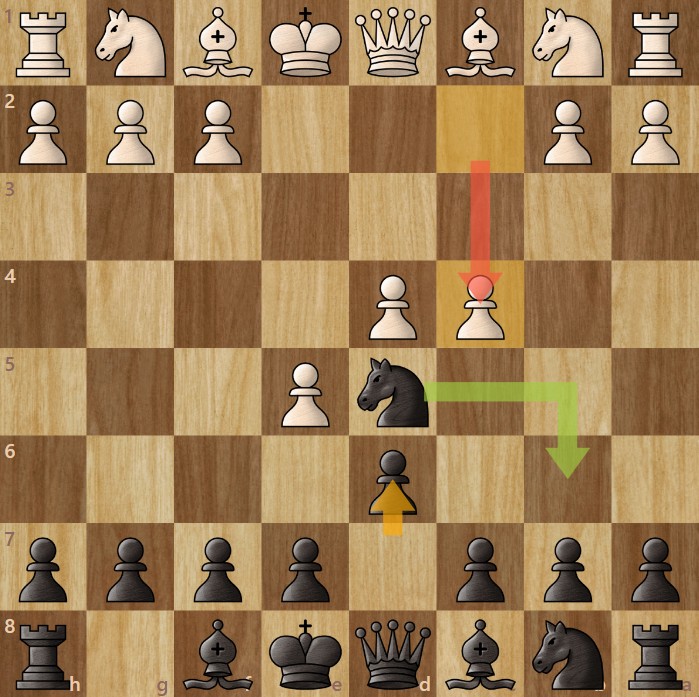
Now, 5...dxe5 6. dxe5 is threatened, which would open the d-file for a queen trade, leaving White’s king stranded in the middle of the board. How will White avoid this? There are two main ways.
- 5. exd6 (the Exchange Variation) is White's most common response. Now, capture back with your c-pawn and fianchetto your king’s bishop to attack White’s center from afar.
- 5. f4 (the Four Pawns Attack) is White’s attempt to occupy even more of the center and defend the e-pawn without opening up the d-file. Answer by trading pawns on e5 before developing your queenside knight (5...dxe5 6. fxe5 Nc6). With two knights now taking aim at all three of White’s central pawns, it often proves difficult for White to maintain its center in the moves that follow.
1. e4 Nf6 2. e5 Nd5 3. d4 d6 4. c4 Nb6 5. f4 dxe5 6. fxe5 Nc6

3. c4
Remember, on move 3, White can play c2-c4 right away. As before, retreat the knight to b6, after which White will usually play 4. d4, transposing into the main line which we’ve just covered.
Occasionally, however, White might decide to push the c-pawn to kick the knight again.

The Collector Series Luxury Chess Pieces - 4.0" King

The Camaratta Signature Master Chess Table

LIMITED EDITION - DGT 3000 Digital Chess Clock
3. c4 Nb6 4. c5 Nd5 – The Lasker Variation
In the Lasker Variation, White can’t resist kicking Black’s knight one more time with 4. c5. This time, however, the knight has been granted a safe outpost (4...Nd5). Play typically continues. 5. Bc4 e6. Black states that it doesn’t mind trading pieces on d5—it would be happy to land a central pawn there!

While grandmasters and chess engines both advocate 6. d4, most amateur players seem to prefer 6. Nc3 or 6. Bxd5. Playing solidly and targeting White’s overextended pawns is a promising path to equality or advantage.
2. Nc3 - A Flexible Move
Back to move 2, White has another common answer. By playing 2. Nc3, White protects its pawn and gives Black another chance to transpose into a more classical setup. The Vienna Game would ensue with the move 2...e5.
If, however, you want to continue with the Alekhine Defense, then you’ll need to continue with 2...d5 – known by many as the Scandinavian Variation.

The Harrwitz Series Timeless Chess Pieces- 3.5" King

Super Deluxe Tournament Director Kit

Large Wedge Chess Clock Carrying Bag
2...d5—The Scandinavian Variation
1. e4 Nf6 2. Nc3 d5 3. e5 Nfd7 4. d4 c5 5. Nxd5 cxd4 6. Qxd4 Nb6
The Scandinavian Variation is so-called because it resembles the Scandinavian Defense (1. e4 d5).
3. exd5—The Scandinavian Defense Modern Variation
Indeed, if White captures on d5, the opening transposes into a common line of the Scandinavian Defense Modern Variation. Play continues with 3…Nxd5. 4. Nxd5 Qxd5, leaving Black’s queen centralized yet safe and commanding. Online game statistics show Black scores very well from here.

Castling long and pressuring the d-file can now pay off for Black. There are also some infamous trappy lines that catch out even strong players such as 5. Nf3 Nc6 6. d4 Nb4 7. a3 Qe4+. In fact, if you are looking for a simpler, yet still provocative counter to 1. e4, the Scandinavian Modern Variation is an excellent chess defense in its own right.
3. e5 Nfd7 – The Scandinavian Variation Main Line
Instead, grandmasters almost always play the main line - 3. e5 Nfd7. Here, Black renews pressure on White’s e-pawn, prompting 4. d4 to defend it. Once again, Black challenges White’s center with 4...c5. What would you play now with the white pieces?

5. Nxd5
If you decided to capture the apparently free pawn on d5, you’re in good company. The Lichess.org opening database shows it's the most common move in online games, yet it’s a dangerous mistake! After 5...cxd4 6. Qxd4 Nb6, White’s knight is pinned and can’t wriggle free!
1. e4 Nf6 2. Nc3 d5 3. e5 Nfd7 4. d4 c5 5. Nxd5 cxd4 6. Qxd4 Nb6

Now, whatever White tries to save with its knight, Black can still capture with its e-pawn from e6. Even top chess engines can postpone but not prevent the capture: 1. e4 Nf6 2. Nc3 d5 3. e5 Nfd7 4. d4 c5 5. Nxd5 cxd4 6. Qxd4 Nb6 7. c4 e6 8. Bg5 Bb4+ 9. Ke2 Qd7 10. a3 Bf8 11. Rd1 exd5

The Burnt Dubrovnik Series Chess Pieces - 3.75" King

DGT 2500 Digital Chess Clock

Premium Chess Box - Brazilian Rosewood
White’s Better Alternatives
There are plenty of other ways for White to defend its center, including 5. Nd3 and 5. Be3. Continue with 5...e6 to shore up your d-pawn and 6...Nc6 to add pressure to both d4 and e5. In the coming moves, look for the perfect timing to trade pawns in the center to leave White struggling to defend its wayward pawn on e5.
For example: 1. e4 Nf6 2. Nc3 d5 3. e5 Nfd7 4. d4 c5 5. Nf3 e6 6. Be3 Nc6 7. Bb5 cxd4
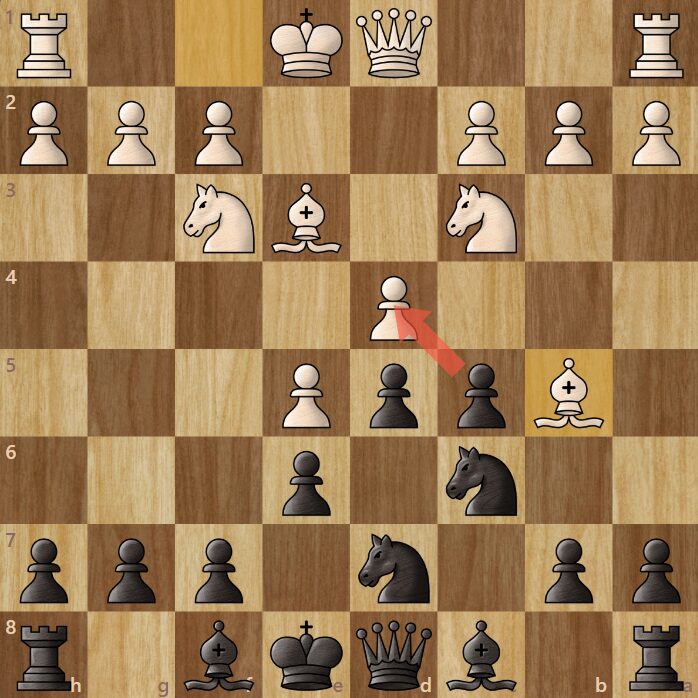
In grandmaster games, White’s favorite way to continue is instead 5. f4, supporting the e5 pawn from another side. This variation shares many similarities with the French Defense Steinitz Variation. In this case, capture on d4 immediately. Many opponents will capture back with their queen, handing you a tempo as you develop your queenside knight later on.
The O’Sullivan Gambit – Brilliant for Blitz and Bullet Chess
There are some infamously tricky lines associated with the Alekhine Defense, and none are more notorious than the O’Sullivan Gambit. After 1. e4 Nf6 2. e5 Nd5 3. d4, Black veers off the main line with the bizarre-looking 3...b5. White can simply snap up this suspicious offering with 4. Bxb5. Indeed, they should! But from now on, White had better be very careful.
Continue with a further apparent gambit 4...c5. Now, what will White do?
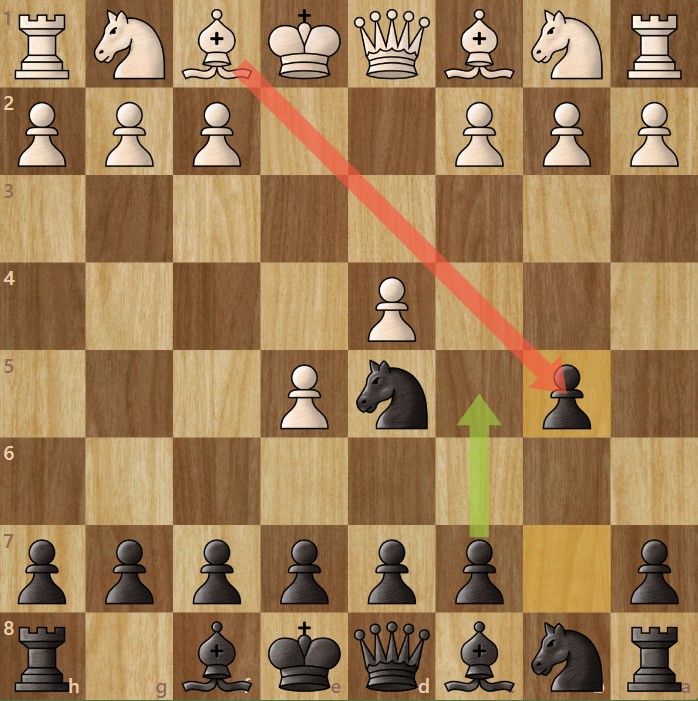
If White Captures the Free Pawn (5. dxc5)
The second pawn sacrifice seems rather fishy, and stronger opponents will no doubt spot the danger of accepting it. If White captures (5. dxc5), you can play 5...Qxb5+, double-attacking White’s bishop and king. White cannot undo this, but they can capture your centralized knight in return.

The Library Collection - The Anderssen Dropjaw Series Luxury Chess Pieces - 3'' King

DOWNLOAD - FRITZ 21

Millennium eONE Electronic Chess Board for playing on chess.com
If they do, however, you reply with 7...Bb7, skewering White’s queen to the g2 pawn, from where your bishop will trap White’s rook. If White blunders further, they may even gift you the chance to play Qf1+—after which they might resign!
1. e4 Nf6 2. e5 Nd5 3. d4 b5 4. Bxb5 c5 5. dxc5 Qa5+ 6. c3 Qxb5 7. Qxd5 Bb7
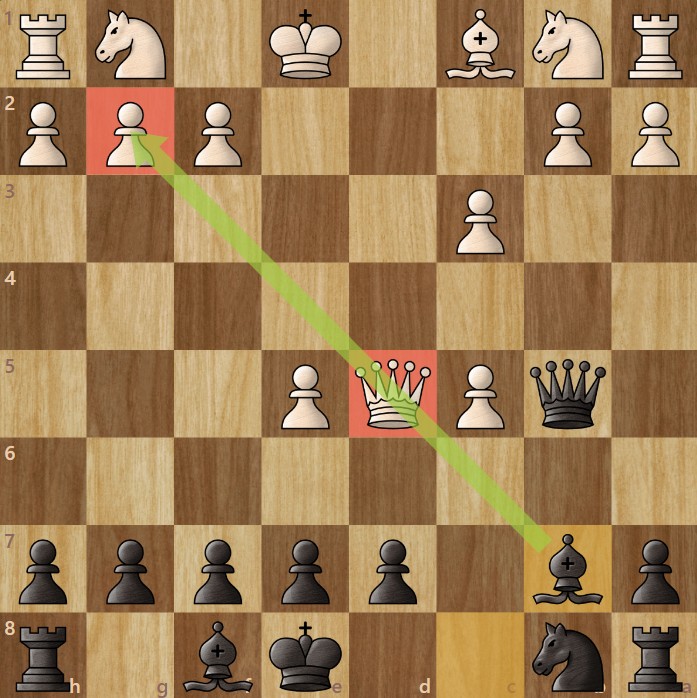
If White Plays 5. c3
By playing 5. c3, White tries to build a pawn chain to maintain its central pawns. The only problem is that after 6. cxd4 cxd4, they’re back to square one. You can just continue with 5...Qa5+ as we discussed above!

The Fischer Spassky Series Chess Pieces - 6.0" King

DOWNLOAD - CHESSBASE '26 - Premium Package

The Millennium King Competition Chess Computer
If White Plays 5. c4
A popular way for White to answer is 5. c4—attacking your central knight. You can ignore this threat with 5...cxd4. If White goes ahead and captures your knight, you once again launch into your familiar plan: 6...Qa5+.
If White instead captures with the queen in the center, 6...Nb4 can cause all kinds of problems. For example: 1. e4 Nf6 2. e5 Nd5 3. d4 b5 4. Bxb5 c5 5. c4 cxd4 6. Qxd4 Nb4 7. Na3 Qa5 8. Bd2. Now it’s Black to play. Can you see your winning move?
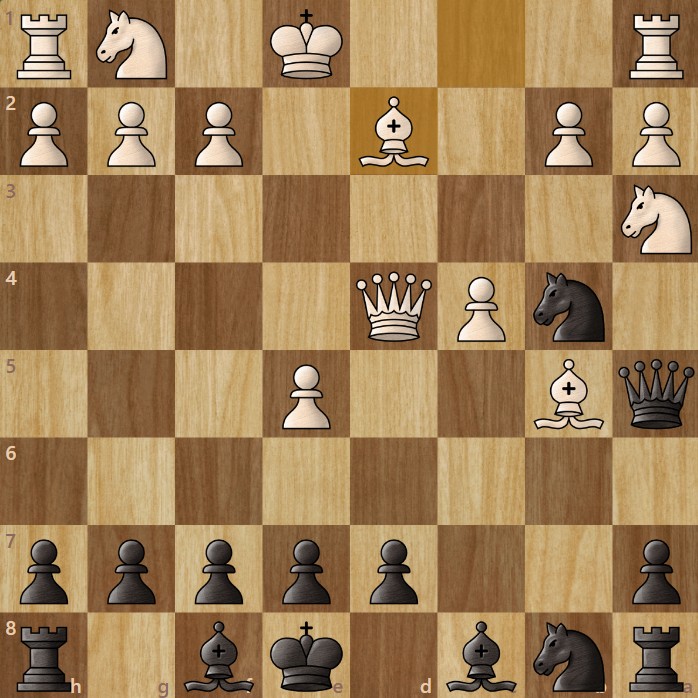
Answer: 8. Qxa3!! A stunning queen sacrifice! After 9. bxa3 Nc2+ wins White’s queen back with interest.
These are but a few of the traps that follow the O’Sullivan Gambit, an opening that even the likes of IM Eric Rosen have used to beat titled players!
Conclusion
The Alekhine Defense is an unconventional and surprisingly sharp weapon against 1. e4 that is well-suited to intermediate and advanced chess players who enjoy hypermodern defenses. Its lesser-known offspring, the O’Sullivan Gambit, is an underrated sideline that scores extremely well even against strong players, especially in blitz and bullet games.
Because the Alekhine Defense bypasses many classical opening principles, however, it’s not ideal for beginners. For those looking for simpler answers to 1. e4, the Caro-Kann Defense and the Scandinavian Defense Modern Variation are better choices for Black.