
Queen’s Gambit Accepted vs. Declined: Strategic Differences Explained
The Queen’s Gambit Accepted vs. Declined. Which is better? Or, more to the point, which is better for you?
In this Queen’s Gambit guide, you’ll learn the fundamental strategic differences between the two openings so you can decide which is better suited to your playing style. At the end, we’ll also suggest two easier openings that avoid the Queen’s Gambit with the Black pieces altogether!
Introducing the Queen’s Gambit Accepted
In the Queen’s Gambit Accepted (1. d4 d5 2. c4 dxc4), Black accepts White’s offering on c4, knowing that it will be difficult to hold onto the pawn advantage. While this temporarily cedes some central control to White, it also lets Black develop faster and more freely than declining the gambit. Later on, Black will try to challenge White’s d4 pawn—either with a ...e5 or ...c5 pawn break.
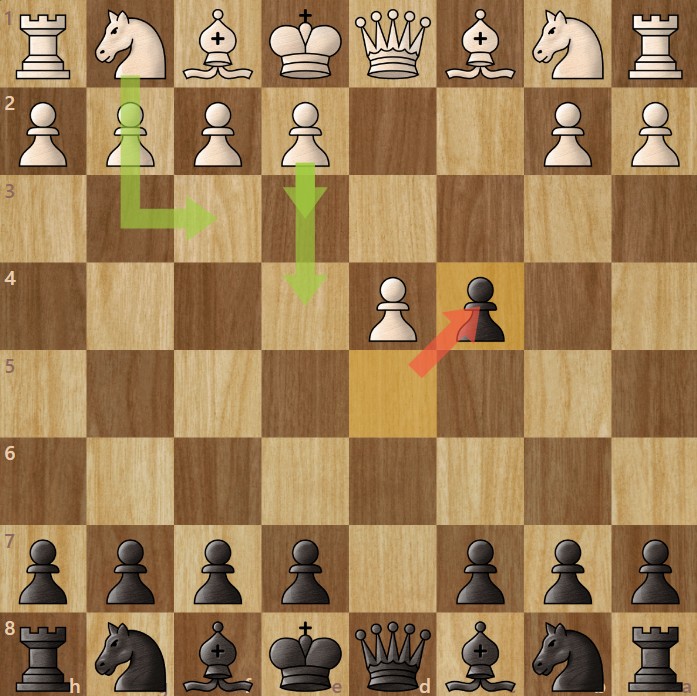
In response to the QGA, White can continue with:
- 3. Nf3 – the main line. This flexible move prevents 3...e5.
- 3. e4 – grabbing ‘the perfect center'; this is White’s most ambitious approach.
- 3. e3 – a more cautious way to control the center. Temporarily blocks White’s dark-squared bishop.
- 3. Nc3 is ill-advised yet remarkably common at amateur level! In response, Black can play 3...a6 and fight to hang on to the c4 pawn.
Online game statistics on platforms like lichess.org reveal that the Queen's Gambit Declined performs very poorly unless Black understands how to effectively challenge the center. Because White has a commanding center from the beginning, Black must find a way to ambush it later.
Let's look at one effective strategy.

The Collector Series Luxury Chess Pieces - 4.0" King

The Camaratta Signature Master Chess Table

LIMITED EDITION - DGT 3000 Digital Chess Clock
The QGA: A Typical Continuation
In the QGA, Black needs to be active and forthright in challenging White’s center. A nice way to illustrate this is with the classic continuation: 1. d4 d5 2. c4 dxc4 3. e4 e5.
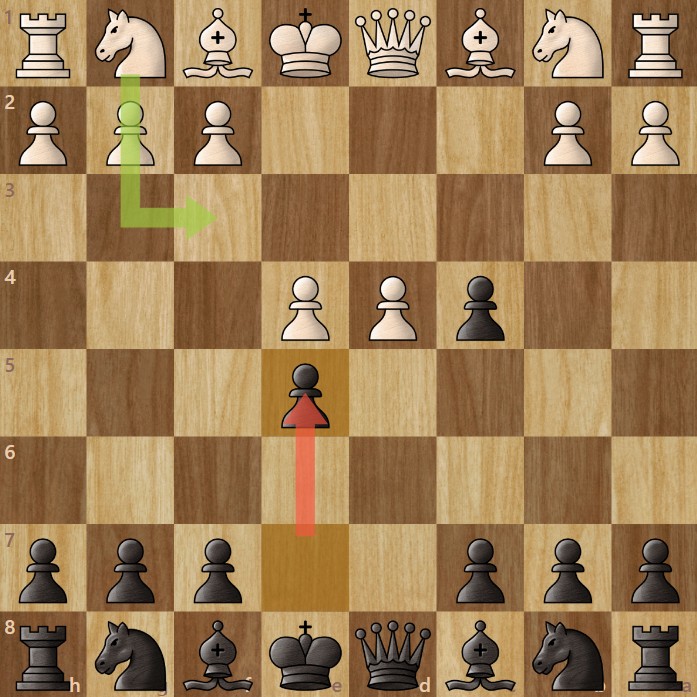
Here, Black immediately challenges White’s d4 pawn, demanding White prove the solidity of its ambitious center. White mustn't capture, since a queen trade on the d-file would leave White’s king stranded. White had also better not push the pawn up to d5, since this overextended center becomes too easy for Black to attack. Instead, 4. Nf3 is White’s only sound move—something that many amateur players fail to realize!
Black continues by capturing on d4. Now, many opponents will make the mistake of capturing back (Nxd4), leaving the knight pinned to the queen. Black can then pile pressure on the knight to leverage an initiative. For example: 1. d4 d5 2. c4 dxc4 3. e4 e5 4. Nf3 exd4 5. Nxd4 Bc5 6. Be3 Nf6 7. Nc3 Ng4 8. Bxc4 O-O 9. O-O Qd6
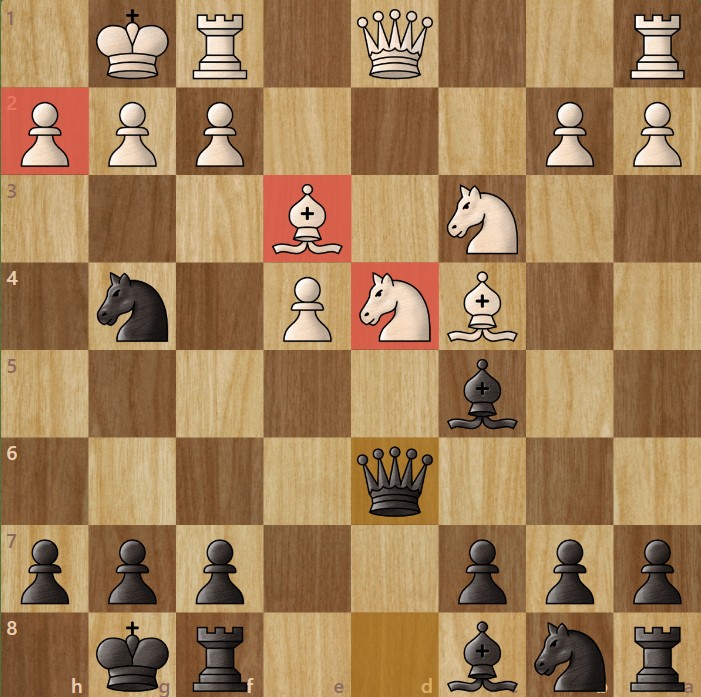
Notice how open the board is! Black has successfully used its active pieces to create trouble for White. Against unlearned opponents, Black can frequently wield its active pieces to turn the tables on White's overconfident center.
If White plays more solidly, by the way, Black can still end up with two central pawns vs. one of White’s! The main line follows: 1. d4 d5 2. c4 dxc4 3. e4 e5 4. Nf3 exd4 5. Bxc4 Nc6 6. O-O Be6 7. Bxe6 fxe6 8. Qb3 Qd7 9. Qxb7 Rb8 10. Qa6 Nf6 11. Nbd2 Bd6 12. b3 e5.
3. Nf3—the Classical Defense
If White instead plays 3. Nf3, Black must find a different approach to strike in the center—this time with the c-pawn!
The most conventional move order follows: 1. d4 d5 2. c4 dxc4 3. Nf3 Nf6 4. e3 e6 5. Bxc4 c5
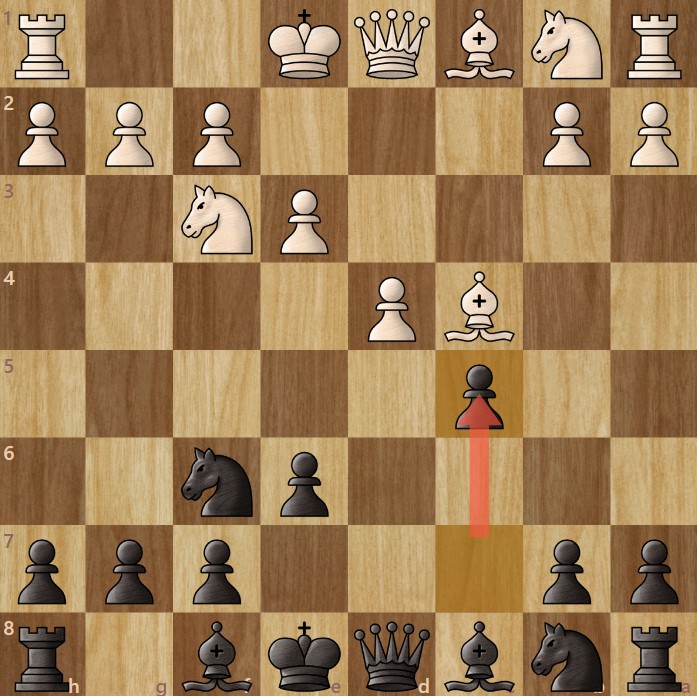
Notice how Black’s c-pawn is threatening to leave White with an isolated queen’s pawn (IQP). This is classic Queen’s Gambit Accepted chess strategy! Temporarily cede central pawn control and boldly take it back later.
This line still appears frequently at the master level and scores exceptionally well among amateur players, too.

The Bohemian Series Chess Pieces - 4.0" King - Lacquered

DOWNLOAD - CHESSBASE '26 - Premium Package

The Millennium King Competition Chess Computer
Introducing The Queen’s Gambit Declined
In the Queen’s Gambit Declined, Black refuses White’s c4 pawn and instead chooses to defend its d-pawn and improve central pawn control with 2...e6. It’s a more constrained, strategic approach that sets up a long positional battle in the center.
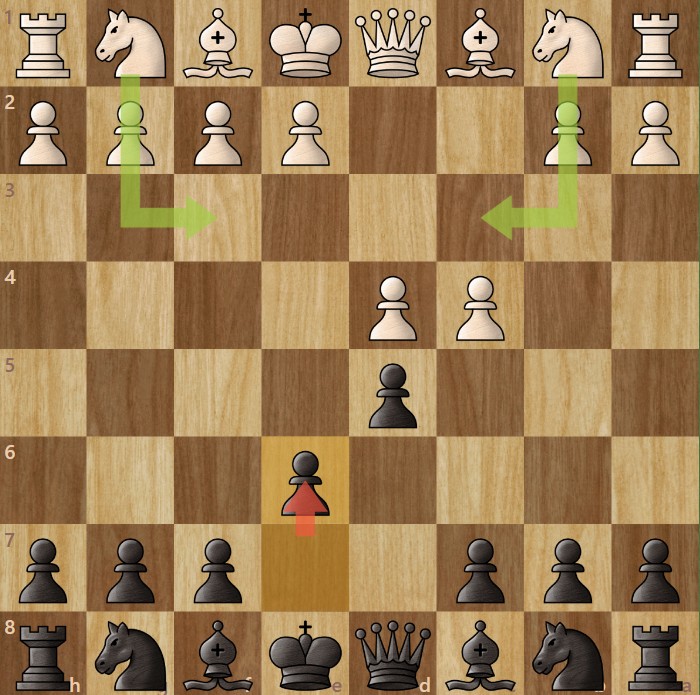
The QGD has a vast number of variations. The most common moves that follow include:
- 3. Nc3 Nf6 4. cxd5 – the Exchange Variation.
- 3. Nc3 Nf6 4. Bg5—leads to a wide range of continuations, including the Lasker Defense and Cambridge Springs Defense.
- 3. Nc3 Nf6 4. Nf3 – the Three Knights Variation
- 3. Nf3 Nf6 4. g3—known as the ‘Catalan transposition', switching into the almighty Catalan Opening.
- 3. Nc3 c6—the Accelerated Semi-Slav Defense
Black's strategy in the QGD depends largely on White's continuation. The Exchange Variation leads to a very different game than if central tension remains unresolved. Furthermore, you'll need to know how to handle the Catalan Opening, which requires a different strategic approach again.
In short, the Queen's Gambit Declined is inherently very solid, yet you'll need to learn significant theory to understand the relevant strategies for each variation.
The QGD - A Typical Continuation
Garry Kasparov once described the Queen’s Gambit Declined as ‘the opening of the world championship matches.' So what better way to study it than from a 2020 game between two world champions: Magnus Carlsen and Ding Liren? Here, Liren attained a draw as Black with the extremely solid play that the QGD is famous for.
Liren chose to play the ‘Ragozin Defense’ against the Three Knights Variation: 1. Nf3 d5 2. d4 Nf6 3. c4 e6 4. Nc3 Bb4
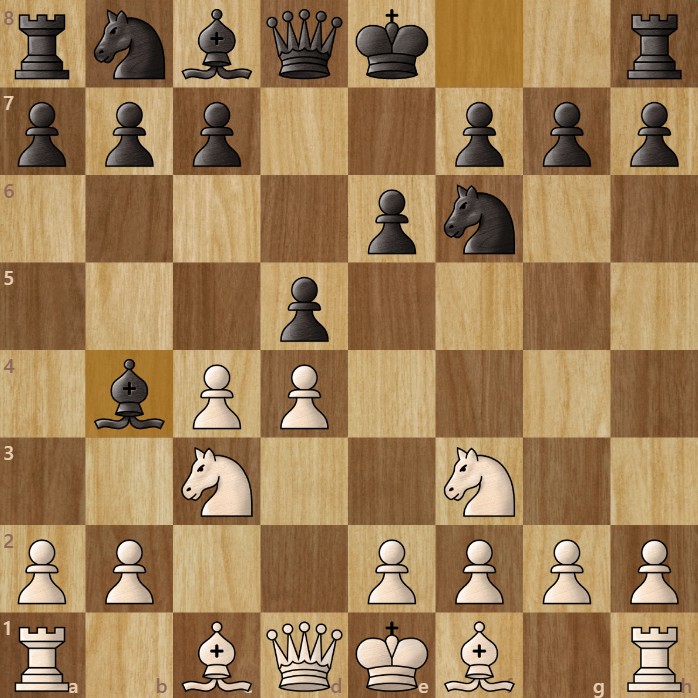
A classic Queen’s Gambit Declined position. Both sides hold off on trading pawns to retain tension in the center. Black’s position is very solid but also a little cramped. The light-squared bishop is blocked in by the e6 pawn for as long as White declines to trade pawns on d5. On the other side, Black delays capturing on c4 until White’s light-squared bishop has already moved—forcing White to move it twice to capture back!
Unbreakable and Often Drawish
Play continues: 1. Nf3 d5 2. d4 Nf6 3. c4 e6 4. Nc3 Bb4 5. Qa4+ Nc6 6. e3 O-O 7. Qc2 Re8 8. Bd2 Bf8 – yes! On move 8, Black retreats its bishop all the way back to f8. Black’s cramped position doesn’t leave any better squares to place the bishop, and Liren wishes to free up b4 for its knight to move to—forcing Carlsen’s queen to move for the third time in the opening!

The Library Imperial Collector Series Luxury Chess Pieces - 3.0" King

Luxe Premium Chess Box - Amboyna Burl

The House of Staunton DELUXE Tournament Bag
Characteristic of the QGD, both sides shuffle their pieces around, seeking to attain a subtle positional advantage. Liren trades pawns on c4 on move 9 and only develops his light-squared bishop on move 12 via b7.
These textbook moves lead to a position so solid and balanced that an astonishing 68 out of the 69 recorded master games using the same sequence end in a draw! Indeed, elite players often choose the QGD to play for a draw with the Black pieces.
The Queen’s Gambit Declined Exchange Variation
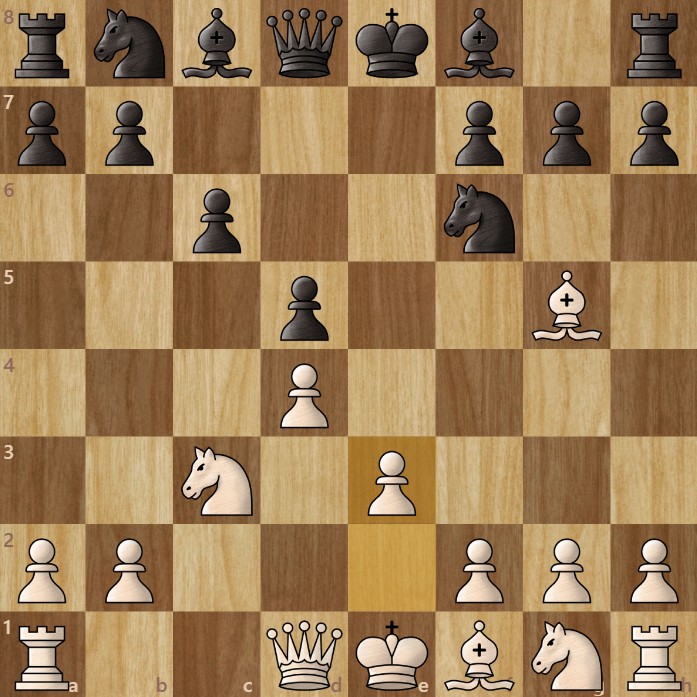
By trading pawns in the center of the board on move four, the QGD Exchange Variation dissolves tension in the center, leading to a more open board and, frequently, more aggressive plans. The classic line that remains the mainstay of many grandmasters to this day leads to the famous Carlsbad Pawn Structure: 1. d4 d5 2. c4 e6 3. Nc3 Nf6 4. cxd5 exd5 5. Bg5 c6 6. e3
Minority Attack and Other Game Plans
Notice how the Carlsbad Pawn Structure leaves White with two queenside pawns, while Black enjoys three connected queenside pawns. To weaken Black’s queenside, White may opt for a classic middlegame chess strategy: the pawn minority attack! By marching its two pawns up the board against Black’s three, White aims to dismantle Black’s strong pawn structure, leaving it with a weak isolated pawn instead.
In response to White's rather slow advance, Black can strike in the center with ...c5, initiate a kingside attack with ...f5, and/or take up the useful knight outpost that becomes available on c4.
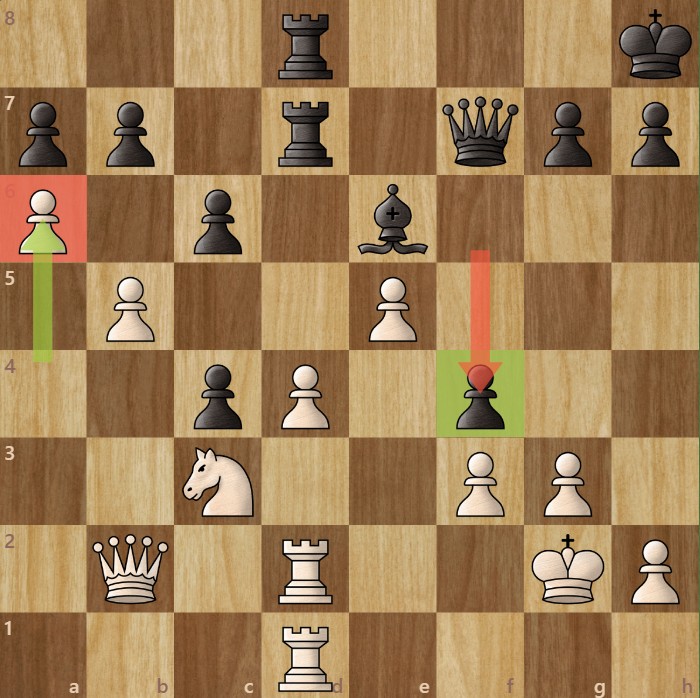
Alternatively, White may attempt central expansion with an f3 and e4 pawn break, or even opposite-side castling and a pawn storm! The Exchange Variation is versatile, but your response should always aim for active counterplay rather than passive defense.

The Library Collection - The Anderssen Dropjaw Series Luxury Chess Pieces - 3'' King

DOWNLOAD - FRITZ 21

Millennium eONE Electronic Chess Board for playing on chess.com
Queen’s Gambit Accepted vs. Declined—Our Conclusion
The Queen’s Gambit Accepted and the Queen’s Gambit Declined are both sound openings for Black, but they lead to very different games, requiring different strategies.
The Queen’s Gambit Accepted leads to more open games where Black can use active pieces to pressure White’s center. To be played successfully, Black needs to be bold and assertive with timely pawn breaks. While the QGA may require less study, you still need to understand its key tenets to avoid losing the center.
By contrast, the Queen’s Gambit Declined leads to more closed games where Black tries to maintain its d5 pawn and solid structure at the expense of a more cramped position and limited piece activity. It tends to lead to slow strategic battles where both sides aim for a slight positional advantage to gain leverage. With so many variations, the QGD requires significant study to play successfully against prepared opponents.
Which one you choose depends entirely on your playing style and the time that you're willing to spend studying. However, any effective way to counter the Queen's Gambit will require significant study! If, on the other hand, you'd like to avoid facing the Queen's Gambit altogether, the Old Benoni Defense and Dutch Stonewall Defense require much less study and perform admirably well in beginner and club-level chess.