
Chess Tactics: Opposition and How To Use It
Once you have tackled the basics of chess and learned most tactics, opening strategies, and checkmate patterns. It might be time to branch out into endgame tactics. Endgames are a vast and complex topic in chess, and you can spend an entire chess career trying to understand that part of the game. So where do you start? If you have learned basic endgame principles, then you probably have learned the value of a pawn at the end of a chess game. Opposition is a tool you can use to make sure your pawns become queens and help you win or draw even more games.

What is Opposition?
Opposition happens when two kings are aligned either vertically or horizontally with an odd number of squares between them. The king that doesn’t need to move is considered to have the opposition. Direct opposition occurs when two kings are on the same rank or file, with only one square between them. Kings, according to the rules of chess, cannot move onto a square that is being attacked by another piece, including the opponent's king. That means that, on occasion, especially towards the end of the game, two kings might end up in a staring contest.
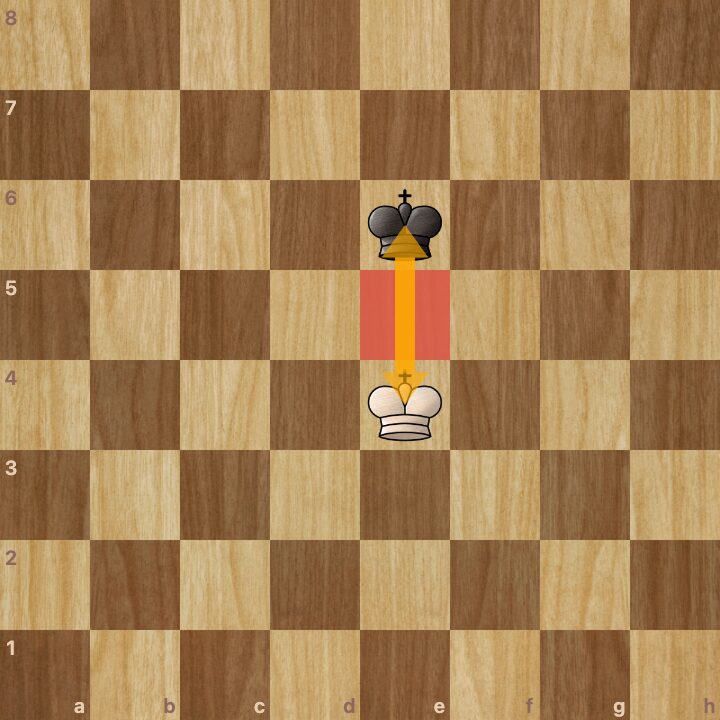
Two Kings In Opposition
When those two kings are staring at one another, someone must blink first and move. Who must move is determined by whose turn it is in that moment. Whichever king does not have to move “has opposition.” The other king is forced to defer to them and move out of the way. This becomes vitally important in most pawn endgame situations, where the king is a key part of your plan and strategy.
How to Use the King in an Endgame
One important basic endgame strategy is to “activate your king!” You may have heard this idea before, and it is very good advice. In the late game, your king becomes one of your most important pieces. If all you have left are pawns, your king suddenly becomes your most mobile piece! You have to use the king both as an attacker and a defender, which is why we usually say you should bring your king to the middle of the board in an endgame so that it is ready to be deployed wherever you may need it. That is the same reason we say you should activate your pieces in the opening by bringing them to the middle of the board, so that they are ready to move where you need them as efficiently as possible.

The Guardian Series Chess Pieces - 3.75" King

Premium Chess Box - Mahogany

Chronos GX Clock Carrying Bag
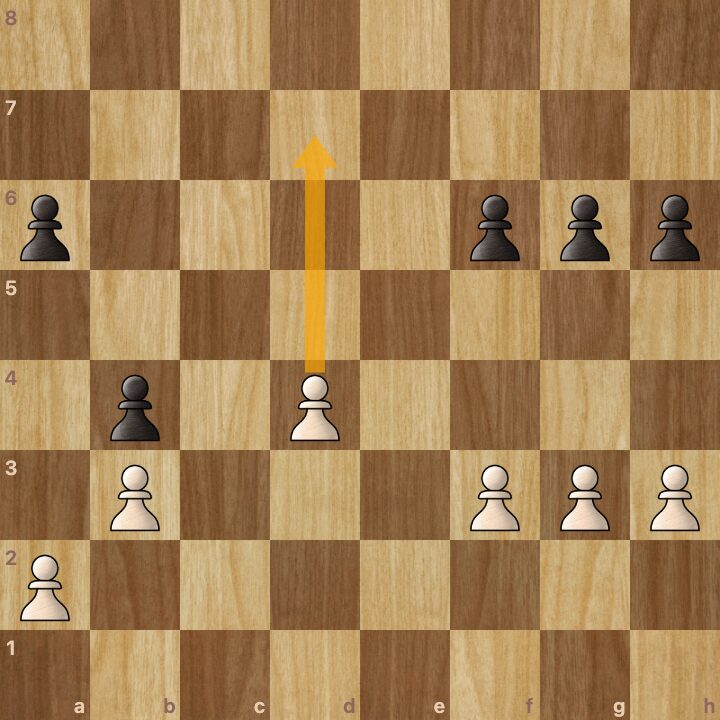
Passed Pawn
Now, a quick review of a passed pawn. A passed pawn is a pawn with no opponent's pawn opposite it, or on either adjacent file. This means it has a path to the end of the board that is not obstructed by pawns. Other pieces can get in the way or capture the passed pawn, but other pawns aren't blocking it. These kinds of pawns are vital to endgame success.
Using Opposition
Take a look at this position below. First, we will examine a position with no pawns, but remember the purpose of all of these endgame techniques is to win the game, and the best way to win an endgame is usually by promoting a pawn. Look at this position and imagine the goal of your king being to get to the other side of the board. It's important to know whose turn it is in this position.
Here, if it is whites turn, it is a winning position. As long as you know how to take opposition, you can maintain your advantage. If it is blacks turn, though, then they can hold a draw.
The Chess Tactics of Understanding the Square
One part of chess that will make it easier to understand all endgames is the square. The “square” is a fairly easy way to know whether or not a pawn can beat the opposing king to the end of the board. When a pawn reaches the end of the board, it can be promoted to a queen, rook, knight, or bishop. Usually, a Queen should be chosen. The rare exception would be a knight check or a stalemate. Below is an example of how you would draw this square from your pawn to the end of the board.
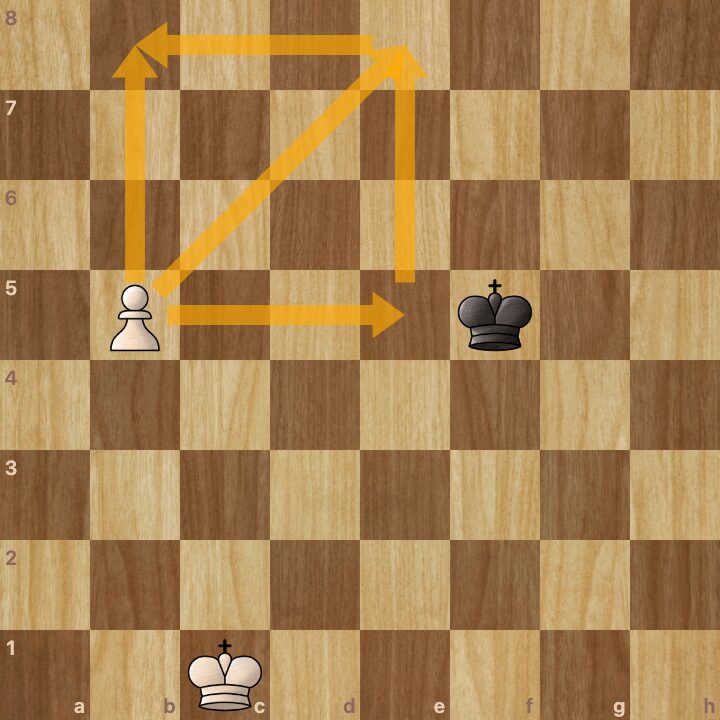
If your opponent’s king can enter the square on their turn, then they will be able to catch the pawn. Go ahead and count out the moves, and calculate until the king captures the pawn. Now do it again, but change it to be White's turn. Now the king is not entering the square, and it will be too far away to catch the pawn and stop it from becoming a new queen.

The Modern Series Chess Pieces - 3.75" King

DGT Pegasus Chess Board (e-Board) - Wireless Bluetooth with USB Charger

Bobby Fischer Teaches Chess
Why Understanding the Square in Chess Endgames Matters
Once you have a good grasp of whether or not an endgame is winning because of a passed pawn or not, then you are better equipped to decide whether or not to enter those endgames to begin with. Don’t trade into an endgame where the opposing king is going to be able to step in front of your passed pawn, and you don’t have opposition!
Chess Tactics: Zugzwang
In chess, zugzwang refers to a situation where a player faces a disadvantage solely because it is their turn to move. In many ways, having opposition is putting your opponent into a kind of zugzwang. They would love to leave their king right where it is in front of the pawn, but they are forced to make a move.
Understanding Stalemate
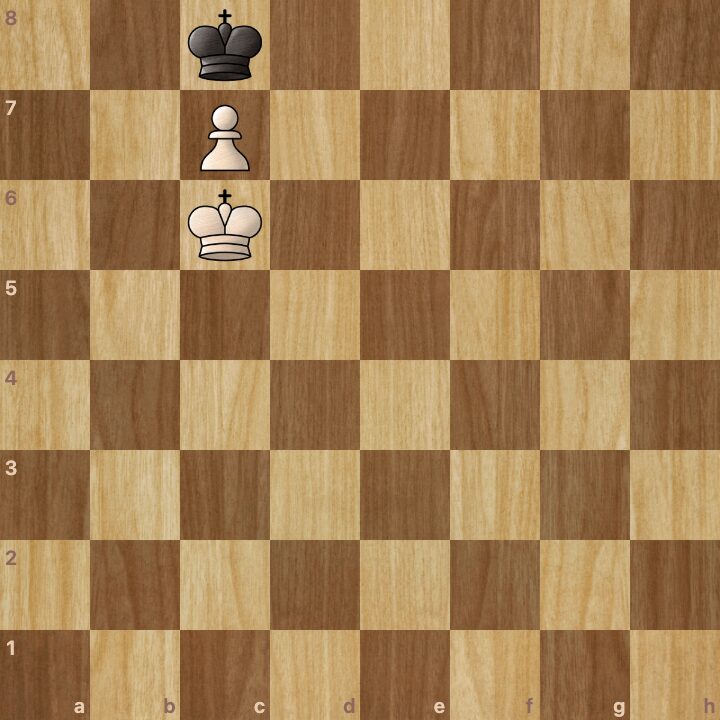
If you are going to stop your opponent's passed pawns with just your king, it is important that you fully understand stalemate. Opposition and other chess tactics would not be nearly as important if it weren’t for this important rule. A stalemate occurs when one side has no legal moves but is not in check. The position below is a common stalemate when the defending side can keep opposition and force a draw. This position is a tie because the king has no legal moves, and no piece is attacking it. Because no legal move can be made, it is a draw.
Practice Positions for Opposition
Similar to mastering other chess tactics, the best way to understand opposition is to drill pawn endgames. You can do this online very easily, and it will help prepare you for these endgames in a real game. First, start with a position like the one below. It is white to move, and you need to convert your passed pawn into a win. Because it is white to move, you can take the opposition and reach a winning position. Let’s look at how.
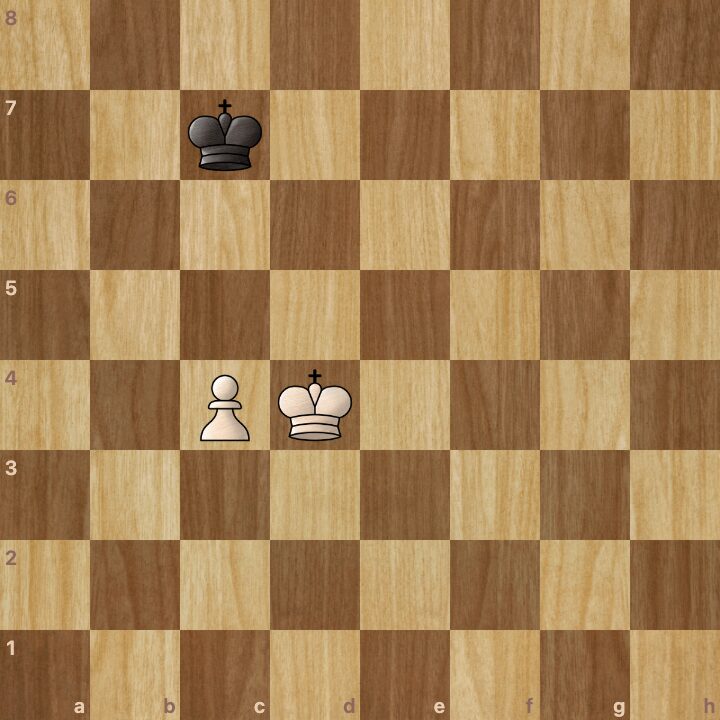
Here white can play Kc5 to take opposition! Once the king is on c5, the black king is forced to move, even though they wish they didn’t have to. Wherever that king moves, the white king can step forward and eventually roll out the red carpet for their pawn on its march to promotion. Practice this position yourself until you can do it successfully every time.

The Sovereign Series Chess Pieces - 4.0" King

Premium Chess Box - Brazilian Rosewood

The House of Staunton PROFESSIONAL Tournament Bag
Holding the Draw with Chess Opposition
The other side of understanding opposition is knowing how to hold a draw when your opponent is trying to promote a pawn themselves. If you have your king positioned correctly and you understand opposition, you don’t have to lose. Take a look at the position below. Can White hold a draw here? Trick question. It depends on whose turn it is! If it is White’s turn, they can take opposition by playing Ke2!
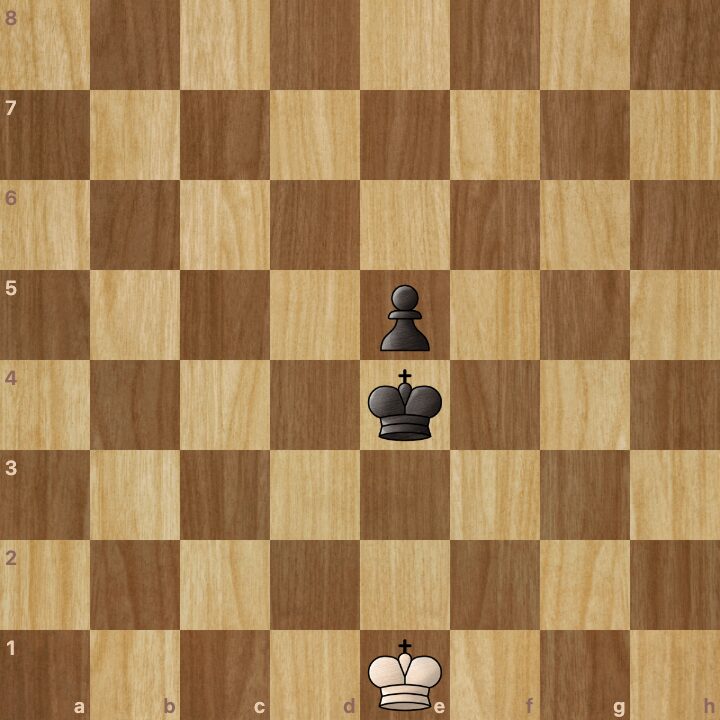
After Ke2, the king tries to get around in order to advance the pawn, but the white king can continue to step in front of the black king. Again, this is the kind of position that you should practice over and over. Either set up the position on a real board with a friend and see if you can hold the draw, or use a chess computer and hold the position against even Stockfish! There are no tricky chess tactics for the computer to find. Even the strongest chess engines in the world couldn’t win a position like this where White can take opposition.

The Collector Series Luxury Chess Pieces - 4.0" King

The Camaratta Signature Master Chess Table

LIMITED EDITION - DGT 3000 Digital Chess Clock
Using Opposition in Your Chess Strategy
The best way to use opposition in your games is to learn how to convert these basic king-and-pawn endgames. Knowing how to hold a draw or convert a winning endgame can be the difference between hundreds of rating points. If you aren’t quite understanding opposition yet, try drilling the positions online or with a friend, and make sure you are putting your king across from your opponent's king with an odd number of squares between them, and you can win or draw the endgames that matter.