
Why Knights Before Bishops?
You’ve probably heard the old chess maxim ‘knights before bishops,’ but what does it actually mean—and is it a hard and fast rule?
Knights before bishops simply means that in chess openings, it’s generally recommended to develop knights before bishops. There are several exceptions to the rule, however, and we’ll take a look at those after we discuss why the rule usually applies.
This is a rule that even strong players sometimes neglect to their detriment. By understanding it better, you’ll know when to apply it and when to ignore it!

Knights Have ‘Natural Squares,’ Bishops Have More Choice
A fundamental reason for moving knights before bishops is that knights have natural squares that they’re usually developed to, whereas bishops have a much larger range of possible squares to move to.
Even beginner chess players know that from their starting positions, knights are usually developed toward the center of the board. Their ‘natural squares’ are c3 and f3 for White and c6 and f6 for Black. From here, they control the most squares, including the four crucial squares in the center of the board (e4, e5, d4, and d5). Since you know where you’ll need your knights, why not develop them right away?
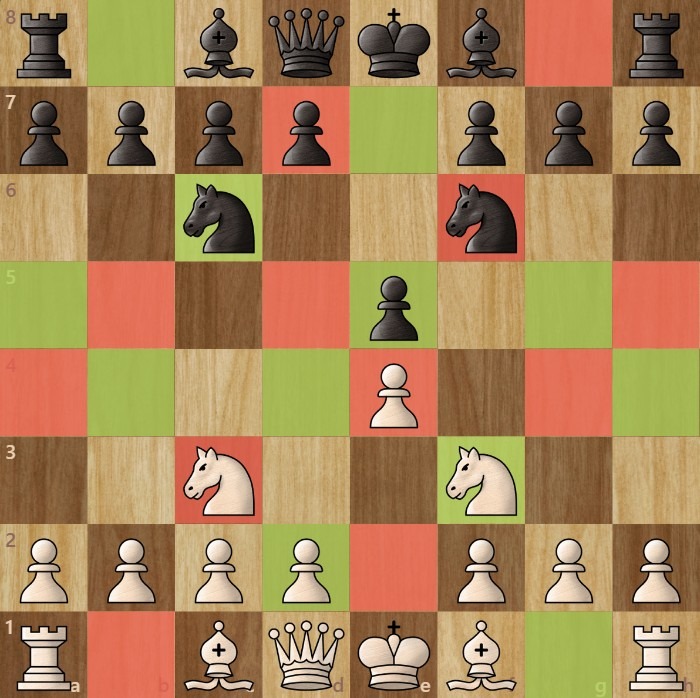
Each bishop, on the other hand, has many potential squares it can move to in the opening. Which one is best depends a lot on what your opponent plays! For example, against the Ruy Lopez, d7 is a strong square for Black’s light-squared bishop. Against the Italian Game, the same bishop might be better on g4. In other openings, fianchettoing is preferable.
In short, knight development is usually an automatic choice. Bishop development is often about remaining flexible and responding to what your opponent plays first.
Knight First = Safety First!
Another key reason for developing knights before bishops is safety. In a chess opening, developing promptly is important to defend against swift, incoming attacks. Postponing the development of the knight can easily lead to getting caught out by fast-flying attacks!
For example, a knight developed on f3 on White’s second move immediately prevents Black’s queen from reaching g5 or h4. It also blocks attacks down the f-file and the central light-squared diagonal and gives the rook an ‘escape square’ to move to. Furthermore, it protects the crucial h2-square when the king is castled. So many defensive functions fulfilled in one move!
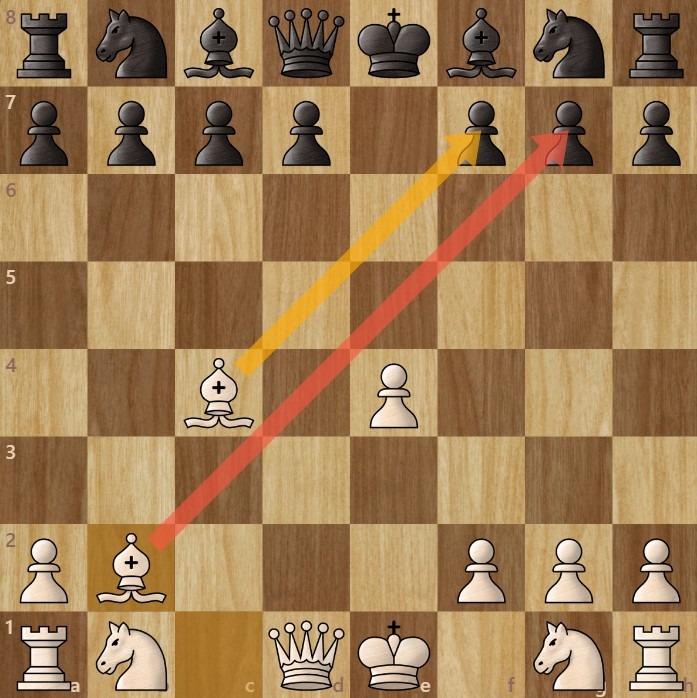
If knights are not developed promptly, defensive problems can quickly ensue. In this example from the deadly Danish Gambit, White has persuaded Black to seek a material advantage before developing properly.
With Black’s knights still on their starting squares, can you see White’s deadly move?
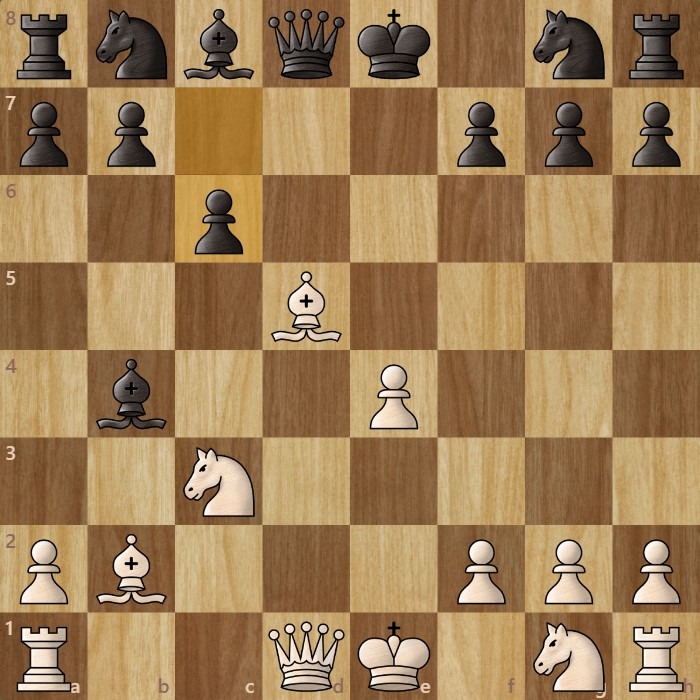
Answer: Bxf7+! Now, Black can’t recapture with its king. Why? It failed to develop its knight to c6, which would usually defend its queen. Now, Black will have to move its king, lose castling rights, and bear an onslaught of further attacks from White. It’s amazing how many chess opening traps exploit not developing knights on time!
Knights Need to Move to Function, Bishops Don’t
Did you ever notice how bishops are already active and ‘semi-developed’ once the central pawns are advanced? Knights, by contrast, are barely active at all until they move.
In the vast majority of chess openings, both sides advance some of their central e- and d-pawns in the first couple of moves. Once these have moved, the bishops already control the entire diagonal in front of them.
Knights, on the other hand, are not helped by pawn moves. Until they are developed off their starting squares, they don’t control any useful squares.
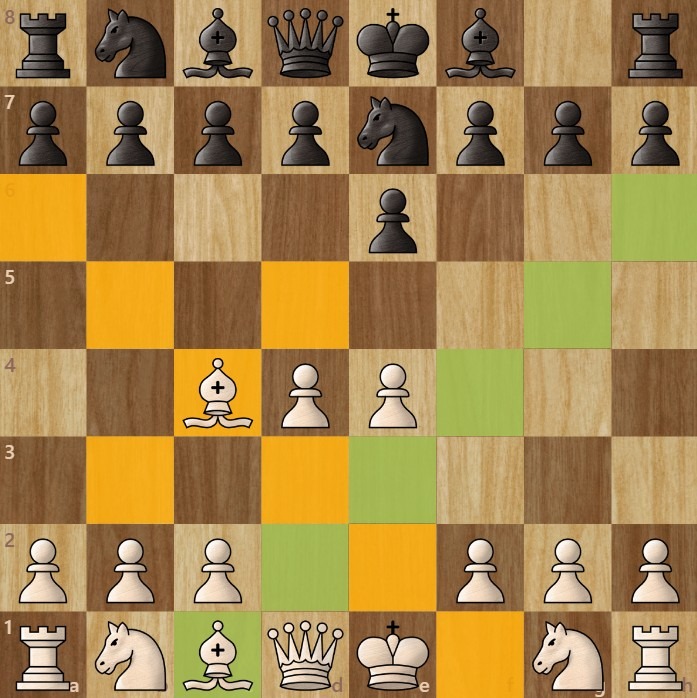
Think about openings as a race between the two sides to control as many squares on the chessboard as possible. Bishops can contribute to that from their starting squares. Knights need to move to bear their influence on the game.
When Bishops Defend c- and f-Pawns
In chess openings where pawns are developed to the 4th or 5th rank on the c- and f- files, an undeveloped bishop is often already doing a perfect job defending the pawn from its home square. In these situations, it’s better to move that bishop last to save you from moving it twice.
A classic example of this is in the Queen’s Gambit Declined. In this opening, White’s light-squared bishop defends its c4 pawn from its starting square. White is better off here, not moving its bishop at all, in case Black decides to capture the pawn. This would break another fundamental opening rule, ‘don’t move the same piece twice’ —especially when it wastes a tempo!
This pattern is also common in other openings where Black or White has pawns on the c- or f-files, like the King’s Gambit, English Opening, and Sicilian Defense. A skillful opponent will often refuse to capture the pawn until the bishop has already moved, with the object of wasting an opponent’s tempo!
In situations like these, developing both knights first is self-explanatory!
Exceptions to the Rule — When It’s Better to Develop Bishops First!
While there are several reasons to advise developing knights before bishops, it’s not a rule set in stone! There are many instances where it’s advantageous to develop a bishop, or occasionally even both bishops, before the knights are in the chess game!
When Attacking Is a Priority!
While knights are defensively strong, bishops are better for launching immediate, long-range attacks. If attacking is your first priority and you’re willing to compromise on safety, developing bishops first is a legitimate choice.
In the fiery Danish Gambit, both of White’s bishops are developed before its knights. Since a bishop is more of an offensive piece than a knight, developing them early is a strong strategy if attacking is your priority!
When Knights Block the c- and f-Pawns from Advancing
In some openings, the development of knights is delayed to preserve the opportunity to advance the c- and f-pawns. This is a slightly more advanced concept that many beginner and intermediate chess players remain unaware of.
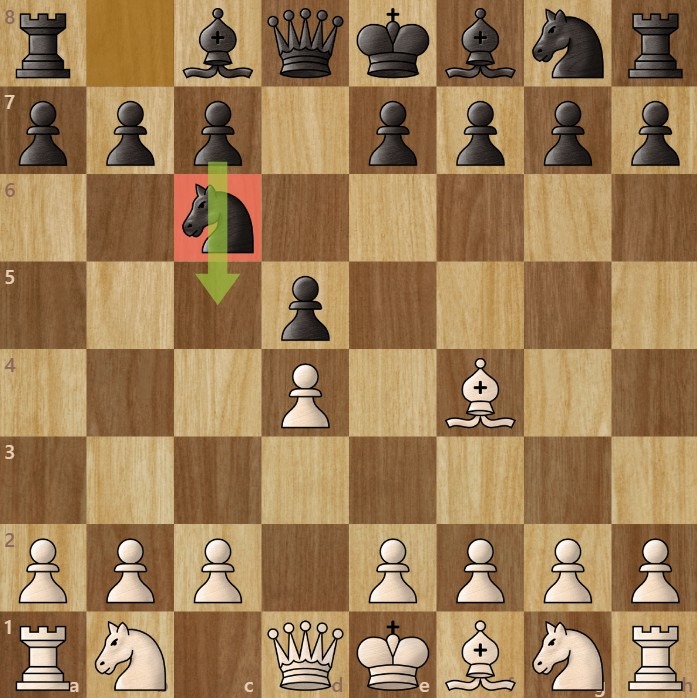
When playing against the London System, for example,...Nc6 is a questionable move for Black because it blocks the fundamental challenge to the center: c7-c5. Likewise, in the Vienna Game, White often delays playing Nf3 so that it can attack the center with f2-f4 down the line.
When Castling is a Priority
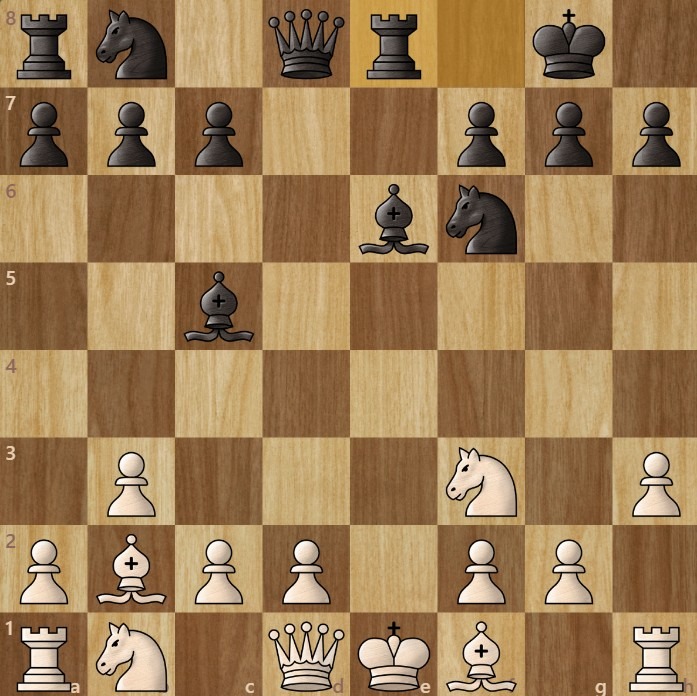
If your opponent is threatening an early attack, it’s sometimes important to ignore generic opening rules and instead castle your king as soon as possible. For this purpose, you’ll sometimes need to develop both bishops before your knights.
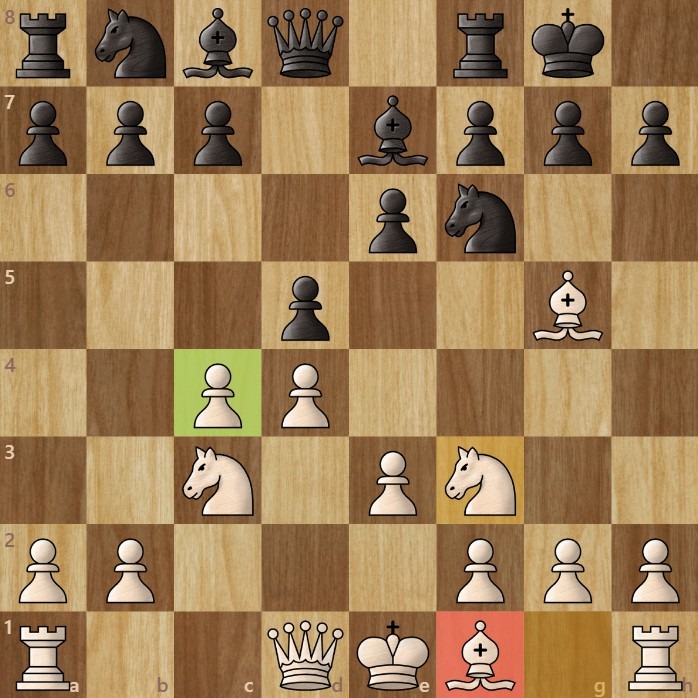
In the example below, Black is attempting an early discovered attack down the e-file with its rook. Developing the second knight now would spell disaster for White! Instead, the second bishop must be developed immediately so that castling can ensue.
Knights Before Bishops—Brief Recap
Knights are typically better developed before bishops because they have a natural square to move to, they need to move to function, and they immediately improve overall safety. Furthermore, delaying bishop moves can be advantageous to preserve the choice of squares they can move to.
Some exceptions to the rule include when immediate attacking is a priority, when knights might block c- and f-pawns from advancing, and when a bishop must move to allow for quick castling.
Knights Before Bishops FAQs
In chess, the adage ‘knights before bishops’ means it’s broadly recommended to develop knights before bishops in the opening. It doesn’t mean that knights are more valuable than bishops! There are also many exceptions to the rule.
In chess, the knight piece represents the cavalry of an army—the horses mounted by armored warriors. Therefore, in English, ‘knight’ was the obvious word for the piece.
In other languages knights are often referred to differently. In Spanish, for example, a knight is a ‘caballo’—literally meaning horse. For Germans, knights are called ‘Springers,’ meaning ‘jumpers’!
In standard chess piece development, it’s broadly recommended not to develop the queen until all of the minor pieces have been developed and castling has taken place. Of course there are exceptions to the rule. In the Scandinavian Defense, for example, the queen typically moves into the center of the chessboard on move two!
In terms of material value, bishops are usually considered slightly more valuable than a knight—but that depends on context. For open positions, bishops are stronger, especially bishop pairs that dominate long diagonals. In closed positions in the first half of the chess game, however, knights can be temporarily more valuable than bishops.
In a Staunton chess set, bishops are always taller or ‘higher’ than a knight, but there’s no specific rule stipulating this!