
The Best Chess Strategies for Beginners
What are the best chess strategies for beginners? There are many to mention, but in this article, we’ll focus on eight core strategies that, once followed, will improve a beginner’s game dramatically.
While learning chess strategy might not be as exciting as learning brilliant tactics or opening traps, the players who stick to these foundational principles will quickly find themselves sailing ahead of their peers.
Even if you’re familiar with these principles, be sure to check out the examples provided. Each of them has been carefully selected to enhance even an intermediate player’s understanding of the strategy described.

8 Chess Strategies for Beginners to Improve Fast
1. Control the Center
Of all chess strategies for beginners, the one you’ll hear time and again is: Fight for control of the center. This means using pawns and pieces to control as many central squares of the board as possible. In simple terms, central control allows you to control more of the board, and therefore more of the game.
In the example below, White has focused on developing and controlling central squares, whereas Black has wasted precious time on opening moves that fail to control the center.
Squares d4, d5, and e5 are all controlled by White, while e4 is controlled equally by both sides. Can you see how White can gain full control of all four central squares?
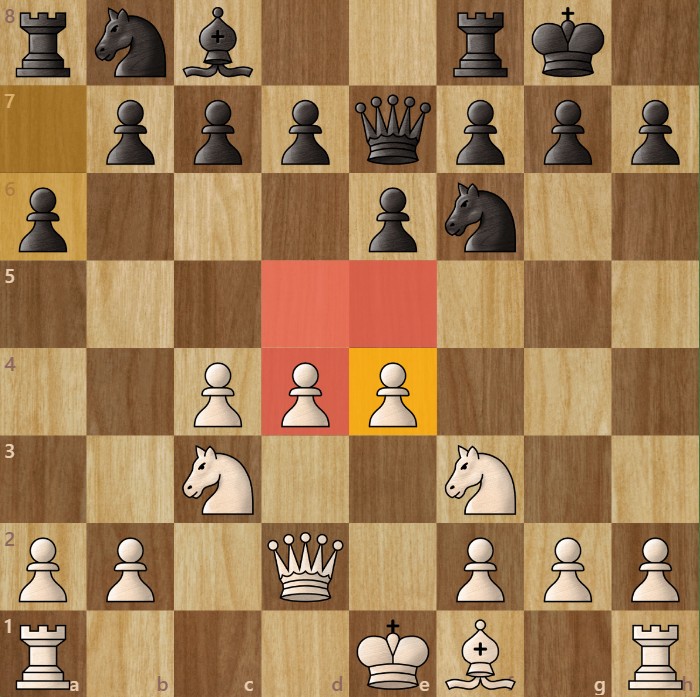
Answer: e5! Because Black failed to occupy e5 with a pawn, White is allowed to push its e-pawn forward to attack Black’s knight. Where will the knight move? Because Black has little central control, the knight has no good squares to move to! If it moves to g4, another pawn will kick it again. Black’s best move now is to retreat the knight to e8, ceding white control of all four central squares.
With a head start in development and massive freedom of mobility, White can continue building its advantage from here. This example clearly demonstrates that whoever controls the center tends to control the game.

The *NEW* Austrian Coffeehouse Series Chess Pieces - 4.0" King

DGT 3000 Digital Chess Clock

The Camaratta Signature Championship Chess Table - Dark Brown
2. Castle Early, Wisely, and Keep Your King Safe!
Most chess players find the most exciting part of chess is going on the attack, but first, you need to make sure your king is safe. The quickest way to achieve king safety is to castle your king behind a solid wall of pawns.
In the example below, Black has castled early behind a solid pawn structure to keep the king safe and develop its rook. White, on the other hand, has delayed castling, a risky strategy, especially when the central files are clear! White must now castle quickly, but to which side?

Answer: O-O-O (queenside castling). Because White’s queenside has a much better pawn structure than the kingside, it will serve as better protection for the castled king. Furthermore, in this example, queenside castling also immediately plants a rook on the open d-file where, with the queen, it will exert significant pressure.
3. Place Rooks on Open Files
In the previous example, White develops a rook to an open file by castling. Mostly, however, you will have to move your rooks manually to control open or semi-open files (files that contain no pawns or only enemy pawns). This is one of the most important chess strategies for beginners that many players miss!
We join the previous example game several moves later. Now, both sides have developed their rooks to open and semi-open files where they can exert enormous influence on the game. Can you already see some of the tactical opportunities this strategy has created for the upcoming moves?
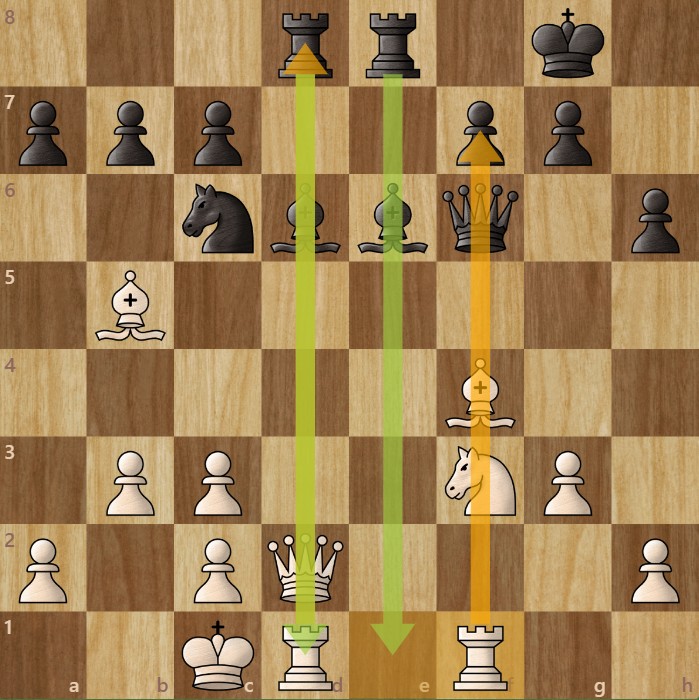
Answer: White’s rook on the f-file is lined up with Black’s queen. If White can move the bishop and knight, they can deliver a discovered attack on the queen. Black, however, may get there first! Its rook on the d-file that is lined up with White’s queen. Now, if Black plays Ba3+, it discovers the rook to capture the queen on the following move.
This example shows us that rooks on open files frequently give rise to x-rays and discovered attacks. It also reminds us that strong chess strategy is the best path to tactical opportunities!

The W.T. Pinney Series Chess Pieces - The Camaratta Collection - 4.75" King

Tap N Set Pro Digital Chess Clock - with DOUBLE DISPLAYS

Signature Fitted Coffer Chess Box - Walnut Burl
4. Look for Forcing Moves: Checks, Captures, and Threats (CCT)
In the previous example, Black might miss the winning move if another crucial principle was missed: On every move, look for forcing moves: Checks, Captures, and Threats! Forcing moves help to keep you in control of the game, pushing your opponent to make predictable defensive moves rather than creative attacking ones.
Scanning for a check, capture, or threat also prevents you from missing chess tactics—even when defending. If you can find a forcing move, you might be able to turn the tables on your opponent and launch a counterattack!
In the example below, Black has just played Nxd4, threatening White’s pinned knight on f3. Before looking for ways to defend, White should look for forcing moves: Checks, Captures, and Threats!

By first playing Bxf7+, White forces Black’s king to capture on that square. From here, White can give a further check with Ng5+. This simultaneously uncovers the queen to attack Black’s light-squared bishop.
In the end, White turns the tables to gain a superior position and material. It all started with a simple scan for checks, captures, and threats. Remember, the best way to defend is to attack!
5. Create an Outpost
In chess, an outpost is a piece placed in the opponent’s half of the board that’s difficult to threaten or capture. The most common type of outpost is a knight protected by a pawn, but you can create outposts with other combinations of pieces, too!
An outpost is dangerous because, from its advanced position, the piece can reach more squares in the enemy camp. This is especially true of knights because they are short-range pieces. Only within the opponent's half of the board can knights attack the vulnerable 7th and 8th rank squares.
In the example below, White has just landed its knight on an outpost on e6. While the two sides are equal in material, the outpost immediately hands White a big advantage. Just look at how many attacking possibilities emerge from this single move!
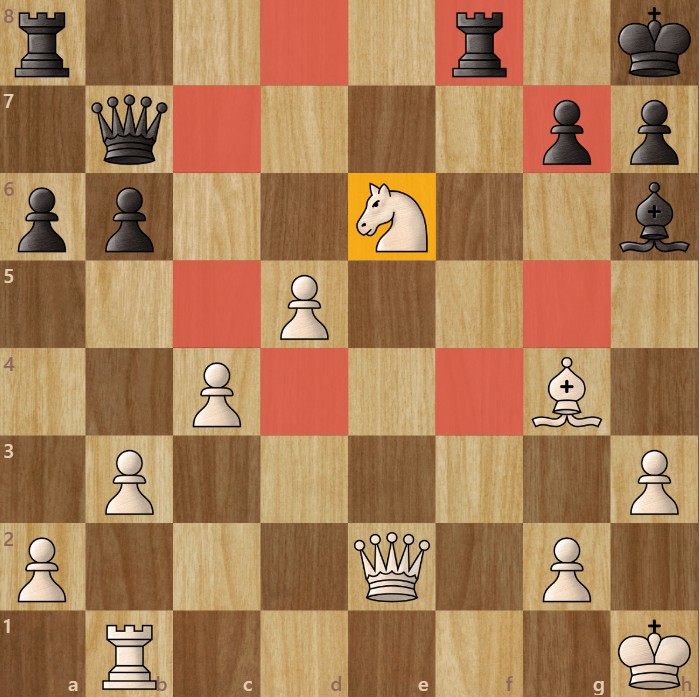
Firstly, White’s knight threatens Black’s rook, forcing it to move. Secondly, it hits g7, where White could easily mount a mating attack further down the line. Thirdly, it controls d8 to support its passed pawn on the d-file to achieve promotion. Furthermore, Black must be extremely careful to avoid placing its pieces where the knight could fork them!
This outpost on the 6th rank is especially troublesome because there are no black pieces left to threaten the knight. Without pawns on adjacent files or a minor piece to trade off, Black might even be forced to sacrifice a rook to eliminate this now extremely powerful piece!

The Fischer Spassky Series Chess Pieces - 6.0" King

DOWNLOAD - CHESSBASE '26 - Premium Package

The Millennium King Competition Chess Computer
6. Improve Your Least Active Piece (LAP)
So, it’s your move: you’ve completed your scans for checks, captures, and threats, and you've tried to find an outpost for one of your pieces. What if you still can’t find an opportunity? The answer is: Improve your least active piece (LAP).
By moving your least active piece to a more active, influential square, you’ll be controlling more of the board, and more of the game. In the example below, White has no checks, captures, or threats to make, nor is there an immediate chance to make an outpost. How, then, can White improve its least active piece?

Answer: Ba3. On its present square on b2, White’s bishop is cramped by Black’s long pawn chain and is bearing very little influence on the game. Just by moving to a3, the bishop suddenly controls a long diagonal, which is every bishop’s happy hunting ground!
Incidentally, did you notice another benefit of Ba3? It also prevents Black from castling kingside. Since queenside castling also doesn’t look safe for Black, its king may remain stuck in the center where White can x-ray attack with its rooks and queen. If White can open the center, it might even lead to a winning attack!
7. To Win the Endgame, Create Passed Pawns
Chess endgames are often won by the player who succeeds in promoting a pawn first. Many beginners, however, fail to realize that the golden ticket to pawn promotion is to create a passed pawn. A passed pawn is a pawn that has a clear pathway to the last rank, without enemy pawns standing on the same file or on adjacent files.
In the example below, Black has just played ...e5 to challenge White’s pawn on f4. What should White do?
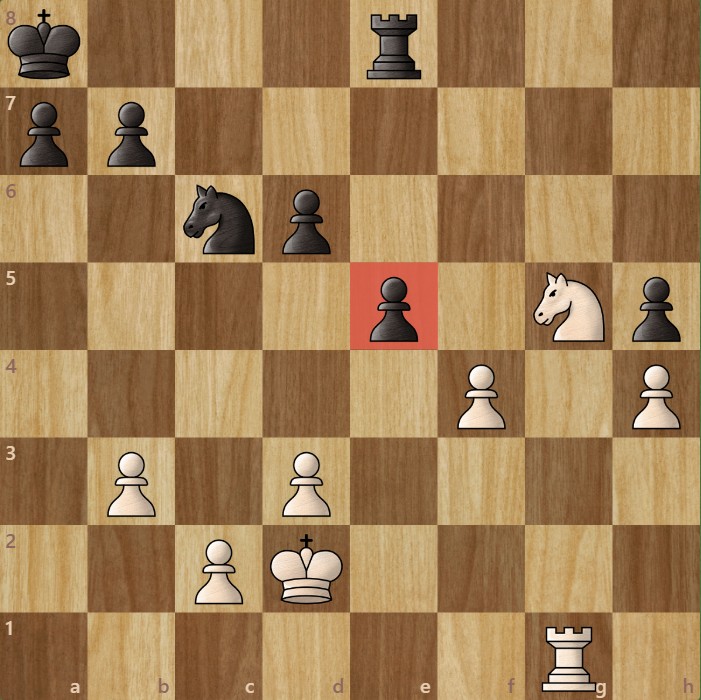
Answer: f5! Instead of trading pawns, White can create a passed pawn by pushing it to f5. Now that Black has no pawns to block or capture the pawn, it will be much more difficult to prevent its path to promotion.
While Black might try to block the pawn’s progress with one of its pieces, that piece will then be locked into defensive duty and severely restricted. Later, White can attempt to undermine the blocking piece to win promotion.
The *NEW* Austrian Coffeehouse Series Chess Pieces - 4.0" King

Premium Chess Box - Golden Heart

The Large Ultimate Chess Bag
8. Rooks Belong Behind Passed Pawns
Once you have created a passed pawn, the next step is to place a rook behind it. Because rooks move in the same direction as pawns, they’re the ideal pieces to support your pawn’s progress towards promotion.
We join the same game again a few moves later. White has correctly placed its rook behind the passed pawn to support its journey up the board. Because the pawn is protected by the rook, White is free to move its knight. Can you see how useful that knight outpost is now? How will White win the game?
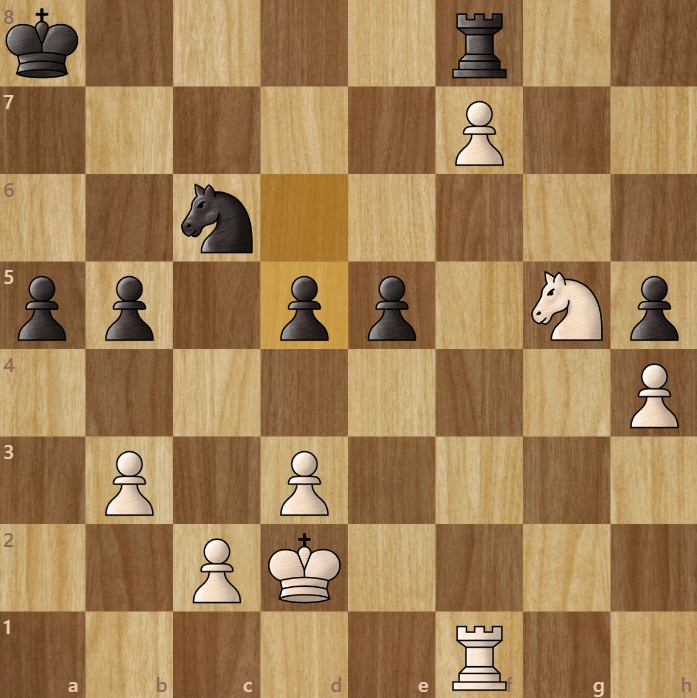
Answer: Nh7 or Ne6. Either of these moves attacks Black’s only piece that prevents pawn promotion. Black must now sacrifice its rook or allow White to promote the pawn.
Just look at how effective those three strategies for chess beginners turned out to be: a knight outpost, creating a passed pawn, and placing the rook behind it all combined to win the game!
Chess Strategy for Beginners - Our Conclusion
The winning chess strategies for beginners don’t need to be elaborate or complex to be effective. Just by following these eight simple principles consistently, you'll naturally find yourself controlling more of the board and more of the game.
You might be amazed at how effortlessly opportunities to attack emerge from your solid strategic foundations. You've seen how effective the strategies are in the examples. Now go and apply them to real games! Good luck!