
10 Great Chess Openings for Beginners
The best chess openings for beginners are easy to remember, simple to understand, and most importantly, fun to play. With that in mind, we’ve handpicked ten of the very best openings for novice players to start each chess game in the best possible way.
Beyond classics like the London System and Italian Game, we’ve included several statistically proven offbeat gems to surprise your opponents and pull the game into your favorite territory from the start.
Six of the Best Chess Openings for Beginners for White
The Scotch Game
A superb opening for beginners who love open, exciting chess is the Scotch Game. Also known as the 'Scotch Opening,' it starts with the moves: 1. e4 e5 2. Nf3 Nc6 3. d4
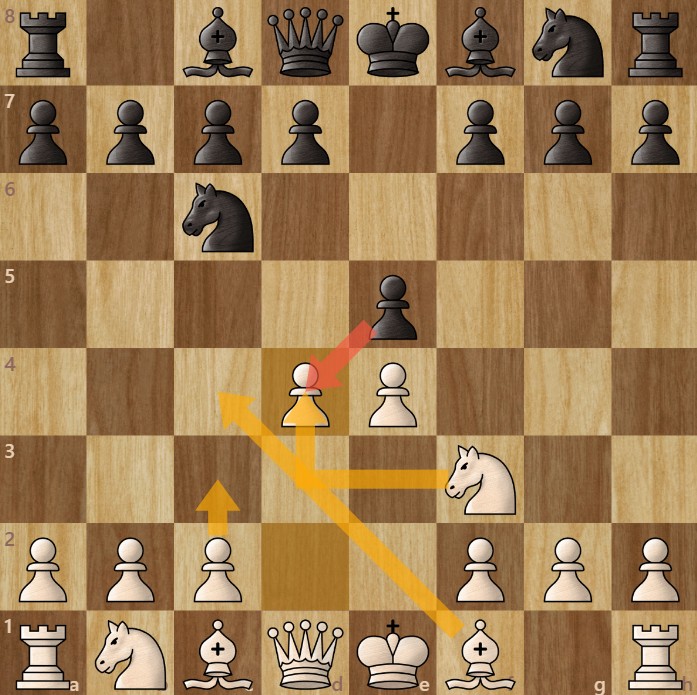
Although the Scotch Game often produces quiet games at the grandmaster level, it usually has the opposite effect at the beginner level. Opening the board early, the Scotch Game is a playground for aggressive players to launch tactical attacks.
After Black captures on d4, White most commonly recaptures with the knight (the main line). Alternatively, you can let Black keep its pawn advantage in exchange for menacing lines such as the Scotch Gambit (4. Bc4) or the Goring Gambit (4. c3).
While most Scotch Game lines require a little memorization, they can also be some of the most rewarding for beginners to learn. With endless tricks and traps, the Scotch Game often creates exciting opportunities to gain a distinct lead in the first ten moves.

The Modern Series Chess Pieces - 3.75" King

DGT Pegasus Chess Board (e-Board) - Wireless Bluetooth with USB Charger

Bobby Fischer Teaches Chess
King’s Gambit
The King’s Gambit is another fantastic opening for beginners who love to attack from the first moves. It all begins with 1. e4 e5 2. f4. By playing 2. f4, White immediately challenges Black’s central pawn. If Black captures the pawn, you’ll usually win it back later against most beginners.
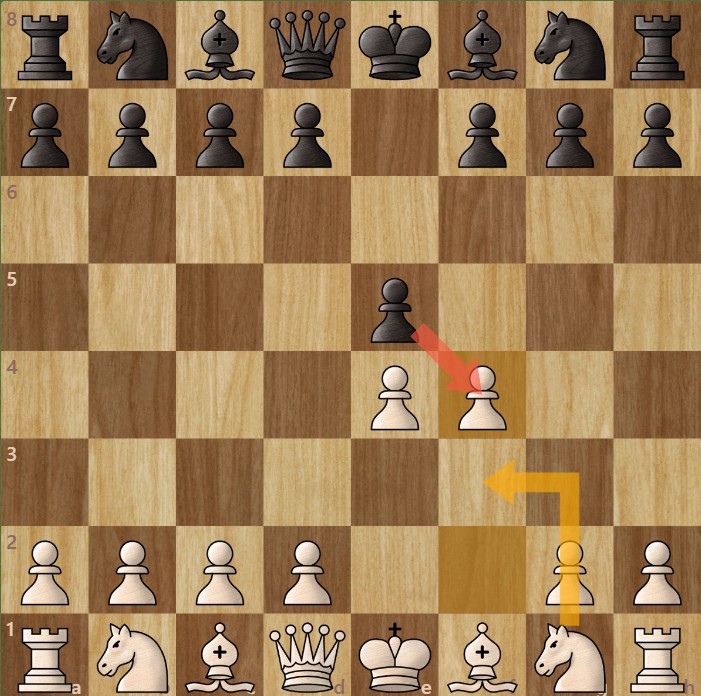
Opening the f-file so early can be precarious, but it also creates dangerous attacking opportunities. After you castle kingside, your rook on f1 will be ready to join other pieces in launching venomous attacks toward f7—Black's most vulnerable square early in the game.
The joy of the King’s Gambit is that you can play it with White in most games! All you need is your opponent to reply to 1. e4 with 1...e5. The basic game plan, dominate the center and attack f7, is easy to understand and often leads to mating attacks in the middlegame. A dream for thrill-seeking beginners.
The Italian Game
Perhaps the most popular opening for beginners is the Italian Game. It starts with the moves: 1. e4 e5 2. Nf3 Nc6 3. Bc4. By developing a central pawn, a knight, and then a bishop, White follows classical opening principles that tend to lead to safe, relatively quiet positions.
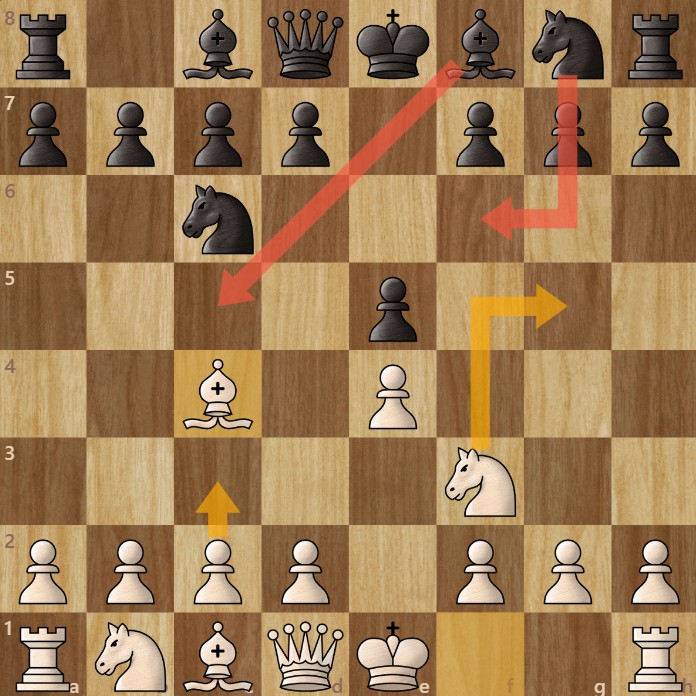
In response, Black usually plays 3...Bc5—the Giuoco Piano, or 3...Nf6—the Two Knights Defense, which can give rise to the notorious Fried Liver Attack. While the Fried Liver Attack is indeed dangerous at beginner level, it becomes obsolete against more experienced players who know how to neutralize it.
The Italian Game is a sound choice for players who prefer a safe, settled opening. Because it is less aggressive and forcing than the King’s Gambit or the Scotch Game, however, Black has more choice in how they respond. As a result, you may need to memorize more variations to fulfill its potential.
The Smith-Morra Gambit
When playing 1. e4, it’s always a good idea to have an answer to 1...c5, the Sicilian Defense. The Smith-Morra Gambit is an exciting way to take your opponent out of their Sicilian preparation and into dangerous territory. It starts with the moves: 1. e4 c5 2. d4 cxd4 3. c3.
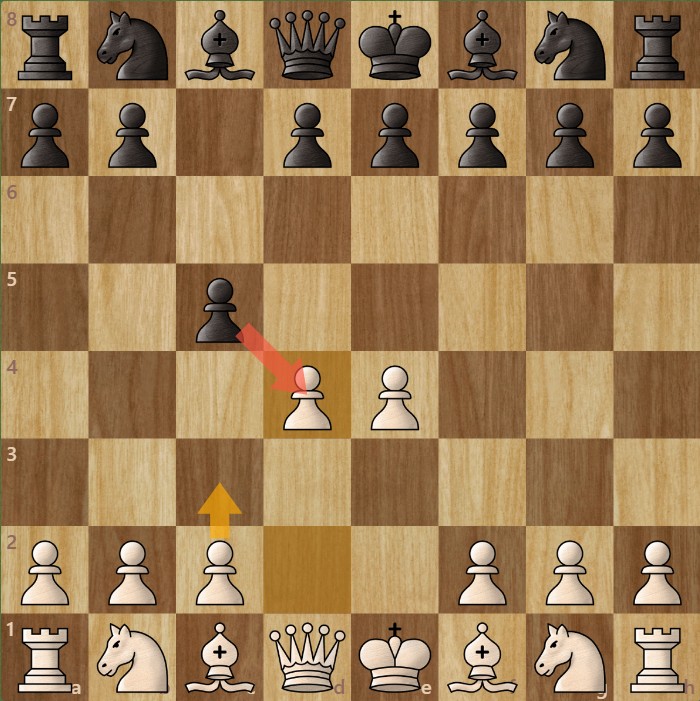
The key idea behind the Smith-Morra Gambit is to give up a pawn in exchange for a galloping head start in development and dangerous open c- and d-files to breathe fire down. The setup that follows works against almost anything Black plays: White’s bishop on c4, knights on c3 and f3, queen on e2, and rooks on d1 and c1.

The Centurion Series Luxury Chess Pieces - 4.0" King

Premium Chess Box - Golden Heart

The Large Ultimate Chess Bag
While this setup may be simple to achieve, it's very difficult to defend against—especially at faster time controls. It also serves as a great teaching tool to help beginners understand the power of rooks dominating open files.
The London System
The London System is often considered the ultimate beginner's opening. Why? It is a reliable setup you can repeat almost no matter what your opponent plays! Whether they reply to 1. d4 with 1...d5, 1...Nf6, or even 1...e6, you can go ahead with your plan. This makes it extremely easy to memorize.
You can play the London System setup in various move orders, but it typically starts with 1. d4 and 2. Bf4. The completed setup features supporting pawns forming an iconic pyramid on e3 and c3.
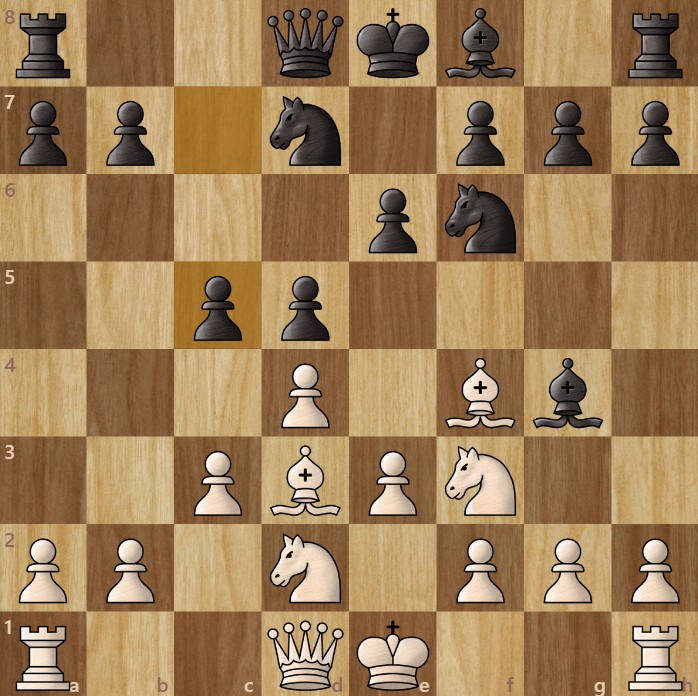
Can you see how solid this setup is for White? It's extremely difficult to break down; the London System has a reputation as one of the most robust openings in chess. While it may offer White fewer attacking chances than some 1. e4 openings, it still has recurring tactical themes you can exploit with practice.
From f3, White’s knight can often hop to the powerful e5 outpost—a perfect staging post for kingside attacks! Also, the bishop on d3 stands ever ready to sacrifice itself on h7—the infamous Greek Gift Sacrifice is a classic tactical trap in beginner chess.
The Blackmar-Diemer Gambit
While 1. d4 openings do have a reputation for being quieter and more patient, the Blackmar-Diemer Gambit breaks the mold. By gambiting the king’s pawn on move two, White sacrifices material in exchange for speedy development and active play.
The Blackmar-Diemer Gambit starts with 1. d4 d5 2. e4.

White's head start in development is the key to the Blackmar-Diemer Gambit. To compensate for the pawn deficit, White must develop quickly and attack! The wonderful thing about the Blackmar-Diemer Gambit for a beginner is that your opponent is very unlikely to know how to play against it, and inaccurate moves are often costly.

The Camaratta Collection - The Botvinnik Flohr Series Chess Pieces - 4.0" King

Leap Digital Classic Chess Clock

US Chess Premium Chess Box
Using an opening explorer, like the one at lichess.org, is a great way to learn how to punish the common errors that opponents are likely to make. Opposite-side castling and pawn storms are recurring middlegame motifs that you can master by choosing this rare yet extremely dangerous opening. Very underrated and highly recommended.
Four of the Best Chess Openings for Beginners for Black
The Scandinavian Defense
Some dismiss it too early, but the true Scandinavian Defense is a strong answer to 1. e4 at the grandmaster level—and it's well-suited for beginners. It all starts with 1. e4 d5.
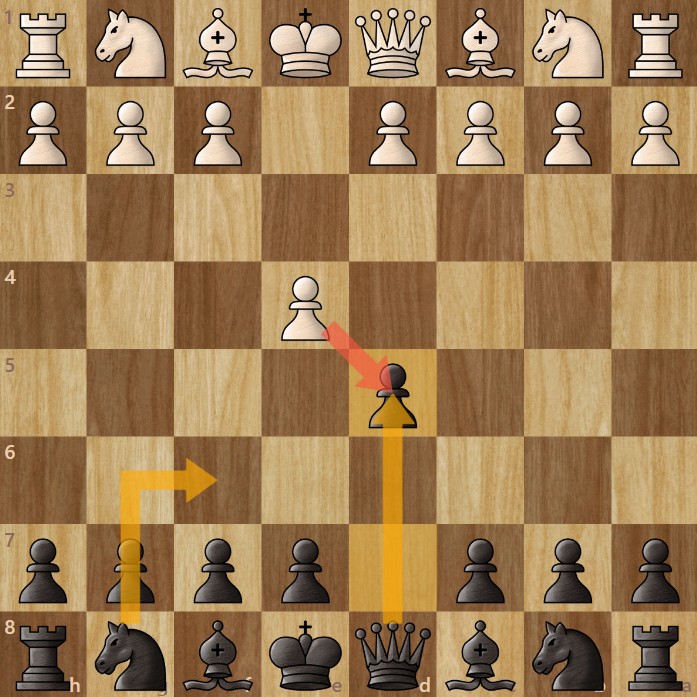
By answering 1. e4 with 1...d5, Black immediately challenges White in a way it can’t ignore. White must decide whether to capture on d5 or push the e-pawn to e5. This assertive start to the game immediately puts the ball in your court. You demand that White plays an opening that you have likely learned better than them.
In the standard Scandinavian Defense main line, Black immediately recaptures the d-pawn with the queen. After White follows with 3. Nc3, the queen moves to a5, where White has little to do. A simple, robust setup follows that’s easy to achieve almost regardless of what White plays.
A very interesting alternative, however, is the Scandinavian Defense Modern Variation. Instead of recapturing with the queen, Black challenges d5 with the kingside knight. Statistically superior at amateur level, the Scandinavian Modern contains easy-to-learn motifs and is one of the best ways for beginners to meet 1. e4.
The Caro-Kann Defense
Robust, dependable, and relatively easy to learn, the Caro-Kann Defense is an ideal choice for players who want to keep things safe and solid with Black against 1. e4. The Caro-Kann starts with the opening moves 1. e4 c6.

The idea of 1...c6 is to prepare for 2...d5. Now, Black has a strong central pawn that asks questions of White’s e4 pawn. In response, White can capture, push, or protect e4. Thus, Black has three main variations to learn: the Exchange Variation, the Advance Variation, and the Classical Variation.
While the Caro-Kann is fundamentally easier to learn than the French Defense or Sicilian Defense, it’s still not an opening that you can learn in 5 minutes. Because it requires studying the three main variations, it's probably better suited to beginners approaching the intermediate level.

The Burnt Dubrovnik Series Chess Pieces - 3.75" King

DGT 2500 Digital Chess Clock

Premium Chess Box - Brazilian Rosewood
Learning the Caro-Kann properly, however, can be gratifying for players who enjoy building an unbreakable defense. It’s often quoted as the defense that 1. e4 players hate facing the most!
The Elephant Gambit
A rare opening with a big personality, the Elephant Gambit is a fun, fascinating choice for beginner chess players who enjoy leading White into unknown, dangerous territory. It starts with the moves: 1. e4 e5 2. Nf3 d5.
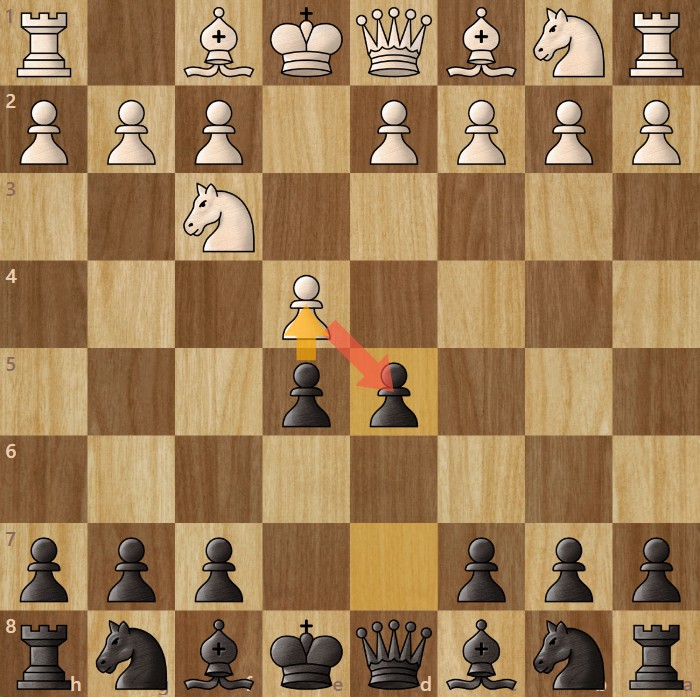
A key idea is that when White captures the d5 pawn, Black can push its e-pawn to attack White’s knight. At beginner level, White’s most popular response, 4. Nd4, is a significant mistake! Black now plays Qxd5, and White’s knight is attacked once again. Black ends up ahead in development, with attacking opportunities across the board.
The Elephant Gambit is especially rewarding for beginners because most opponents have no idea how to respond. With a little study to memorize the tricks, traps, and tactical ideas, you could win many more games by the opening or middlegame.
While grandmasters rarely play it, the Elephant Gambit boasts an impressive track record from beginner to 2000+ rated players. It’s a well-kept secret that works especially well in blitz and bullet games.
The Stonewall Dutch Defense
When facing 1. d4, beginners can struggle to find an effective response. Playing 1...d5 most commonly leads to the Queen’s Gambit or London System—both very difficult openings to play against. An interesting alternative is the Dutch Stonewall Setup, a fortress-like system you can reach regardless of what White plays.

The Broadbent Series Chess Pieces - 3.0" King

The House of Staunton *NEW* Fitted Coffer Chess Box - Red Burl

DOWNLOAD - Chess King Learn Beginners 6 - Forever Pack All Platforms
The defining characteristic of the Dutch Stonewall setup is pawns placed on light squares: f5, e6, d5, and c6. Meanwhile, Black develops the kingside knight to f6, the dark-squared bishop to d6, and castles short.

Game plans from here include creating a knight outpost on e4 and lifting your king’s rook via f6 to attack White’s kingside. The Stonewall Dutch is compelling because it is simultaneously solid while preserving aggressive attacking opportunities.
Intriguingly, the Stonewall Dutch is a system that you can play with both the black and white pieces! With the white pieces, you simply create a mirror image with pawns on dark squares instead of light. Most of the themes and game plans remain the same.
Best Chess Openings for Beginners: Key Takeaways
Let's return full circle to our opening premise. Can you see how the openings chosen exemplify the three tenets of the best chess openings for beginners?
- Easy to remember. Attacking openings with forcing lines and 'opening systems' that can be played against almost anything are memorized easily, allowing beginners to spend their chess training time on more important parts of the game.
- Simple to understand. Openings that feature classical opening principles like controlling the center and rapid development help beginners not only memorize but to grasp cornerstones of opening theory.
- Fun to play. Openings with surprise attacks, tactical traps, and fluid middlegame plans are great fun for beginners to learn and play. Not only that, they're often highly successful, too!
