
Master The Scotch Game
If I had to choose one chess opening for beginners, I might choose the Scotch Game. This confrontational opening not only embodies many classic opening principles, but also tends toward exciting tactics and strong middlegame plans that are fun and easy to understand.
But that isn’t to say the Scotch Game isn’t ideal for advanced chess players as well. Several lines boast some of the highest win rates of any opening on online platforms like lichess.org, and it has remained a strong offbeat choice among grandmasters for decades, too!
In this guide, you’ll learn the best way to play the main line, as well as some of the deadly gambits that lurk inside this ancient opening.

The Scotch Game: A Romantic Favorite
First recorded in 1750 by the early chess theorist Ercole del Rio, the Scotch Game (aka Scotch Opening) was a popular ancient chess opening that has recently seen a revival at the highest level. It begins with the moves 1. e4 e5 2. Nf3 Nc6 3. d4, inviting an early central pawn exchange.
In the 1800s, the Scotch Game and the many gambits that it can lead to perfectly suited the exciting, tactical chess of the Romantic era. Among 19th-century chess legends such as Howard Staunton, Paul Morphy, Adolf Anderssen, and Wilhelm Steinitz, the Scotch Game was one of the most popular openings of the time.

By the late 1890s, however, the Scotch Game was falling out of favor. The second official world champion Emanuel Lasker concluded that the Scotch releases early pawn tension too soon and that a well-prepared opponent can gain equality too easily.
The Kasparov Revival
For nearly a hundred years, the Scotch Opening appeared to be banished from elite chess. Then, in 1990, Garry Kasparov stunned the chess world by playing it against Anatoly Karpov in their last-ever world championship duel. Famed for his meticulous preparation, Kasparov and his team of grandmasters and early chess computers discovered new lines in the Scotch Game that promised White an advantage.

The Guardian Series Chess Pieces - 3.75" King

Premium Chess Box - Mahogany

Chronos GX Clock Carrying Bag
Since the Kasparov Scotch revival, other grandmasters such as Vladimir Kramnik, Levon Aronian, Hikaru Nakamura, and Magnus Carlsen have also proven the Scotch Game to be a worthy weapon in any e4 opening repertoire.
Regardless of its popularity among grandmasters, the Scotch Game has always remained an astute choice at beginner and club-level chess—especially for those who enjoy sharp tactical play. Indeed, statistics from lichess.org show that the Scotch scores better than the Italian Game or the Ruy Lopez at club level. In this guide, you’ll learn why.
The Many Ways to Play the Scotch Game
The Scotch Game begins with the moves 1. e4 e5 2. Nf3 Nc6 3. d4. Now, Black will almost always (and quite rightly) capture: 3...exd4. How you continue on move 3 depends on your style of play.
The Scotch Game Main Line: 3. Nxd4
In the Scotch Game main line, you immediately recoup the pawn (3. Nxd4), leaving you with a central knight.
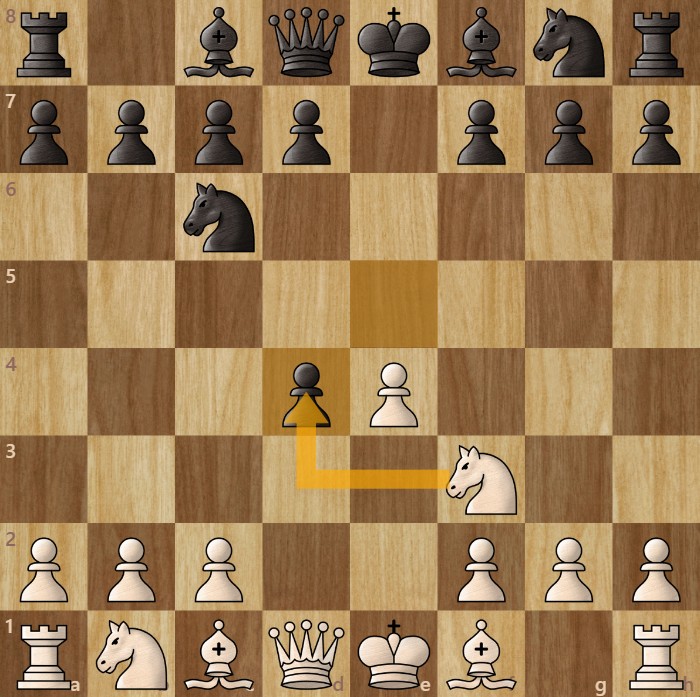
The wonderful thing about the main line in amateur chess is that many opponents have no idea how to meet it! The most common response is the dubious 3...Nxd4.
3...Nxd4
3...Nxd4 is a weak move for Black because after your queen recaptures, you’re in strong stead. A centralized queen in the opening may appear to break a foundational opening principle, yet here is an exception.
Black simply has no good way to kick the queen, so she can sit pretty in the center, controlling vast portions of the board. Furthermore, Black ends up in a cramped position—its chances of controlling the center severely stifled.
From here, your game plan is very simple. Since you have far more space than Black, you can mobilize your pieces more fluidly into an attack. At times like these, it’s a great moment to castle on the opposite side and storm the enemy camp with your pawns.
As this is a theme that we’ll see in other variations, too, we'll take a closer look at the Scotch pawn storm in a moment.
3...Bc5
Black’s second-favorite way to meet the main line at the amateur level is 3...Bc5. Here, the board may look slightly different, but your plan will remain largely the same: castle on the opposite side and pawn storm Black’s king.
Start by kicking Black’s bishop: 4. Nb3 Bb6. Now, prepare for long castling with Qe2, Nc3, and Be3.

The Sovereign Series Chess Pieces - 4.0" King

Premium Chess Box - Brazilian Rosewood

The House of Staunton PROFESSIONAL Tournament Bag
3...Nf6
3...Nf6 is seen less often among amateur chess players, yet it’s by far the most popular among grandmasters. The main line known as the Mieses Variation line (1. e4 e5 2. Nf3 Nc6 3. d4 exd4 4. Nxd4 Nf6 5. Nxc6 bxc6 6. e5 Qe7 7. Qe2 Nd5 8. c4) leads to a plethora of continuations and therefore isn’t particularly suitable for beginners.
Instead, you can often switch into the pawn storm middlegame plan that we’ve been discussing by swapping off knights and playing an early 6. Qe2. Getting your queen on the e-file is clever because it discourages Black from challenging the center with ...d5. It also enables long castling in the coming moves.
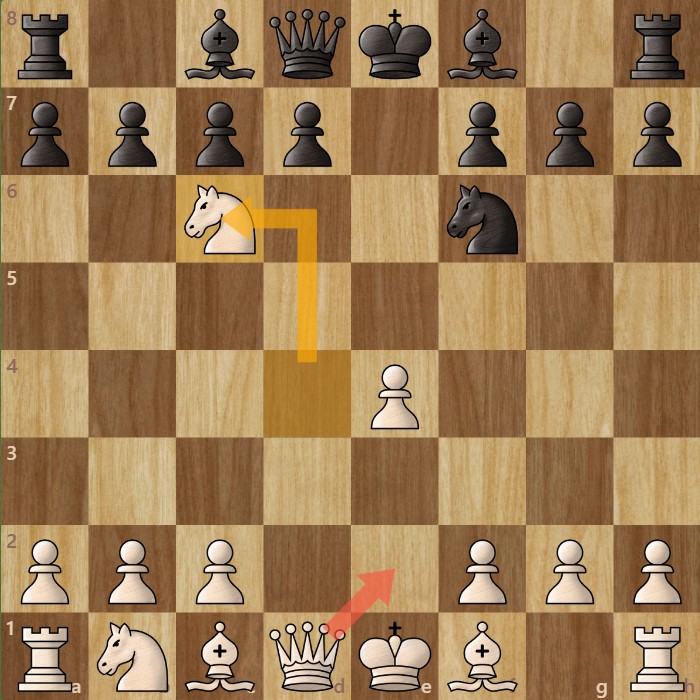
While Qe2 does block in your light-squared bishop, remember that it will be released once you begin your pawn march on the kingside. If Black gives you the opportunity, try to also fianchetto your dark-squared bishop to guard against rook attacks on the b-file.
Launch the Pawn Storm!
The joy of the Scotch Game is that so many variations lead into the same key game plan: long castling and a pawn storm on Black’s kingside. Start with f3 to prepare for g4 and h4, then march your pawns to crack open Black’s defenses. You may also wish to block or trade off Black’s dark-squared bishops to prevent them from controlling the useful g1 square.
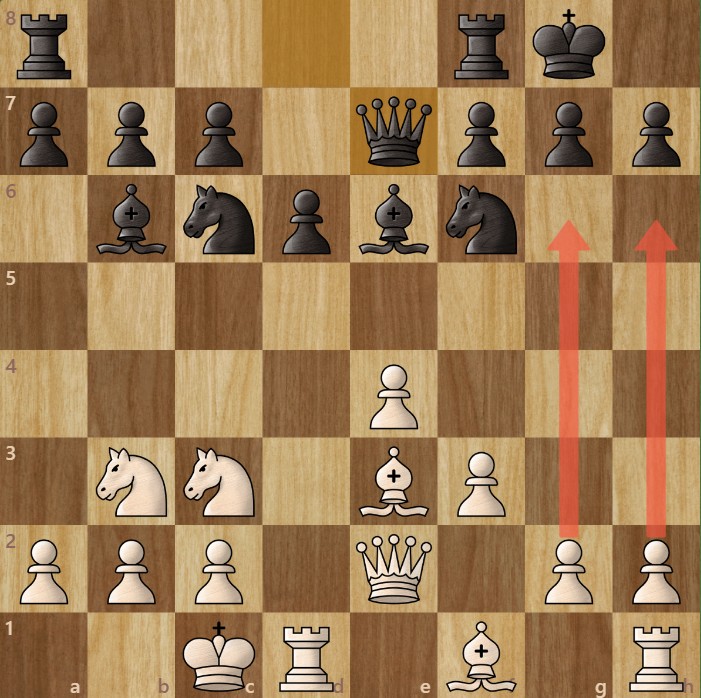
Once the fortress has been broken, mobilize your heavy pieces to attack the king on open files. Because of White's space advantage, you should be able to attack faster than Black if they try the same strategy on the other side of the board!
The Scotch Gambit: 4. Bc4
The Scotch Gambit is an especially aggressive way to play the Scotch Game. Instead of capturing back on d4, White aims for rapid piece development with 3. Bc4. Now, Black must decide if and how to preserve the pawn.

The Burnt Dubrovnik Series Chess Pieces - 3.75" King

DGT 2500 Digital Chess Clock
Premium Chess Box - Brazilian Rosewood
4...Bc5 and the Haxo Gambit
Black’s favorite way to defend its pawn advantage is 3...Bc5. Now, we’re about to see just how dangerous the Scotch Gambit is! Continue with 4. c3. This sideline, known as the ‘Haxo Gambit,' is notorious for ensnaring unwitting players with a cunning trap.
If your opponent captures on c3, spring your trap with 5. Bxf7. Can you see White's idea?
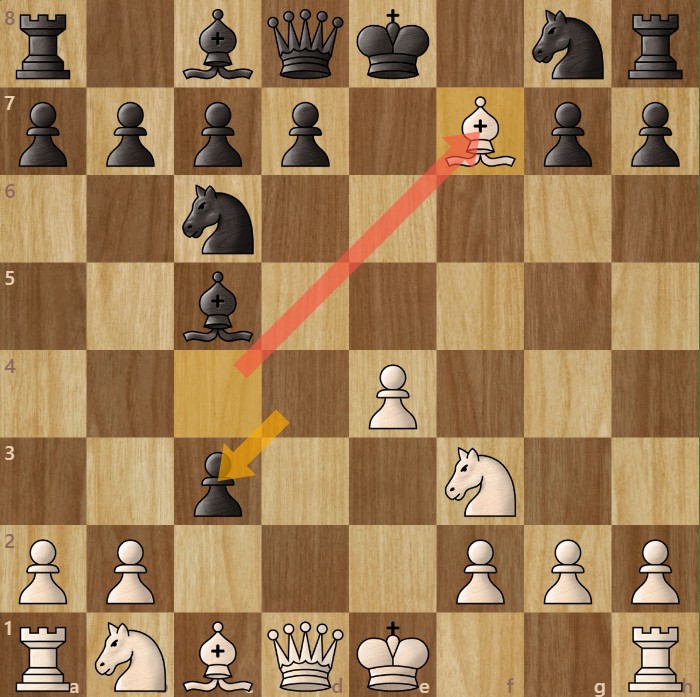
Answer: 5...Kxf7 Qd5+ double attacks Black’s bishop and costs Black castling rights. Black is left a pawn down, shaken, and in a difficult position to defend adequately.
4...Bb4 – Double Gambit!
If Black responds with 3...Bb4 instead, you can reply with the same move:4. c3. Now, they will almost always capture (4...dxc3). Instead of recapturing, however, you can slide into a double gambit. By simply castling, you invite Black to capture again on b2. Recapture with your bishop (5. O-O cxb2 6. Bxb2)
Now, you might be two pawns down, but just look at the tactical opportunities on the table! Both of your bishops are pointing ominously toward Black’s kingside, with the g7 pawn hanging. It’s surprisingly difficult for Black to defend this position properly.
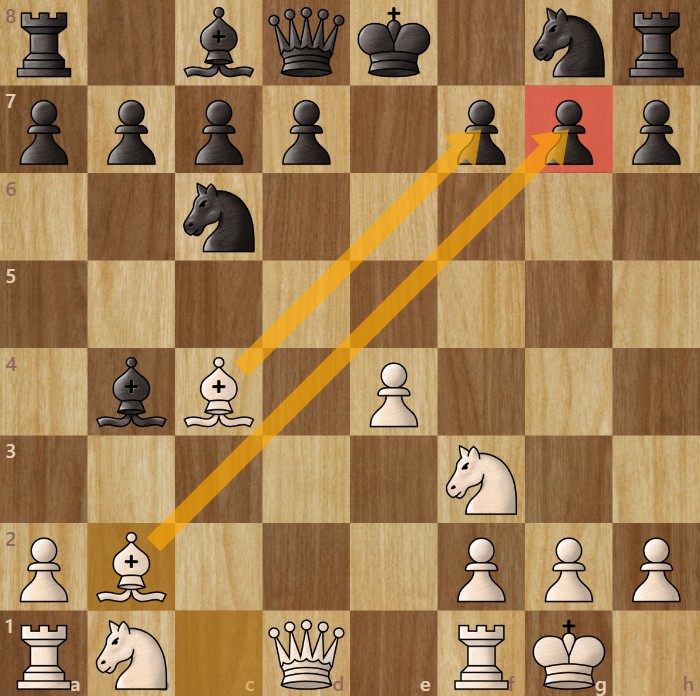
Most opponents will attempt to defend g7 with 6...Nf6. Continue with e5 to kick the knight.
From here, there are too many more traps to name. If you paste this line into the Lichess.org opening explorer, you’re sure to have some fun discovering them! (1. e4 e5 2. Nf3 Nc6 3. d4 exd4 4. Bc4 Bb4+ 5. c3 dxc3 6. O-O cxb2 7. Bxb2).

The Modern Series Chess Pieces - 3.75" King

DGT Pegasus Chess Board (e-Board) - Wireless Bluetooth with USB Charger

Bobby Fischer Teaches Chess
4...Nf6
4...Nf6, attacking your e4 pawn, is Black’s other favorite way to counter the Scotch Gambit. You can ignore the threat and either launch a Fried Liver-style attack with 4. Ng5 or, more sensibly, castle kingside.
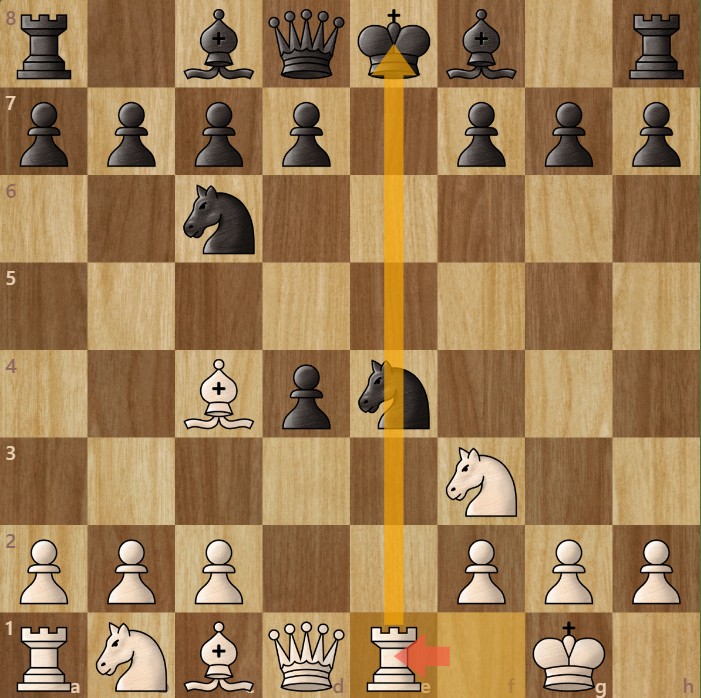
Black might try to save the knight with 5...d5, but then you’ve always got this extremely tricky line to ruffle Black’s feathers: 1. e4 e5 2. Nf3 Nc6 3. d4 exd4 4. Bc4 Nf6 5. O-O Nxe4 6. Re1 d5 7. Bxd5 Qxd5 8. Nc3
Other Lines in the Scotch Gambit
BULLETS
- In response to the far-too-passive 4...h6, castle kingside to get your rook into the game. There are so many traps now at your disposal—this is one of the trickiest lines in the Scotch Game! For example 1. e4 e5 2. Nf3 Nc6 3. d4 exd4 4. Bc4 h6 5. O-O Be7 6. c3 dxc3 7. Qd5 means forced mate in two moves!
- With 4...d6, Black has only further hampered their own development. Continue by capturing in the center (5. Nxd4). This will likely lead to lines that you’re familiar with by now!
The Goring Gambit: 4. c3
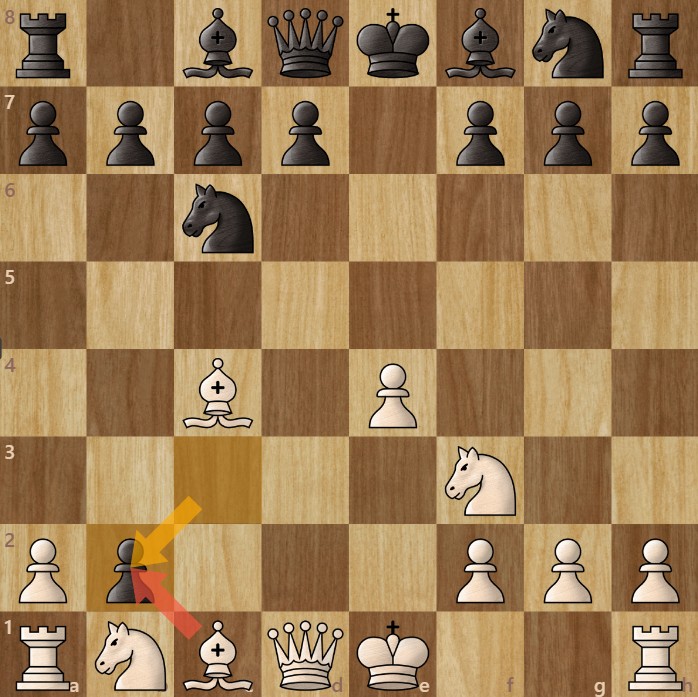
In the Goring Gambit, White allows Black to immediately seal its pawn advantage with 3. c3. As if that wasn’t enough, White can decide to gambit its b-pawn, too, by playing the Double Goring Gambit! (1. e4 e5 2. Nf3 Nc6 3. d4 exd4 4. c3 dxc3 5. Bc4 cxb2 6. Bxb2). While this does leave White two pawns down, it also gains a massive lead in development and unleashes that deadly bishop pair pointing menacingly at Black's kingside.
Similar to the Double Danish Gambit, this is one of the most daring, dangerous, and highest-scoring openings in amateur chess. The lichess.org database reveals that the Double Goring Gambit scores White a staggering 60% win rate across all levels and time controls.
...And What If Black Doesn’t Capture (3...Nxd4) in the Scotch Game?
In 75% of games, Black will capture your pawn on d4 (3... Nxd4). There simply aren’t any other strong replies, yet it’s worth knowing how to respond to the rest:
- 3...d6 is weak since 4. dxe5 will clear the d-file for an unfavorable queen swap.
- 3…Nf6, aiming to capture your e4 pawn, is dangerous for Black. For example, the most common continuation: 1. e4 e5 2. Nf3 Nc6 3. d4 Nf6 4. dxe5 Nxe4 5. Bc4 Bc5 6. Qd5 is a triple attack on Black’s bishop, knight, and checkmate on f7!
- 3...Nxd4, the Lolli Variation is considered playable, but like so many variations in the Scotch Game, it’s precarious for players who don’t know it thoroughly. In reply, capture on e5 rather than d4. This can lead to some stunning traps like this one: 1. e4 e5 2. Nf3 Nc6 3. d4 Nxd4 4. Nxe5 Bc5 5. Nxf7 Kxf7 6. Qh5+

The Collector Series Luxury Chess Pieces - 4.0" King

The Camaratta Signature Master Chess Table

LIMITED EDITION - DGT 3000 Digital Chess Clock
Conclusion
The Scotch Game is a strong opening at any level and is especially fearsome for beginners and club-level players. The mainline is well-suited to steadier players who wish to turn a positional advantage into a straightforward, efficient middlegame plan.
For more adventurous players, the Scotch Gambit and the Goring Gambit are deadly weapons that often succeed in delivering devastating tactical blows in the game’s opening stages.
Since many opponents have surprisingly little know-how on facing the Scotch, it’s an opening that often proves more effective than more popular king pawn openings like the Italian Game or Ruy Lopez.