
How To Reach A 2000 Chess Rating
So, you want to reach a 2000 chess rating? This is a difficult goal, but with enough hard work and persistence, it should be within reach for most serious chess players.
Unlike trying to become a grandmaster (which, realistically, is extremely unlikely if you begin pursuing it later in life), a 2000 chess rating is eminently possible if you follow the right study program. It’s ambitious, yet achievable!
In this article, you will learn:
- How strong a 2000 chess rating really is.
- What sort of training should you undertake in pursuit of this goal?
- Our recommended resources to improve each facet of your game.
How Strong Is A 2000 Chess Rating?
A 2000 chess rating is a high level of chess. Anyone who reaches this milestone can justifiably call themselves an advanced chess player.
Here are some characteristics of 2000-rated chess players:
- They have a specialized opening repertoire and have memorized considerable theory.
- They can calculate complex tactics and can spot simple tactics almost instantly.
- They very seldom make unprovoked blunders.
- They understand high-level chess strategy concepts.
- They have undertaken serious work on the endgame.
But what does a 2000 chess rating actually mean? Rating players can be confusing because different organizations use their own chess rating systems. Here are the main ones:
- FIDE rating (from the International Chess Federation).
- National rating (e.g., US Chess Federation).
- Online rating (from websites such as chess.com and lichess).
Of these, the FIDE rating is the most difficult, whereas online ratings are more generous. For example, a player rated 2000 online may be rated only 1700 when judged by the FIDE Elo system.

The Camaratta Collection - The Botvinnik Flohr Series Chess Pieces - 4.0" King

Leap Digital Classic Chess Clock

US Chess Premium Chess Box
To make things even more complex, each organization offers different ratings across different time controls. Some players with strong powers of tactical intuition might be able to get to 2000 under a fast time control, such as blitz chess, but will struggle to replicate the feat under slower time controls, which require strategic depth and highly accurate calculation.
With all that said, let’s assume that you want to reach a 2000 USCF chess rating under the classical time control (or the equivalent in your country, if you live outside the US).
- A 2000 rating ranks the holder inside the top 5% of USCF tournament chess players.
- A 2000 rating also officially earns the “expert” designation at USCF tournaments.
How challenging this goal will be for you depends greatly on your starting point.
- If you are currently a beginner, reaching 2000 will take many years of dedicated effort.
- However, if you are already a strong intermediate player (say, 1700-1800), it may be possible to reach 2000 within 12 months with the right training program and the discipline to stick to it.
Now, let’s take a look at what the key pillars of your training program should be in order to reach the 2000 chess rating.
#1: Opening Study
A 2000-rated chess player needs to go beyond the opening fundamentals. Simply following the rules of thumb taught to beginners, such as “develop your pieces” and “do not move the same piece twice in the opening,” will no longer be enough to get good middlegame positions at the 2000 level. Your opponents will have memorized their opening theory, and so must you.
Therefore, to reach a 2000 chess rating, you need to:
- Find an opening repertoire that matches your strengths as a chess player.
- Commit to memory the most important lines of the repertoire you select.
Different openings lead to different types of middlegames. This means that your choice of opening repertoire ought to be different if you thrive in sharp, tactical dogfights than if you are better in slow, strategic middlegames.
An excellent all-round guide to opening play is Practical Chess Openings. It covers every chess opening in a single volume, allowing you to experiment with different systems before deciding on the opening repertoire you want to concentrate on.
One final piece of advice when it comes to the opening: if you want to reach 2000, it’s time to abandon trappy openings such as the Stafford Gambit. While these may work at lower rating levels, your opponents at the 2000 level will know the refutations to openings like these.
#2: Tactics Training
As the popular tactics training book The Woodpecker Method noted, a very high percentage of decisive chess games at the 2000 rating level are won or lost through tactics.
The statistics quoted in the book indicate:
- 1800 - 2000 elo: 72% of games decided by tactics.
- 2000 - 2200 elo: 63% of games decided by tactics.
The implication is clear: if you improve your tactics, you will improve your chess.
Greater tactical acumen results in:
- Spotting more opportunities to win material or checkmate through a tactical sequence.
- Offering fewer such opportunities to your opponents (i.e., blundering less).
The key with tactics training is to make it a regular part of your routine. Doing 30 minutes every day is much better than cramming a long, multi-hour session once per week.

The *NEW* Austrian Coffeehouse Series Chess Pieces - 4.0" King

DGT 3000 Digital Chess Clock

The Camaratta Signature Championship Chess Table - Dark Brown
Also, make sure to complete tactical exercises at an appropriate level for you. If they are too easy, you are wasting your time. If they are too difficult, you risk getting frustrated. GM Jacob Aagard suggests you should aim to get around 70% of the tactical exercises correct to maximize the benefit you gain from your tactics training sessions.
The tactics book you select depends on your current level, but if you are already closing in on the 2000 chess rating, then Improve Your Chess Tactics will be a great option. It contains 700 practical lessons and exercises - more than enough to keep even the most dedicated tactics student busy for quite some time!
#3: Chess Strategy
As Bobby Fischer once said, “Tactics flow from a superior position.” 2000-rated opponents rarely offer tactical opportunities unless they are first outplayed via positional chess. To make the tactics appear in your games, you need to become adept at chess strategy.
Chess strategy is all about what to do when there are no forcing sequences available. In such situations, you must come up with a plan while also keeping an eye on your opponent’s plans.
Here are a few of the concepts you must master to compete at the 2000 rating level:
- How to improve your pieces and worsen enemy pieces.
- Identifying which trades are good and bad for you.
- Creating pawn weaknesses in the enemy camp and targeting them.
- Opening or closing lines in different areas of the board.
- Which pawn breaks to aim for.
There are many excellent chess strategy books. However, Aron Nimzowitsch’s My System stands out as a classic chess strategy guide. This book is also eminently readable, being responsible for some of the best-known chess aphorisms of all time.
#4: Play Against Stronger Opponents
The best way to improve at chess is to play serious games under classical time controls against strong opponents. By subjecting yourself to stiff competition, you are forced to raise your level to match theirs.
Whenever you sign up to a chess tournament, try to play in the highest section you can. While you may have to endure some pain in the form of losses in the short term, it will do wonders for your chess in the long term.

The Burnt Dubrovnik Series Chess Pieces - 3.75" King

DGT 2500 Digital Chess Clock

Premium Chess Box - Brazilian Rosewood
As José Raúl Capablanca put it: “You may learn much more from a game you lose than from a game you win. You will have to lose hundreds of games before becoming a good player.”
Just as important is to review your games after you finish playing them. Every chess game you play contains lessons - but you will only unearth these lessons if you take the time to conduct a thorough review! You can do this post-game with your opponent, with the help of a chess coach, or with the assistance of a computer engine.
Related: Improve Your Chess Analysis And Your Game.
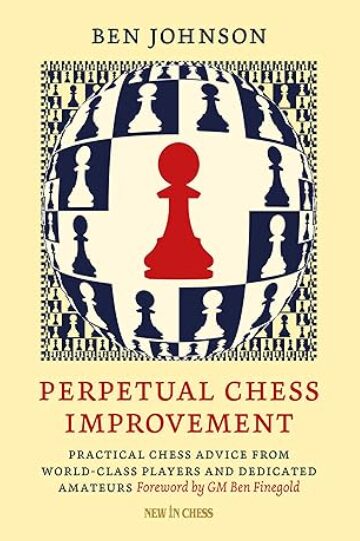
Ben Johnson’s book Perpetual Chess Improvement contains a great deal of practical advice about how to get the most out of your games and your post-game analysis.
#5: Endgame Technique
One of the main differences between beginner / intermediate chess players is endgame proficiency.
Lower-rated players do not get much experience in the endgame, since most of their games are decided before an endgame is reached. However, as you rise through the ranks, more and more of your games will be decided in this phase of the game - making it more and more important to take it seriously.

The W.T. Pinney Series Chess Pieces - The Camaratta Collection - 4.75" King

Tap N Set Pro Digital Chess Clock - with DOUBLE DISPLAYS

Signature Fitted Coffer Chess Box - Walnut Burl
A 2000-rated chess player should have a solid grounding in theoretical endgames such as:
- Philidor position.
- Lucena position.
- Triangulation.
- Distant opposition.
- How to defend in worse positions (such as king and knight vs. king and rook).
Related: Chess Endgames: 10 Must-Know Patterns.
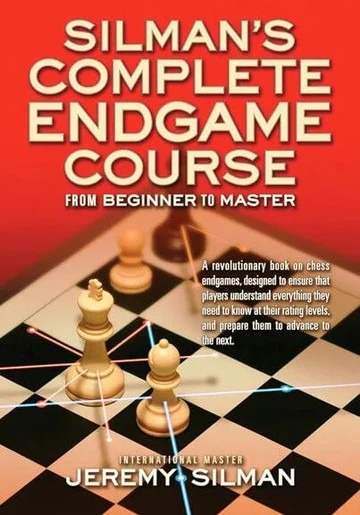
Silman’s Complete Endgame Course can be the perfect companion on your journey to a 2000 chess rating. The book is structured to introduce the must-know endgames gradually. You won’t be presented with the knight and bishop checkmate until you “need” to know it!
Final Thoughts
Reaching a 2000 chess rating will not be easy - but then again, the fact that it is such a challenge is what makes achieving that magical 2000 milestone so special to begin with!
Along the way, you will be sure to face many setbacks and moments of frustration. Higher-rated players will defeat you. It’s part and parcel of the road to 2000. Do not lose heart. Remind yourself that every loss is a lesson that builds your player strength.
Good luck!