
Master Positional Chess
When you start out in chess, it’s all about familiarizing yourself with the basics: the value of the different pieces, simple checkmate patterns, and trying not to blunder. That is enough to win against fellow beginners. Positional chess is not needed at this stage.
However, as you advance in the game and start encountering tougher opposition, it becomes necessary to learn about positional chess. This is necessary to outplay stronger opponents - the type who do not make unprovoked mistakes.
But what is positional chess? And how can you improve this aspect of the game?
In this article, you will learn:
- What positional chess is.
- Some of the most important elements of positional chess.
- How can you take your understanding of positional chess to the next level?
What Is Positional Chess?
The best way to understand positional chess is by contrasting it with tactical chess.
- Tactical chess is all about short-term combinations that lead directly to clearly defined advantages. Most commonly, winning material or checkmating the enemy king. Tactical chess is purely about calculating the forcing sequence to its conclusion.
- Positional chess is longer term in nature. It is most important in positions where there are no tactical shots. Positional chess strategy is all about making moves that make your own position easier to play and your opponent’s position more difficult to play.
Related: What Is The Difference Between Chess Strategy And Tactics.
A strong chess player needs to be adept at both tactical chess and positional chess. The 11th World Chess Champion, Bobby Fischer (winner of the 1972 World Chess Championship), once said, “Tactics flow from a superior position”.
What this means is: for tactics to appear, it is usually necessary to outplay your opponent positionally first.
Positional Chess In Action
We now provide eight vital positional chess elements that all strong chess players need to know. These are the factors within a position beyond the material count.
- Beginners' understanding of chess is often confined to which player is ahead in material.
- More advanced players also consider positional chess factors, such as those listed below. They may even be prepared to sacrifice material in order to gain these positional advantages.
Study them and look for opportunities to apply them in your own games.
#1 Center And Space
Extra space generally makes positions easier to play. When you enjoy a space advantage, your pieces have more options and maneuverability.
Take a look at the position below and ask yourself - who has more space?

White has a major space advantage. The broad phalanx of White pawns in the center gives White’s pieces plenty of room to move.
Meanwhile, Black’s position is cramped and restricted. It is difficult for Black’s pieces to find useful squares to move to.
One useful tip is that trades generally favor the side with less space. When pieces are traded from the board, the space disadvantage tends to become less salient. With fewer pieces remaining, they are less likely to get in each other’s way.
#2 Development
One of the first lessons taught to beginners is: “Do not move the same piece twice in the opening”. The idea behind this is to get the pieces off their starting squares and into the action.
Like all chess maxims, there are always exceptions. Still, it remains good advice. Even master-level players find it uncomfortable to play if they are behind in development.
The position below shows White with a clear development advantage.
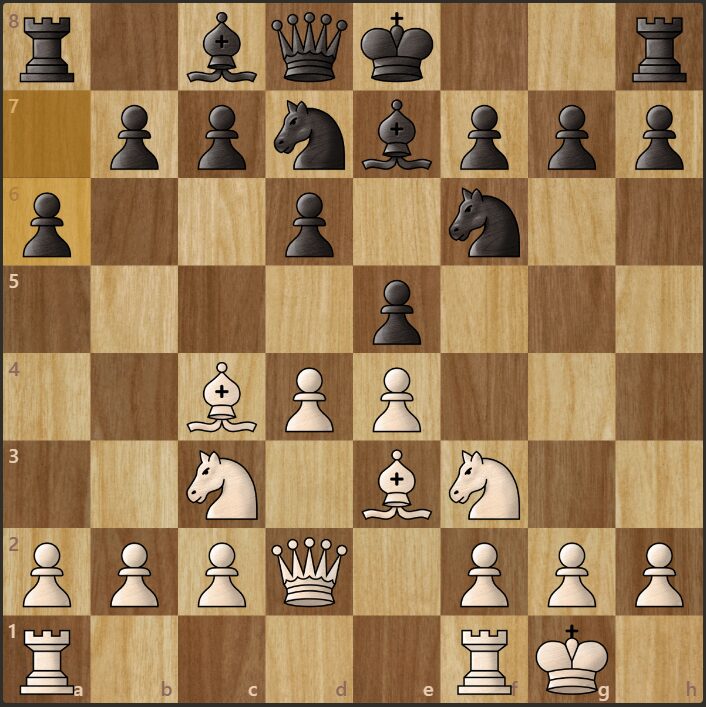
All of White’s pieces are playing. The White king has castled to safety, and the White rooks are connected. Meanwhile, it seems as though Black has wasted a great deal of time with slow pawn moves.
Thanks to White’s superior development, a tactic is already possible: 1. Bxf7+! because after 1. …Kxf7, White has the follow-up 2. Ng5+! Once the Black king moves, the knight can hop into the heart of Black’s position via 3. Ne6, creating an immediate attack on the Black queen as well as the capture 4. Nxc7 once the queen moves.
This sequence is possible because Black is so far behind in development.
#3 Outposts
Because pawns cannot move backwards, one must be especially careful about advancing them. Pawn advances can leave behind squares which are ripe for enemy pieces to occupy.
Notice how, in the below position, Black used this positional chess concept to play …Nd3!
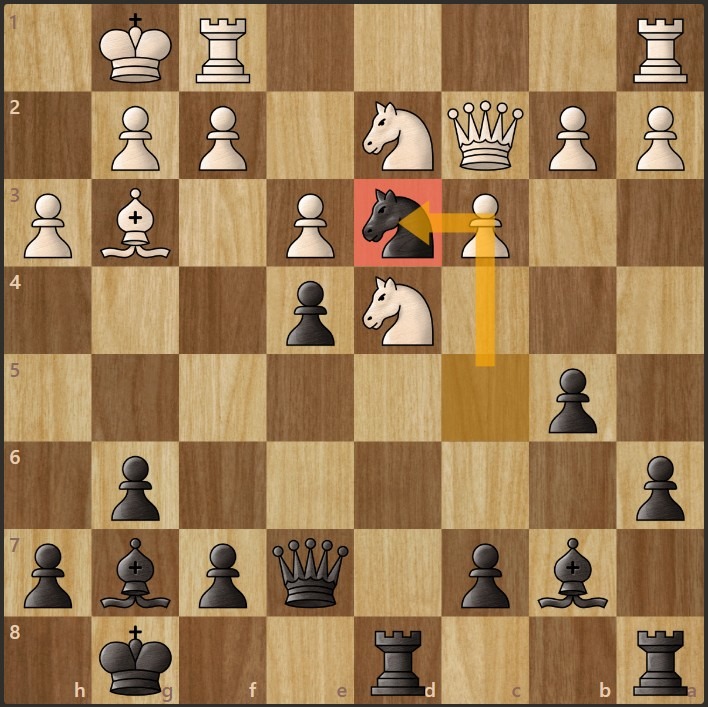
The Black knight is excellent on this square. Furthermore, it cannot be removed from d3 by a White pawn since both pawns on adjacent files have already advanced to the third rank.
Meanwhile, White’s own strong knight on d4 can easily be pushed away by Black playing …c5.
Learn to identify where such outposts are within the enemy camp and try to maneuver your pieces into those squares.
#4 Weak Pawns
There are many types of chess pawn structures. A healthy pawn structure sees pawns mutually defend one another - a so-called pawn chain.
If this is not achieved, pawns can become weak. Some pawn weaknesses include:
- Isolated pawns.
- Doubled pawns.
- Backward pawns.
Recognizing these pawn weaknesses and knowing how to target them are hallmarks of a strong chess player.
In the game Bogoljubov vs. Capablanca 1924, it was Capablanca with the Black pieces who saw the weak White pawn on c3 and arranged his forces to target it.

Importantly, with the move 21. …Nd6, Capablanca prevented his opponent from advancing his weak pawn. Preventing the c4 pawn break enabled Capablanca to keep the pressure up.
White’s pieces were forced to go passive, defending the pawn. Capablanca went on to win the pawn and, eventually, the game.
#5 Open Files and Semi-Open Files
Open files are those that have no pawns on them. The lack of pawns makes open files ideal avenues for rooks and queens to move along.
A related concept is the semi-open file - where one side has traded off their pawn, but the other still has a pawn on that file. That remaining pawn may become a target.
Positional chess strategy suggests the following approach:
- Try to dominate the open files.
- Try to place pressure against enemy pawns on semi-open files.
The minority attack is one way to target pawns using semi-open files. We can see this in action in Van den Berg vs. Kramer, 1950. White played 17. bxc6 and after Black recaptured via 17. …bxc6, White followed up with 18. Ne5, targeting the weak Black c-pawn.
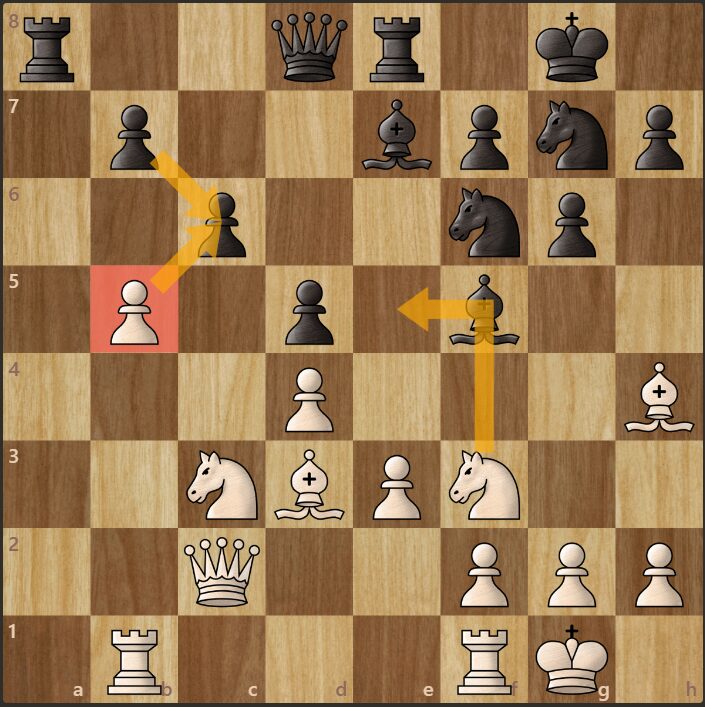
Notice how, after the trades on c6, the Black c-pawn is also on a semi-open file. This makes it a natural target for White to attack. The White queen is already well-positioned to target this pawn, and White can also play Rc1 to add even more pressure along the c-file.
#6 The 7th and 8th Ranks
If White can successfully occupy the 7th or 8th rank with a piece, it often results in the position becoming very unpleasant for Black. (The same is true, in reverse, if Black is able to get a piece to the 1st or 2nd rank).
Once again, it will be the 3rd World Chess Champion, José Raúl Capablanca, to be our teacher for this positional chess concept. In the game Capablanca vs. Vidmar, 1922, the legendary Cuban played 14. Qc7, infiltrating on the 7th rank.
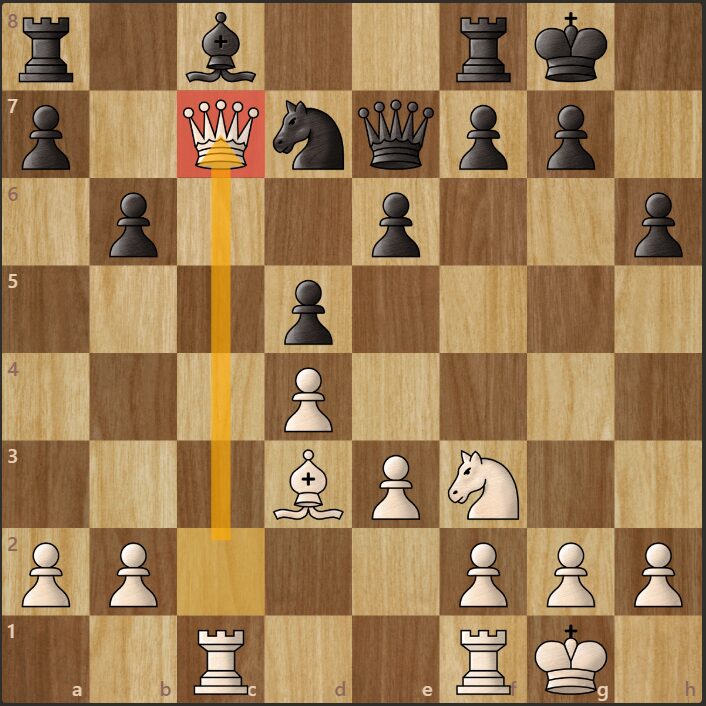
This move paralyzed Black’s development.
- Black’s knight cannot move because it is pinned in front of the Black queen.
- Black’s bishop also cannot develop from c8 because it has no square it can move to without being captured.
Vidmar tried to escape from the bind but was unable to. He was soon down a piece, and Capablanca went on to win the game - thanks largely to his understanding of positional chess.
Related: Learn from Capablanca’s classic instructional text Chess Fundamentals.
#7 The Art Of Exchanging Pieces
Beginners are taught the “point value of pieces”.
- Pawns are worth 1 point.
- Knights and bishops are worth 3 points.
- Rooks are worth 5 points.
- The queen is worth 9 points.
While this simple scale is useful to gain an initial understanding of the game, stronger players learn when to break these rules. For example, there are times when a knight can be worth more than a rook (prompting the exchange sacrifice).
Knowing which pieces to trade and which to avoid trading is a key part of positional chess mastery.
The following position is instructive. White is on the attack, but how to continue? The right idea is 1. Bxe7, removing the Black knight, which was playing a key defensive role.
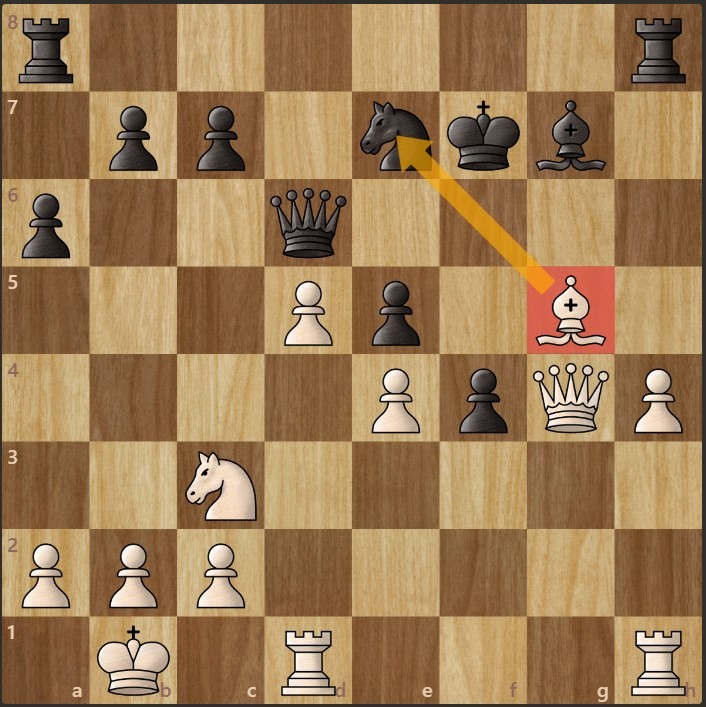
By taking this knight off the board, the f5 and g6 squares suddenly become potential avenues for White to prosecute the assault on the Black king.
After 1. …Qxe7, White may also give consideration to the pawn sacrifice 2. d6, followed by 3. Nd5, taking advantage of the square vacated by the pawn. However, none of this is possible without first recognising that the Black knight is a key defender that needs to be removed.
#8 Transition To Endgame
Even in the midst of an attack, one should always ask whether reaching the endgame offers better winning chances.
Alekhine vs. Glig 1926, which appears in Art of Attack in Chess, is a fine example. White’s king looks exposed, and many players with the Black pieces would be tempted to continue going for a mating attack.
However, Glig played 30. …Qh6!, offering the queen trade because of the fact that it removed all danger to his own king.
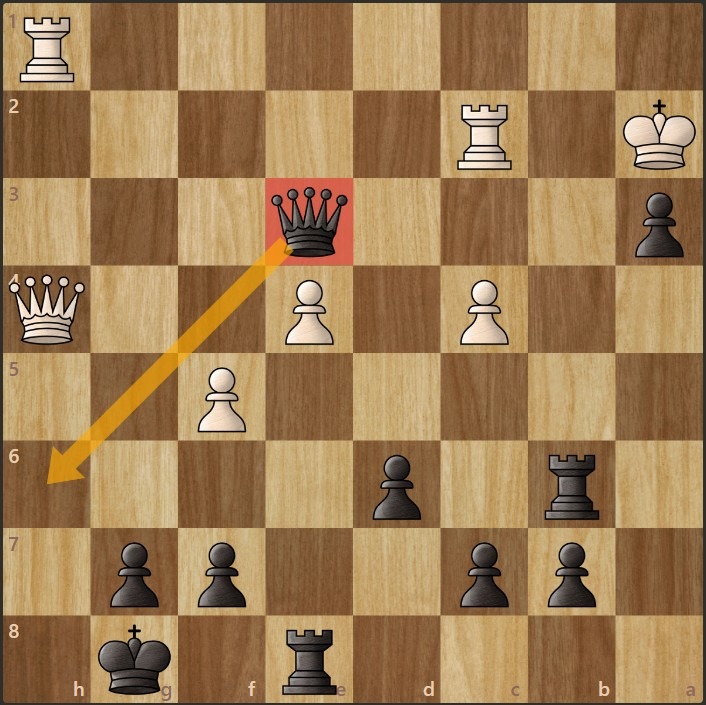
With the queens traded, Glig was able to slowly win in the endgame with his extra pawns. In so doing, he secured a famous victory against his more highly renowned opponent.
How To Improve At Positional Chess
Now that you have a solid grounding in the key elements of chess strategy, here are our top tips to take your understanding of positional chess even further.
Play Positional Chess Openings
The more practice you get with positional chess, the better you will become at it. It will therefore be helpful to play more games where you can slowly outplay your opponents. Your opening repertoire determines the sorts of middlegames you tend to get most often.
If improving at positional chess is your focus, then avoid playing gambits and openings where the play quickly becomes sharp and tactical. Instead, favor strategic chess openings such as the Nimzo-Indian Defense with Black and the Queen’s Gambit with White. Openings such as these also have the advantage of requiring less opening memorization.
Read Positional Chess Books
There is a lot more to learn about positional chess than we could fit into this article. Studying positional chess books allows you to explore the subject in far greater depth.
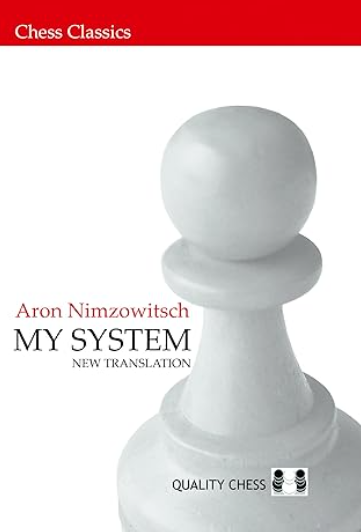
One of the best positional chess books for intermediate/advanced chess players is My System by Aron Nimzowitsch. This classic text covers all of the elements listed in this article and many more. By reading it, you will gain a thorough education in every aspect of positional chess.
Study Games From Positional Chess Masters
Great positional chess masters of the past include Wilhelm Steinitz, Tigran Petrosian, and Anatoly Karpov. Today, Magnus Carlsen is preeminent among modern chess grandmasters for his understanding of chess strategy. Reading through Magnus Carlsen - 60 Memorable Games, a game collection compiled by Andrew Soltis, is an excellent way to learn how Carlsen approaches the game and how you can build his way of thinking into your own play.
Frequently Asked Questions
Positional chess (also known as chess strategy) is the aspect of the game to do with improving the position gradually. For example, seizing control of important squares, getting pieces to better positions, and preventing the opponent from being able to carry out their plans.
Tactical chess is about short-term forcing sequences that lead to concrete outcomes such as checkmate or winning material. Positional chess is about longer-term considerations where the effect is not so clear, but which leads to making the position easier to play (or the opponent’s position more difficult to play).
Wilhelm Steinitz was one of the greatest positional chess players in history. Steinitz’s reign as the first World Chess Champion in the late 19th century was highly influential, leading to the widespread adoption of positional chess among elite masters. For this reason, Steinitz is often named as the “father of modern chess”.