
Stun Black With The Reti Opening
If it's never occurred to you to start a chess game with 1. Nf3, the Reti Opening (1. Nf3 d5 2. c4) might change your mind. By avoiding the burden of building a center, White opts instead to disrupt Black’s development from afar. A high-scorer among club level players, the Reti is still wielded by today's grandmasters, too.
Best of all, few amateur opponents know how to answer the Reti. By playing this offbeat chess opening, you’ll be immediately taking them off their home turf onto a playing field that’s riddled with tricks and traps!
In this guide, you’ll learn how to beat Black’s four most common responses — including venomous traps against all of them.

Introducing the Reti Opening
The Reti Opening was invented by one of the best chess players of the early 1900s, Richard Reti. As one of the founders of the hypermodern school of chess, Reti became renowned for his landmark contributions to chess theory and modern chess strategy.
In 1924, Reti made waves by using his signature 'Reti Opening' to defeat reigning World Chess Champion José Raúl Capablanca—the first competitive game Capablanca had lost in eight years!
Although some define the Reti Opening as an ‘opening system’ rather than a specific sequence of moves, it typically begins with 1. Nf3 d5 2. c4. By encouraging Black to play 1...d5 before undermining it with 2. c4, White creates an unusual challenge that many amateur chess players are utterly unfamiliar with.
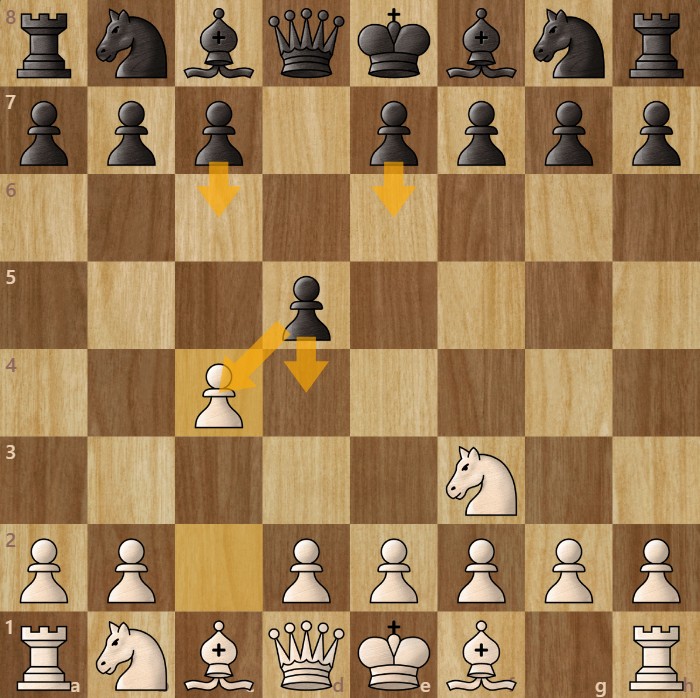
While there are many conceivable replies to the Reti, there are four main options. Since two of these are very similar in theory, we’ll treat them as one variation. Let’s find out how to beat them all!

The Fischer Spassky Series Chess Pieces - 6.0" King

DOWNLOAD - CHESSBASE '26 - Premium Package

The Millennium King Competition Chess Computer
All Four Variations of the Reti Opening
Option 1: Black Captures on c4 (Reti Accepted)
In amateur chess, Black’s most common response to the Reti Opening is to capture your c4 pawn. It’s not considered the best line for Black, however, and some continuations quickly become very sharp and dangerous!
In reply to 2...dxc4, you continue with 3. e3, attacking Black’s wayward pawn with your light-squared bishop. According to the lichess.org public database, White already scores a massive 58% win rate among amateur players with these simple moves! In reply, Black will usually either play 3...Nf6 or 3...b5.
3...Nf6
After 3...Nf6, you simply go ahead and capture on c4 (4. Bxc4) and just look at the board. You’re equal in material, ahead in development, and your bishop and knight are well situated to attack f7 should the opportunity arise.
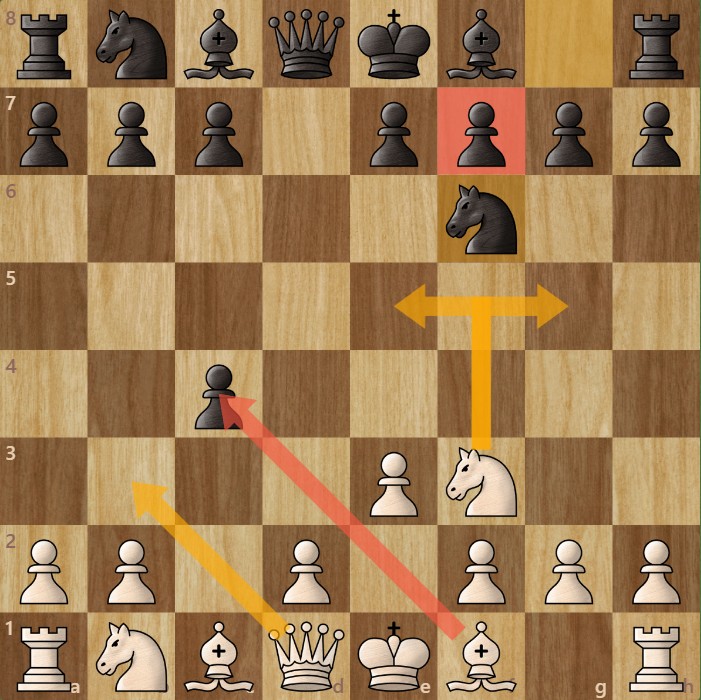
Even if your opponent plays solidly, your superior development should see you enjoying an advantage in the middlegame. Many times, however, you’ll have a chance to attack f7, occasionally with dire consequences!
Reti Trap #1: Oh No, My Queen!
A spectacular entry into the f7 attack is when your opponent replies with 4...Bg4, attempting to pin your knight to your queen. Ignoring the threat, you calmly hop the knight to e5. Why? You're threatening checkmate the next move!

Even if your opponent spots the danger and defends: 5. Ne5 Be6, you can capture the bishop and make a mess of your opponent’s pawn structure and development. Keep attacking with your queen, and you might still win the game swiftly!
3...b5
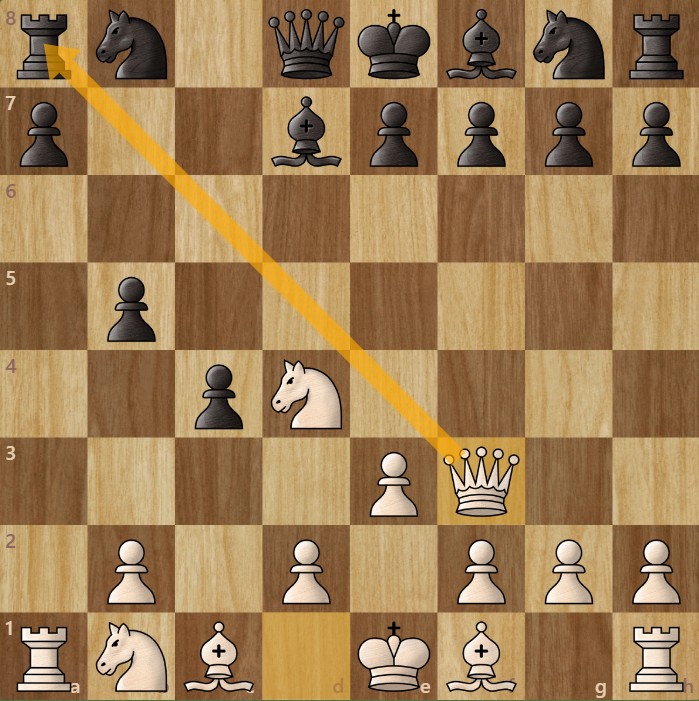
If your opponent replies with 3...b5, they immediately put their rook at risk of being trapped—typically from Qf3. Be patient with this idea, however, and begin with attacking their pawn chain with 4. a4. If they try to back it up with 4...c6, continue to attack it with 5. axb5. With a little perseverance, you should succeed at eroding their feeble queenside pawns.

The Library Imperial Collector Series Luxury Chess Pieces - 3.0" King

Luxe Premium Chess Box - Amboyna Burl

The House of Staunton DELUXE Tournament Bag
Reti Trap #2: Win a Rook!
At any moment, you should be ready to launch that attack to trap the rook: Nd4 or Ne5 followed by Qf3. These two moves make it difficult, if not impossible, for Black to defend both their pawn chain and impending attack on their rook. Oftentimes, they’ll miss the attack on their rook altogether!
Option 2: Black Pushes the Pawn (Advance Variation)
In around 20% of amateur games, Black will push its queen pawn forward to d4 - the Advance Variation. You reply with 3. e3, challenging the pawn once again. Now, Black has several options:
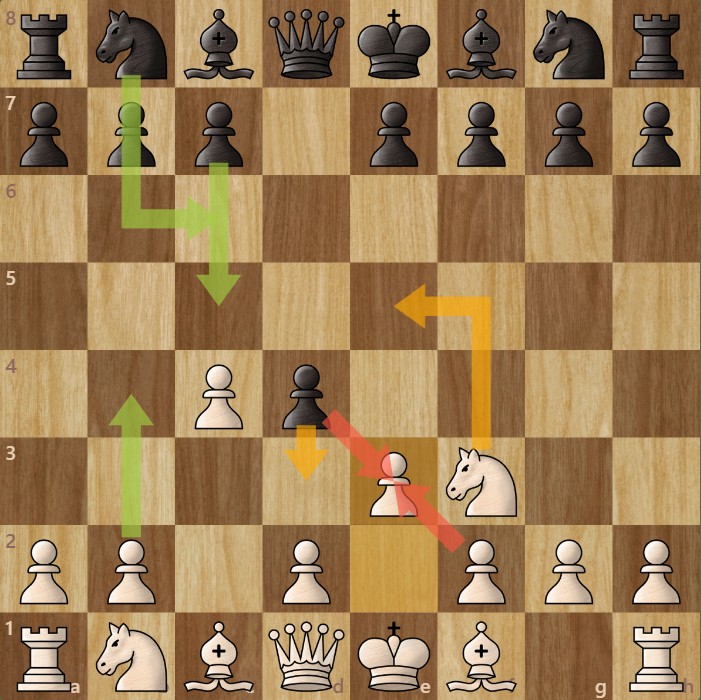
- If Black captures, you capture back with your f-pawn, and you’re in great shape.
- If Black pushes the pawn to d3, you hop your knight to e5 to attack it. From here, look out for daring attacks on f7 to follow!
- If Black protects the pawn with 3...Nc6, you continue with 4. b4, threatening to kick it on the next move.
- If Black protects the pawn with 3...c5, you deflect the defender, again with 4. b4, known as the Reversed Blumenfeld Defense. Since this is Black’s favorite move, we’ll look at this one more closely.
3...c5 4. b4—The Reversed Blumenfeld Defense
Against 3...c5, your strongest move is 4. b4. Known as the Reversed Blumenfeld Defense, you attack Black’s defending pawn to renew the pressure on d4. Now Black’s best moves are either to capture on e3 (4...dxe3) or the clever positional move 4...Nf6. From here, natural development moves will serve you well.
At the amateur level, however, Black usually chooses something far more precarious: 4...b6.
Reti Trap #3: Win a Queen in 12 Moves
The lovely thing about this variation is that most amateur opponents simply don’t know it and continue with the very doubtful 4...b6. While this does extend Black’s pawn chain, it also makes its queen’s rook very vulnerable to attack—not unlike Trap #2, which we just discussed.

The *NEW* Austrian Coffeehouse Series Chess Pieces - 4.0" King

Premium Chess Box - Golden Heart

The Large Ultimate Chess Bag
Continue with 5. Ne5, clearing the way for your queen to trap Black’s rook on the next move (6. Qf3). If your opponent spots the danger (6...Bb7), you switch tack with 6. Qa4+. This leads to a trap that statistics show most opponents fall for: 1. Nf3 d5 2. c4 d4 3. e3 c5 4. b4 b6 5. Ne5 Bb7 6. Qa4+ Nd7 7. bxc5 bxc5 8. exd4 cxd4 9. c5 Qc7. What happens next?

Answer: After 10. Nxd7 Qxd7, 11. Bb5 pins Black’s queen to the king, and it’s game over!
Options 3 and 4: Black Plays 2...e6 or 2...c6
If your opponent wishes to land themselves in more familiar territory, they may opt to play 2...e6 or 2...c6, which transposes to variations of the English Opening. Also, if you reply with 3. d4, you’ll have effectively transposed to the Queen’s Gambit Declined or the Slav Defense, respectively.
A statistically more successful reply to either of these defenses, however, is 3. b3, preparing to fianchetto the dark-squared bishop on the beautifully long open diagonal. Because it's difficult for Black to stand in the way of this long-range weapon, this bishop frequently becomes instrumental in attacking the center or kingside later down the line.
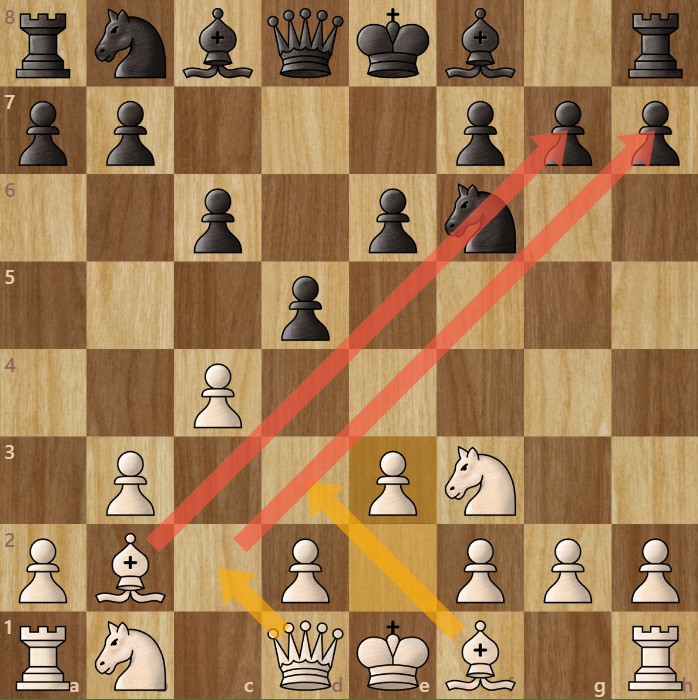
To ramp up your long-range attack, placing your queen on c2 and light-squared bishop on d3 aiming at h7, oftens proves deadly. Since Black’s key defender of that square—the f6 knight—is attacked by your dark-squared bishop, you can often plot a mating attack that your opponent never sees coming!
Top tip! Remember that fianchettoed bishops are even more effective in blitz and bullet chess! These long-range weapons are often missed at faster time controls.
Reti Trap #4: The Fishing Pole Trap
The so-called Fishing Pole Trap is seen in many openings, and it’s extremely effective in the 2...e6 and 2...c6 lines of the Reti. Here, White has followed the plans that we’ve discussed, placing a bishop on b2 and a queen on c2, aiming ominously toward Black’s kingside.
White has continued the attack with 7. Ng5, which Black has defended with 7...h6. White sets the fishing pole trap with 8. h4. Now, if Black captures the knight (the bait), White will capture back with the h-pawn and unleash the rook to attack the h-file.

With White’s two bishops, queen, and rook all attacking Black’s kingside, Black will now struggle to defend its fort. If Black declines the bait, your knight remains on the dangerous outpost.

The Camaratta Collection - The Botvinnik Flohr Series Chess Pieces - 4.0" King

Leap Digital Classic Chess Clock

US Chess Premium Chess Box
What is the Best Way to Play the Reti Opening for Black?
Because the Reti Opening is so strong, many chess players naturally ask, ‘What’s the best way to answer it?’ A line that works especially well is the Advance Variation, followed by 3...Nc6. This defends the d4 pawn and invites an exchange of pieces that ends favorably for Black: 1. Nf3 d5 2. c4 d4 3. e3 Nc6 4. exd4 Nxd4 5. Nxd4 Qxd4

When we discussed this variation for White earlier, we recommended pressuring the c6 knight with 4. b4. Few opponents know this line, but if they do, you have an even rarer retort to trip them up! 1. Nf3 d5 2. c4 d4 3. e3 Nc6 4. b4 dxe3 5. fxe3 e5 6. b5 Nb4 7. Nxe5 Qh4+ 8. g3 Qe4 9. Nf3 Nc2+ wins a rook against even high-level opponents!
Reti Opening: A Brief Recap
The Reti contains many variations, yet if you forget the exact moves, just follow these broad principles:
- Against 2...dxc4 or 2...d4, play 3. e3. Attack Black's pawn chain if they attempt one, and remember to look for chances to trap your opponent’s rook!
- Against 2...e6 or 2...c6, fianchetto your dark-squared bishop, place your queen on c2, and take any chances to pounce on Black’s kingside.
Conclusion
The Reti Opening is a solid yet tricky chess opening that deserves to be played far more often by intermediate and advanced chess players.
While the high number of variations makes it less suitable for beginners, the Reti is a strong choice for those looking for a unique, versatile opening that's fascinating to play. Of course, it's also a fantastic way to immediately drag your opponent out of their comfort zone!
The Reti Opening FAQs
Hypermodern chess openings emerged in the early 1920s as a rebellion against classical chess theory. Instead of occupying the center with pawns, the center is controlled indirectly from afar, typically with one or even both bishops fianchettoed. It is often considered a more patient, strategic approach.
Most of the world’s top chess players have played the Reti at some point in their careers. Kasparov and Karpov both used the Reti in World Championship matches, and Magnus Carlsen famously deployed it twice against Viswanathan Anand on his way to becoming the new World Champion in 2013.
If you’re comfortable playing the Sicilian Defense, you can avoid playing the Reti Opening altogether by replying to 1. Nf3 with 1...c5. Since White will usually follow with 2. e4, you’ll find yourself in familiar territory in the Open Sicilian! Another defiant approach is to reply with 1...f5, which transposes into the Dutch Defense.