
The 10 Best Chess Starting Moves for Black
As we continue our exploration of the best chess starting moves, let’s take a look at the best first move for Black. Since White begins 88 percent of amateur games with either 1. e4 or 1. d4, we’ll focus on the best replies to the King’s Pawn and Queen’s Pawn Openings.
Black has 18 possible ways to respond to either 1. e4 or 1. d4, each leading to a completely different game. Which one is the best for your level and playing style? In this guide, we’ll unearth some fascinating statistics and pro tips to provide key insights!

Notes on Data Sourcing
All statistics cited below are based on the Lichess.org public database. ‘Amateur games’ refers to online chess matches across all time controls and rating ranges from 400 to 2200 Elo. ‘Master games’ refers to games played by National Masters, International Masters, and Grandmasters since the year 2000.
Black’s Best Starting Move vs. the King’s Pawn Opening
Against the King’s Pawn Opening, Black has many strong moves to choose from, each reflecting a different style of play. Here is a table of statistics from over four billion 1. e4 amateur games played on lichess.org:
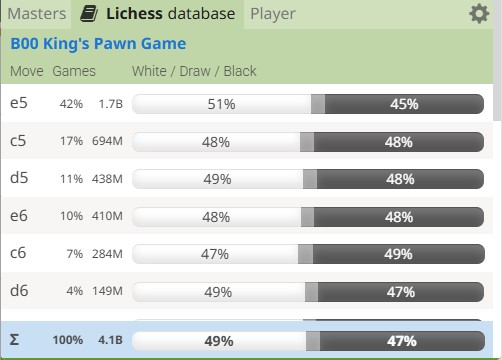
The table shows that, overall, Black wins 47% of games, loses 49%, and draws 4%. Interestingly, the table also reveals that by far Black’s most popular reply, 1...e5, scores worse than any other common response!

The Burnt Dubrovnik Series Chess Pieces - 3.75" King

The Millennium King Competition Chess Computer

Premium Chess Box - Macassar Ebony
The next most popular moves, the Sicilian Defense (1...c5), the Scandinavian Defense (1...d5), and the French Defense (1...e6), all score roughly equally to White. Curiously, the rarely played Caro-Kann Defense (1...c6) has the highest win rate of any opening and is the only starting move where Black's win rate exceeds White's.
Let’s take a closer look at each reply to 1. e4, one by one.
The Symmetrical King’s Pawn Opening (1. e4 e5)
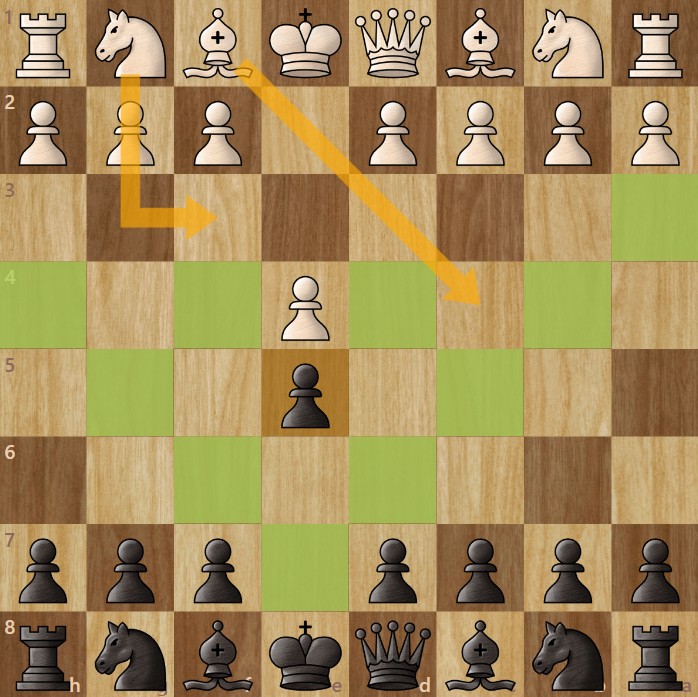
The Symmetrical King’s Pawn Opening (1. e4 e5), also known as the ‘Open Game,’ is Black’s most common response to 1. e4 at the amateur level. It’s played in 41% of amateur chess games and 25% of master games.
Strengths
- Controls key central squares: d4 and f4. Prevents White from advancing its e-pawn any further.
- Opens up the light-squared bishop for development.
Weaknesses
- Gives White the initiative to play their favorite chess opening.
- Can lead to a vast number of continuations—impossible to learn them all!
- Scores surprisingly poorly at the amateur level.
Common Continuations
- The Symmetrical King’s Pawn Opening can give rise to a vast array of continuations, including the King’s Gambit, Petrov’s Defense, the Ruy Lopez, the Italian Game, and the Scotch Game.
- Top Tip! In amateur chess, defiant gambits such as the Stafford Gambit and Rousseau Gambit score extremely well for Black.
The Sicilian Defense (1. e4 c5)
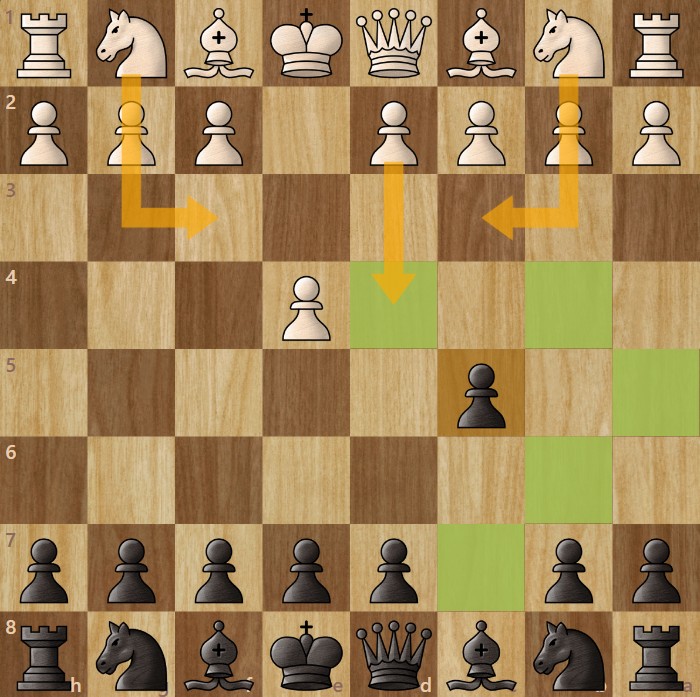
The Sicilian Defense (1. e4 c5) is Black’s second most common response to 1. e4 at the amateur level and the most popular response at the master level. It’s played in 17% of amateur games and 46% of master chess matches.
Strengths
- Controls d4, preventing White from establishing the ‘perfect center.’
- Complex, sharp, and tactical. If Black grasps the theory, they can often overpower unprepared opponents.
- Since most games will continue with the Open Sicilian, Black can choose their favorite variation and play on their ‘home turf.’

The Fischer Spassky Series Chess Pieces - 6.0" King

The Superior Grandmaster Chess Set, Box, & Board Combination

The Camaratta Signature Master Chess Table
Weaknesses
- Heavy theory. Often too complex for beginners and intermediate players (although there are easier lines!).
- White can turn the tables with continuations like the Smith-Morra Gambit, Wing Gambit, or Portsmouth Gambit. Black must be well prepared!
Common Continuations
- Open Sicilian variations include the Najdorf Variation, Dragon Variation, and Kan Variation.
- Top Tip! Sicilian variations that include 2...e6 tend to be easier to learn and higher-scoring for intermediate players. Of these, the rarely played Kveinis Variation is one of the most successful.
The Scandinavian Defense (1. e4 d5)
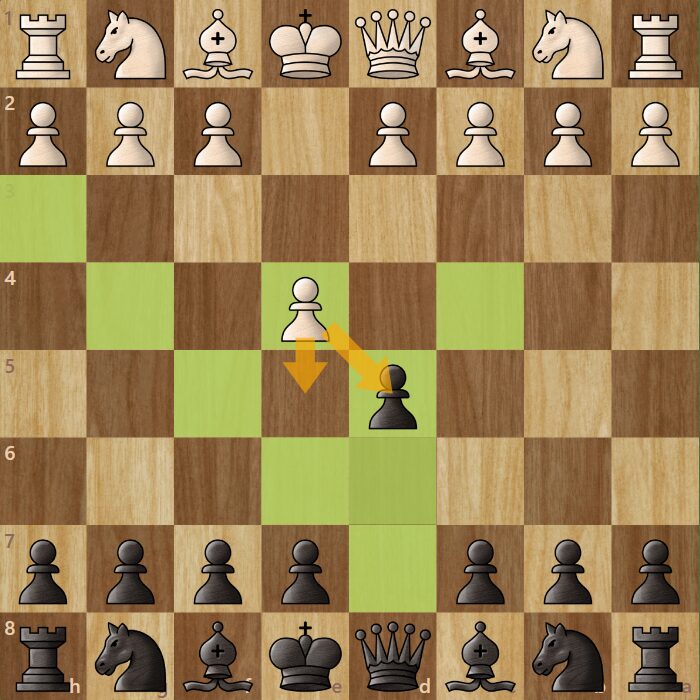
The Scandinavian Defense (1. e4 d5) is Black’s third most popular answer to 1. e4 at the amateur level—seen in 11% of games. It’s only seen in 2% of master games.
Strengths
- Assertive and forcing. An immediate challenge to White’s center.
- Opens up the light-squared diagonal for the queenside bishop.
- Easy to learn. A model opening for beginners.
Weaknesses
- Since White will usually capture the pawn, Black is effectively giving up its d-pawn immediately—an important pawn for central control.
- If Black recaptures with the queen (2...Qxd5), the centralized queen may be subjected to repeated attacks.
Common Continuations
- The Scandinavian Defense Main Line (1. e4 d5 2. exd5 Qxd5 3. Nc3) is by far the most common continuation.
- Top Tip! A statistically superior approach for Black is the Scandinavian Defense Modern Variation (1. e4 d5 2. exd5 Nf6). It’s easy to learn, and few opponents know how to counter it properly.
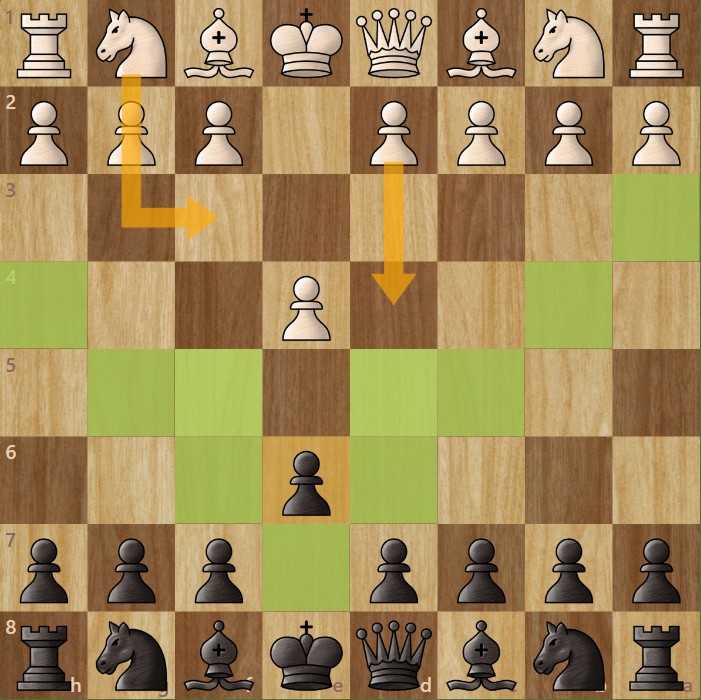
The French Defense (1. e4 e6)
The French Defense (1. e4 e6) is Black’s fourth most common response to 1. e4 at the amateur level—seen in 10% of games. At the master level, it’s seen in 12% of games.
Strengths
- Prepares for 2. d5, making a strong challenge to White’s center.
- Opens up the dark-squared diagonal for the king’s bishop.
- Defensively solid and hard to penetrate.
Weaknesses
- If the pawn remains on e6, it blocks in the light-squared bishop (known as the ‘French bishop’).
- White often succeeds at gaining a space advantage. Black can be left in a cramped position.
- Heavy theory. Black needs to learn the myriad ways that White will answer!
Common Continuations
- The Advance Variation (1. e4 e6 2. d4 d5 3. e5) is the amateur player’s favorite with the White pieces—though it scores poorly. Black can reply with the very strong 3...c5 and 4...Qb6.
- Better for White is the main line (1. e4 e6 2. d4 d5 3. Nc3) or the obscure Steiner Variation (1. e4 e6 2. c4).
The Caro-Kann Defense (1. e4 c6)
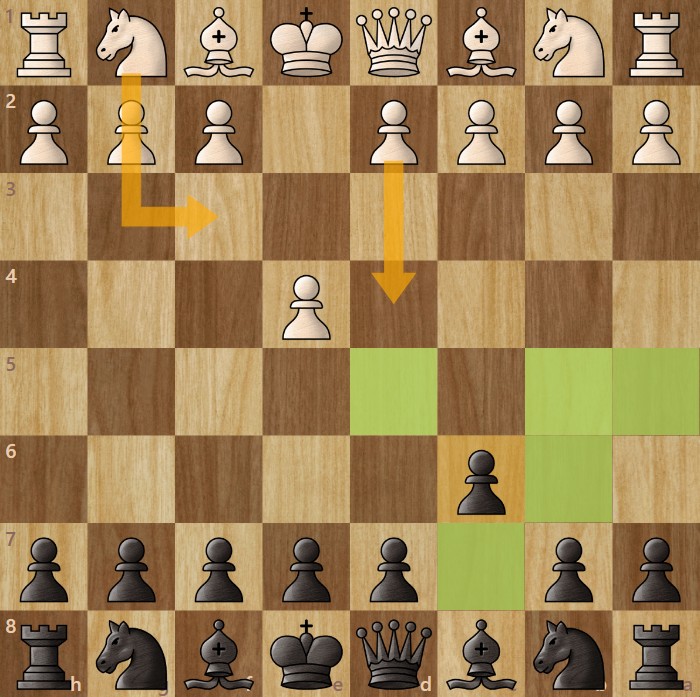
The Caro-Kann Defense (1. e4 c6) is Black’s fourth most common response to 1. e4 at the amateur level—seen in 7% of games. At the master level, it’s seen in 8% of games.
Strengths
- Prepares to support 2. d5 and a strong challenge to White’s e4 pawn.
- Relatively light theory and easy game plans to understand.
- Statistically successful. Black’s highest-scoring answer to 1. e4 at the amateur level!
Weaknesses
- 1…c6 immediately occupies the natural square for Black’s queenside knight.
- White can play tricky lines like the Rasa-studier Gambit to trip Black up.
Common Continuations
- White usually chooses either the Advance Variation (1. e4 c6 2. d4 d5 3. e5) or the Exchange Variation (1. e4 c6 2. d4 d5 3. exd5).
- The other mainstream choice is the Classical Variation (1. e4 c6 2. d4 d5 3. Nc3), which scores better for White.
Black’s Best Starting Move vs. The Queen’s Pawn Opening
Black has just as many choices against 1. d4 as against 1. e4. Here is a table of statistics from 1.7 billion Queen’s Pawn Opening games on lichess.org:
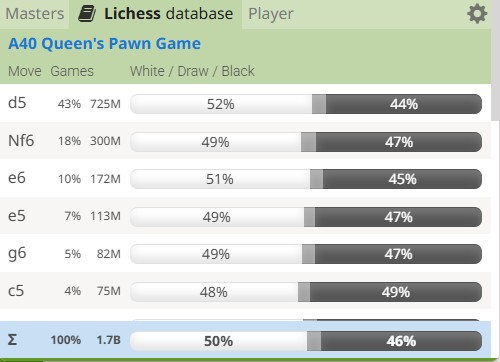
The table shows that against 1. d4, Black wins 46%, loses 50%, and draws 4% of games. Just as we saw against 1. e4, the most common reply is the least successful!
With a 47 percent win rate, the second-most popular response, the Indian Defense (1...Nf6), scores significantly better. Another fascinating revelation is that the Old Benoni Defense (1...c5) is the highest-scoring and the only reply that gives Black a majority of games. Astounding for an opening that is only played in 4% of chess matches!
Let’s take a closer look at five replies to 1. d4 in closer detail.
The Symmetrical Queen’s Pawn Opening (1…d5)
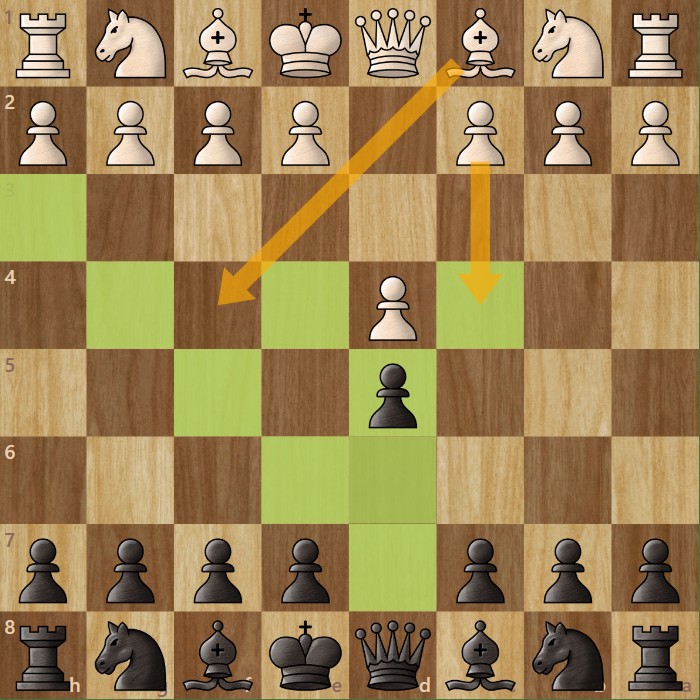
The Symmetrical Queen’s Pawn Opening, also known as the ‘Closed Game,’ is Black’s most popular response to 1. d4 at the amateur level and the second most common at the master level. It’s seen in 43% of amateur chess games and 27% of master games.
Strengths
- Controls e4 and c4. Opens up the light-squared bishop for development.
- Occupies the d5 square, so White cannot push its d-pawn any further.
Weaknesses
- Allows White to play the Queen’s Gambit—one of the most effective openings in chess.
- Often leads to closed, positional games. May seem boring to attacking, tactical players.
- Most continuations score poorly for Black.
Common Continuations
- White will nearly always continue with either the Queen’s Gambit (1. d4 d5 2. c4) or the London System (1. d4 d5 2. Bf4)—two of the most solid chess openings in the book.
- Top Tip! Black’s most successful way to defy the Queen’s Gambit is the Albin Countergambit. It also makes the game much sharper and more exciting than typical Queen’s Gambit lines!
The Indian Defense (1. d4 Nf6)
The Indian Defense or 'Indian Game' (1. d4 Nf6) is Black’s second most common response to 1. d4 at the amateur level and the most common at the master level. It’s seen in 18% of amateur games and 60% of master games.

Strengths
- Immediately controls key squares d5 and e4.
- Patient and flexible. Allows White to build a center before ambushing it later in a ‘hypermodern style.’
Weaknesses
- If White succeeds in defending a strong center, Black will struggle for equality.
- Many lines are complex, requiring a thorough understanding of middlegame chess strategy. This makes the Indian Defense less suitable for beginners.
Common Continuations
- The King’s Indian Defense, Nimzo-Indian Defense, and Grünfeld Defense are all classic continuations.
- Top Tip! The Modern Benoni Defense (1.d4 Nf6 2.c4 c5) and especially the notorious Benko Gambit (1.d4 Nf6 2.c4 c5 3.d5 b5) are highly successful ways for Black to continue.
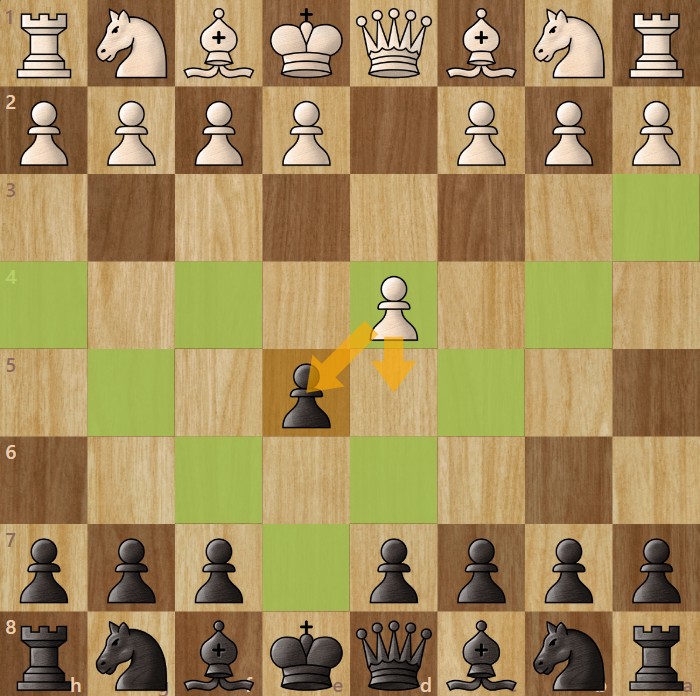
The Englund Gambit (1. d4 e5)
The Englund Gambit (1. d4 e5) is Black’s fourth-most common response to 1. d4 at the amateur level—seen in 7% of games. It’s almost never seen at the master level.
Strengths
- Immediately challenges White’s d4 pawn. Opens up Black’s dark-squared bishop.
- Boasts lots of tricks and traps to ensnare unwitting opponents! Especially effective in blitz and bullet games.
Weaknesses
- Immediately loses a pawn, sometimes without adequate compensation.
- If White knows how to avoid the traps, the Englund Gambit can prove unsound.
Common Continuations
- The Englund Gambit main line is a notorious and highly dubious attempt to ensnare White in one of several traps.
- The lesser-known Hartlaub-Charlick Gambit is also very tricky yet more solid than the Englund main line. Scores brilliantly at faster time controls.
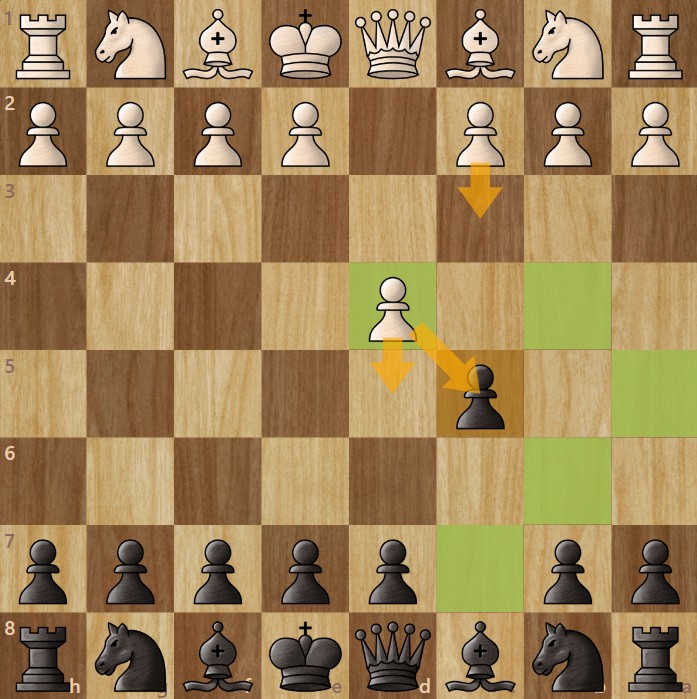
The Old Benoni Defense (1. d4 c5)
The Old Benoni Defense (1. d4 c5) is only seen in 4% of amateur games. Curiously, it’s statistically the most successful counter to 1. d4 of all!
Strengths
- Immediately challenges White’s d4 pawn and opens up a diagonal for the queen to develop.
- Surprise factor! A rare opening with several sharp, tricky lines to trip up unprepared opponents.
- Prevents White from playing the Queen’s Gambit or London System.
Weaknesses
- If White pushes its d-pawn with 2. d5, it can become difficult to remove.
- At higher levels, the Old Benoni may be deemed unsophisticated compared to the more complex ‘Benoni Defense.’
Common Continuations
- Many amateur opponents continue by capturing the pawn (2. dxc5) and throwing away their initiative. Black can continue with 2...e6, leading to tricks and traps!
- 2. d5 is the Old Benoni main line. If 2...Nf6 3. c4 follow, and Black can transition into the deadly Benko Gambit (3...b5).
The Dutch Defense (1. d4 f5)
The Dutch Defense (1.d4 f5) is only seen in 2% of amateur games. It’s rarely seen at the master level, although it has been used by top players like Magnus Carlsen and Hikaru Nakamura in recent years.

Strengths
- Immediately controls e4, preventing White from building the ‘perfect center.’
- Aggressive and unbalanced. Rarely leads to dull, drawish games!
- The ‘Stonewall Dutch’ variation is a simple chess opening system that can be played against most things that White plays. It can even be played with the white pieces!

The Bicentennial Series Luxury Chess Pieces - 3.6" King

The House of Staunton DELUXE Tournament Bag
Weaknesses
- Advancing the f-pawn early on can compromise kingside safety.
- In the Dutch Stonewall continuations, the light-squared bishop can remain very passive.
Common Continuations
- The three main systems that follow are the Stonewall Dutch (simple, attacking), the Classical Dutch (flexible, dynamic), and the Leningrad Dutch (hypermodern, more complex).
-
Top Tip! This is a great opening for beginners to sidestep the complex opening theory of other queen’s pawn openings.
Conclusion: The Best Chess Starting Moves for Black
There is no single ‘best’ reply to either 1. e4 or 1. d4—it all depends on your level, playing style, and the time controls for a particular game.
Statistically, the highest-scoring reply to 1. e4 is the Caro-Kann Defense (1...c6), and the highest-scoring answer to 1. d4 is the Old Benoni Defense (1...c5). The margins are small, however, and the most important thing is the continuation you choose to follow each starting move.
The advice that chess coaches often offer their students is to try several different openings! This way, you’ll find the ones that suit your game best.
Best Chess Starting Moves for Black FAQs
The three best chess starting moves is a subjective question—it depends on the type of game, the level of play, and who you ask! Statistically, aggressive gambits like the Vienna Gambit (1. e4 e5 2. Nc3 Nf6 3. f4) and the Danish Gambit (1. e4 e5 2. d4 exd4 3. c3) are some of the highest-scoring for amateur players.
The best first move in chess for attacking players is probably to move the king’s pawn two squares forward (1. e4). For more cautious players, moving the queen's pawn two squares (1. d4) may be the best choice.
The 20-40-40 rule suggests that improving chess players should spend 20 percent of their study time on chess openings, 40 percent on the middlegame, and 40 percent on the endgame. Some chess coaches, on the other hand, advise students to allocate study time in proportion to where they're losing games.
The 80/20 study rule in chess is based on the Pareto Principle, which suggests that 80% of results come from 20% of our efforts. In chess training, this means prioritizing important skills like middlegame chess strategy, endgame techniques, and tactical recognition, rather than practices that won’t yield such high results, like endless blitz chess matches!