
Outmaneuver White With the Benko Gambit
If you’re feeling bored with bland 1. d4 openings, why not spice things up with the Benko Gambit? By sacrificing a pawn early on, Black launches into a fast-paced, crushing queenside attack that White often struggles to withstand.
Not only is the Benko Gambit a legendary weapon among grandmasters, but it’s also one of the highest-scoring openings for Black at club level, too!
In this instructive guide, we’ll focus on the most aggressive line of the Benko Gambit, proven to work wonders against even the world's chess elite! Let’s get started.

The Benko Gambit: Unrivaled Statistics!
When studying opening statistics, it’s rare to find Black openings that achieve a 50% win rate. Anything above 55% is practically unheard of.
It’s astonishing, then, to discover how the most aggressive line of the Benko Gambit scores Black against White’s most common moves: 1. d4 Nf6 2. c4 c5 3. d5 b5 4. cxb5 a6 5. bxa6 g6 6. Nc3 Bg7 7. e4 O-O 8. Nf3 Qa5
Here are the statistics from lichess.org. Players were rated between 1200 and 2000 at all-time controls.
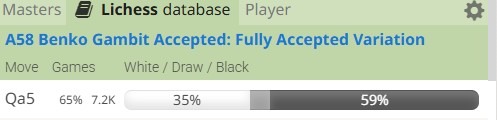
Grandmasters playing with the White pieces typically play exactly the same moves and also score surprisingly poorly against this almighty variation of the Benko! Here are statistics from the matches of titled players against the same line:
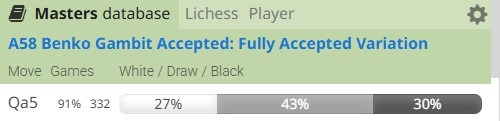
Any chess opening that scores a majority with the black pieces at the FIDE master level has attained the gold standard. Let’s find out how it’s done!
The Benko Gambit Accepted: A Razor-Sharp Variation
The Benko Gambit is a notorious continuation of the Benoni Defense: 1. d4 Nf6 2. c4 c5. White’s standard response to the Benoni is 3. d5, after which Black initiates the Benko Gambit with 3...b5.
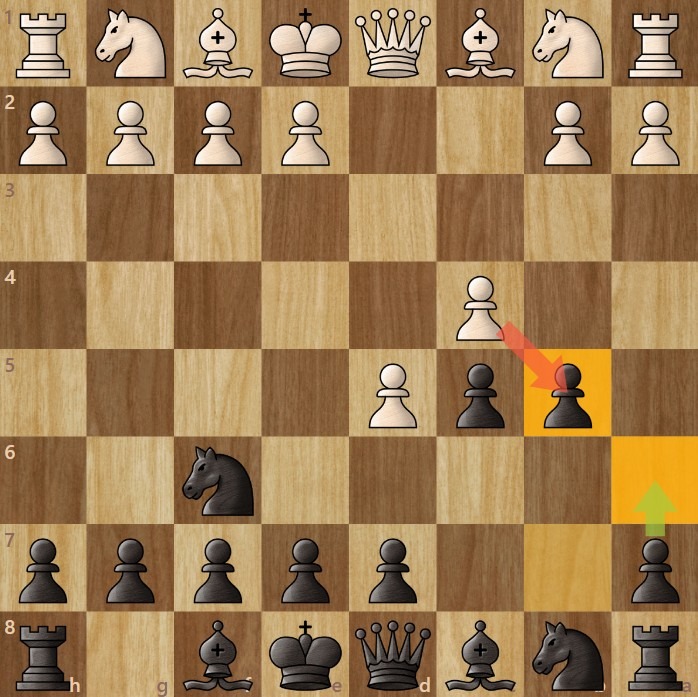
White’s most common response to the Benko Gambit is to accept the free pawn, after which Black offers up another on a6. White usually captures again (4. cxb5 a6 5. bxa6).

The Cooke Series Luxury Chess Pieces - 3.6" King

Premium Chess Box - Elm Burl

Leap Digital Classic Chess Clock
Develop First, Recapture Later!
Now, Black could recapture the a6 pawn immediately with the bishop. But notice how Black has three pieces attacking it! Since there’s no rush to recapture, Black can gallop forward in development with 5...g6 and 6...Bg7. This is the most aggressive way that many grandmasters play the Benko Gambit today.
Once posted on g7, the fianchettoed bishop becomes a formidable long-range weapon against White’s queenside, leaving White dangerously exposed. It also helps to defend the fort once Black has castled kingside. Development typically continues: 6. Nc3 Bg7 7. e4 O-O 8. Nf3.
With development nearly complete, we can consider this the classic starting setup you’re aiming for.
Turn Up the Heat: 8...Qa5
Now, it’s time for the menacing move you’ve been waiting for: 8...Qa5. This pins White’s c3 knight, the sole defender of e4. Black is now threatening to capture on e4 on the following move (...Nxe4). Yet there is another, more concealed threat. Can you see it?
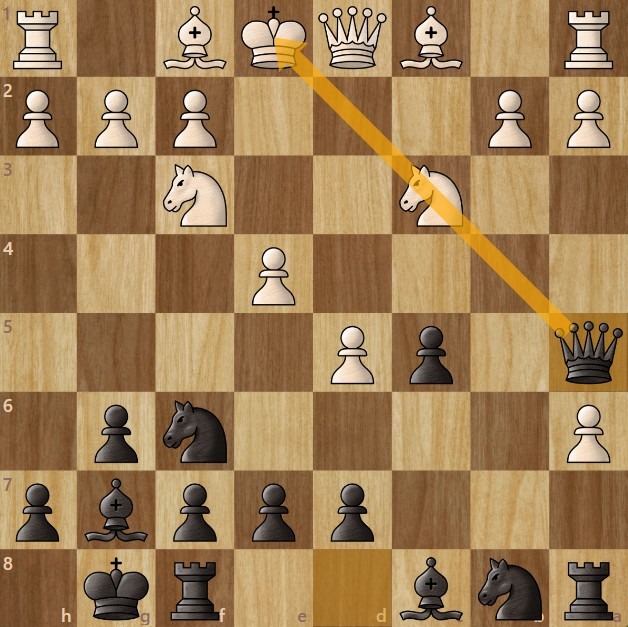
Yes! Black’s g7 bishop is x-raying White’s c3 knight. With a discovered attack, the c3-knight can be captured, delivering a further, even nastier threat — a king-rook fork from the queen, which is worse than it looks! (See the board diagram below.)
Amazingly, even grandmasters don’t always spot the danger. In this 2014 rapid chess match between world greats Boris Gelfand and Magnus Carlsen, Gelfand responded to 8...Qa5 the same way that many players do: 9. Be3?
It was all too easy then for Carlsen to sacrifice his knight to unleash the terrible attack we’ve been discussing: 9...Nxd5 10. exd5 Bxc3+ 11. bxc3 Qxc3+ 12. Qd2 Qxa1
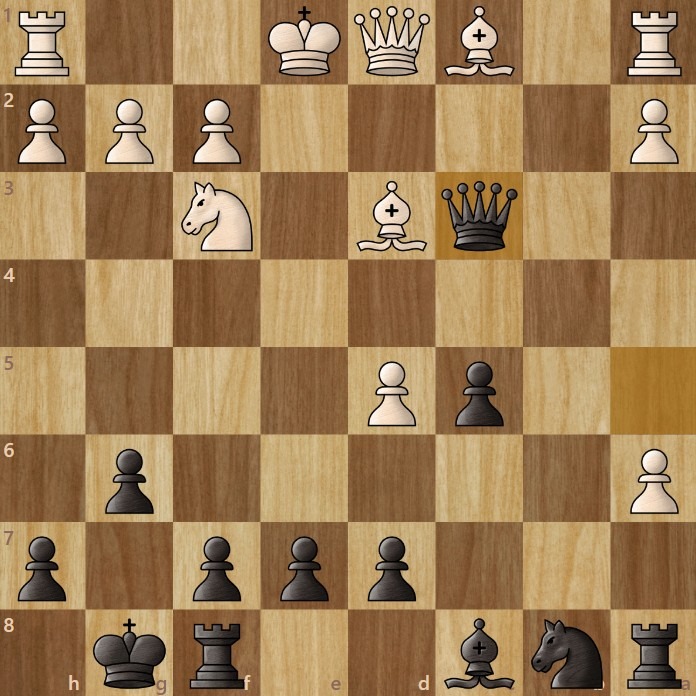
9. Bd2 Bxa6
Instead of 9. Be3, White should respond with 9. Bd2 to undo the pin on its knight. Now that White has its queen backing up the a6 square, it’s time to recapture that a6 pawn: 9...Bxa6.
Since this move attacks White’s king’s bishop and threatens the loss of castling rights, White has two ways to respond: 10. Bxa6 or 10. Be2.

The Mechanics Institute Chess Set, Box, & Board Combination

DGT Pegasus Chess Board (e-Board) - Wireless Bluetooth with USB Charger
10. Bxa6 Qxa6, and a Dubious Queen Swap
Most opponents reply with 10. Bxa6. By recapturing with your queen (10...Qxa6), you continue to deny White kingside castling. To rectify this, most opponents reply with 11. Qe2, threatening a queen swap that they may imagine you’d want to avoid. White is still up a pawn, after all.
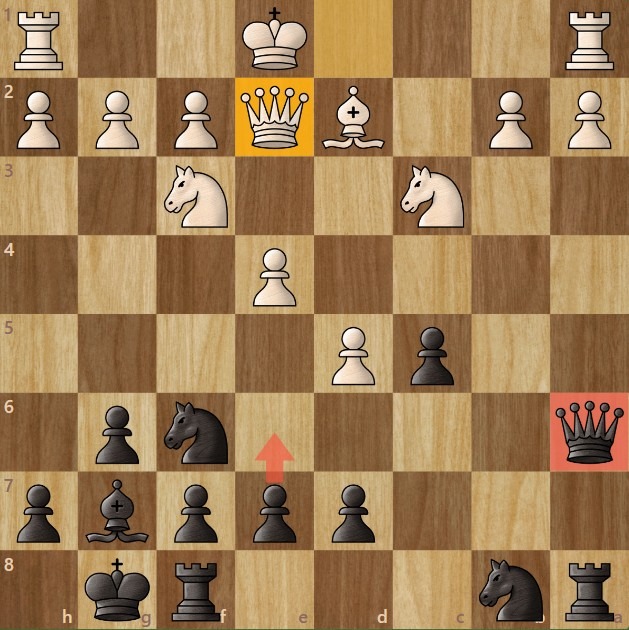
Sadly for White, it’s not quite that simple. Despite being a pawn down, Black’s position is very favorable for an endgame. With the semi-open a- and b-files for Black’s rooks to attack, as well as overextended central pawns, White is not in good shape to enter the endgame after all.
These nuances, however, are beyond most club-level players. Black follows with 11...e6, and White invariably goes ahead to swap off queens on a6. Recapture with your knight - it will become a deadly weapon in a moment!
10. Be2
If on move 10, White responds with 10. Be2, capture the bishop, and offer up the same queen trade (10... Bxe2 11. Qxe2 Qa6 12. Qxa6 Nxa6). In this line, it’s better to follow with ...d6 than ...e6. Otherwise, it’s very much like the line above.
Roll on the Endgame!
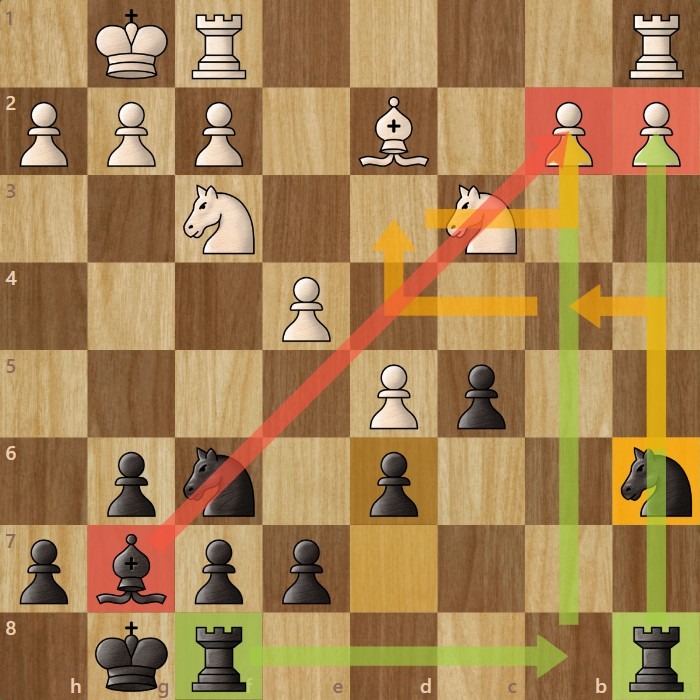
Things move fast in the Benko Gambit, don’t they? Move 12, and we’re already approaching the endgame. It’s now that White will learn the tough lessons of how powerful Black’s setup is.
The semi-open a- and b-files allow the two rooks to unleash havoc on White’s two queenside pawns. Not only that, White’s overextended central pawns allow Black’s knight to move in behind them and take up a very cozy outpost on d3 to increase pressure on b2.
It may be difficult to believe how much better Black is here, but statistics are a testament to the crushing Benko setup. From here, Black wins a stunning 63% of games. Chess engines also acknowledge that Black has the edge!
Sidelines of the Benko Gambit
Naturally enough, White won’t always stick to the usual moves. The good news is that, in many variations, you can follow similar principles and still dominate with the Benko’s trademark plans!
Remember, the Benko Gambit is all about attacking on the queenside. By fianchettoing your king’s bishop and launching rook attacks down the a- and b-files, you’ll often still succeed at overthrowing White's defenses.
If White Declines the Gambit With 4. b3
In amateur chess, White frequently tries to evade Black’s plans by declining the gambit with 4. b3. It’s a poor choice. Meeting this, simply capture the pawn. After White recaptures, their queenside pawn structure is weakened and in feeble shape to withstand Black’s fianchetto on g7.
Benko Gambit Declined Main Line: 4. Nf3
Although chess engines and most grandmasters would recommend accepting the Benko Gambit, 4. Nf3 is usually considered the best way to decline it outright. In amateur chess, this is one of White’s most successful ways to counter the Benko Gambit and spoil Black’s usual plans.
In response to 4. Nf3 and several other ways to decline, however, Black has a powerful move: 4...b4. From b4, Black’s pawn controls c3 and a3, preventing White’s knight from developing to its natural square. Black can make this problem more persistent by following up with ...a5.
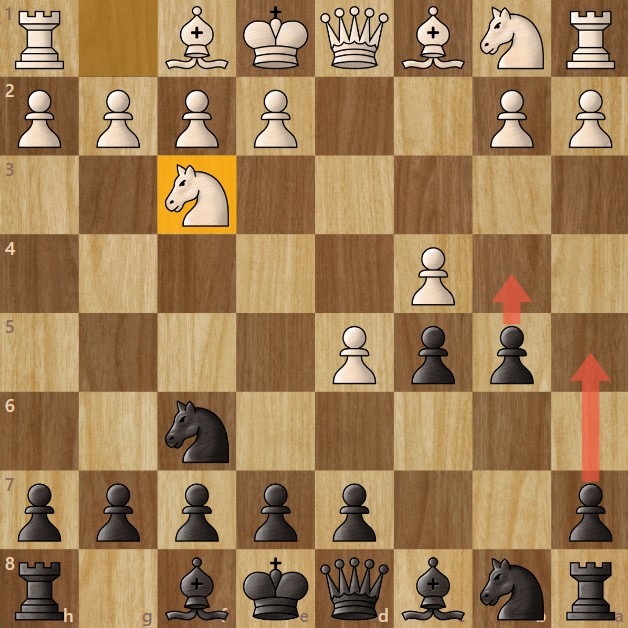
Now, Black has a strong spatial advantage on the queenside, and White can’t even enjoy an extra pawn for compensation!
The Best Way to Refute the Benko Gambit: Half Accepted With 5. f3
Looking through statistics of amateur chess matches, one of the few ways that White can win a majority of games is by accepting the first pawn, but not the second! Instead of accepting the second pawn, White plays a surprising move: 5. f3.
This thoroughly analyzed line has been called the Half-Accepted Benko Gambit ‘Dlugy Variation.’ Here, White’s plan is simple: prepare for playing e2-e4, thereby creating a strong pawn chain all the way up to the prominent d5 pawn.
1. d4 Nf6 2. c4 c5 3. d5 b5 4. cxb5 a6 5. f3:
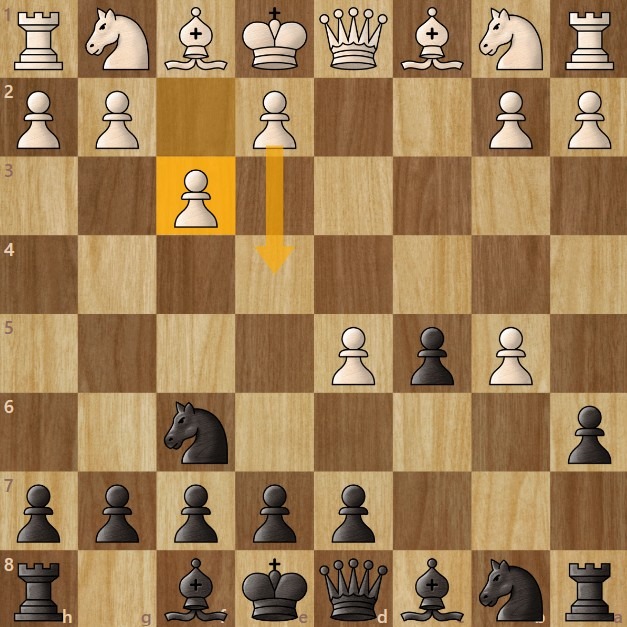
Though it’s played by grandmasters, the Dlugy Variation is a line that few amateur opponents will know well. White often succeeds in dominating the center, and if they can defend the queenside successfully, White will have the edge.

The Fischer Spassky Series Chess Pieces - 6.0" King

The Large Ultimate Chess Bag

DGT 2500 Digital Chess Clock
Conclusion: Long Live the Benko Gambit!
The Benko Gambit is a venomous chess gambit against 1. d4 that scores exceptionally well at all levels and time controls. By fianchettoing the king’s bishop and deploying rooks down open files, Black often succeeds at overwhelming White’s queenside.
By choosing the most aggressive lines that include ...Qa5, you’ll be joining many grandmasters in playing one of the most successful of all Black openings in the book.
With the White pieces, your best way to sidestep the formidable Benko Gambit mainline is instead to only half-accept the gambit and slip into the lesser-known 4. f3 variation. Focus on building a solid center, and do everything you can to avert Black’s attempts to invade your queenside!
Benko Gambit FAQs
Over the years, the Benko Gambit has proven to be one of the best ways for both grandmasters and amateur players to defy 1. d4. With a relatively straightforward game plan, this fun opening scores extremely well for intermediate and advanced players alike.
In amateur chess, the most statistically high-scoring gambits for White are the Boden–Kieseritzky Gambit and the Deutz Gambit. With the black pieces, the Rousseau Gambit and Benko Gambit are two of the deadliest.
The stupidest opening in chess is probably the Barnes Defense (1. f3). By starting with 1. f3, White weakens its kingside and blocks development of its knight. It also does nothing to control the center or develop any pieces! If 2. g4 follows, White can lose to the fastest checkmate in chess—Fool’s Mate.
Statistics show that the Budapest Gambit scores well in amateur chess, especially in blitz and bullet chess matches. The tricky ‘Adler Variation’ with 4...d6 is objectively dubious but performs especially well for Black and makes for a thrilling line to play!
Since the Benko Gambit involves intermediate level game plans, it's not the ideal opening for beginners. Instead, vs. 1. d4, consider the Old Benoni Defense.