
Create Havoc With The Danish Gambit
The Danish Gambit is one of the most exhilarating ways to begin a game of chess with the White pieces.
Although the Danish Gambit is seldom seen at the master level, it can be a very dangerous weapon at the club level. It is especially deadly if your opponent has not taken the time to study the various tricks and traps that it contains.
In this article, you will learn:
- Why you should consider trying the Danish Gambit.
- Thematic tactical ideas within the opening and early middlegame.
- How to continue your education in this chess opening for White.
Introduction
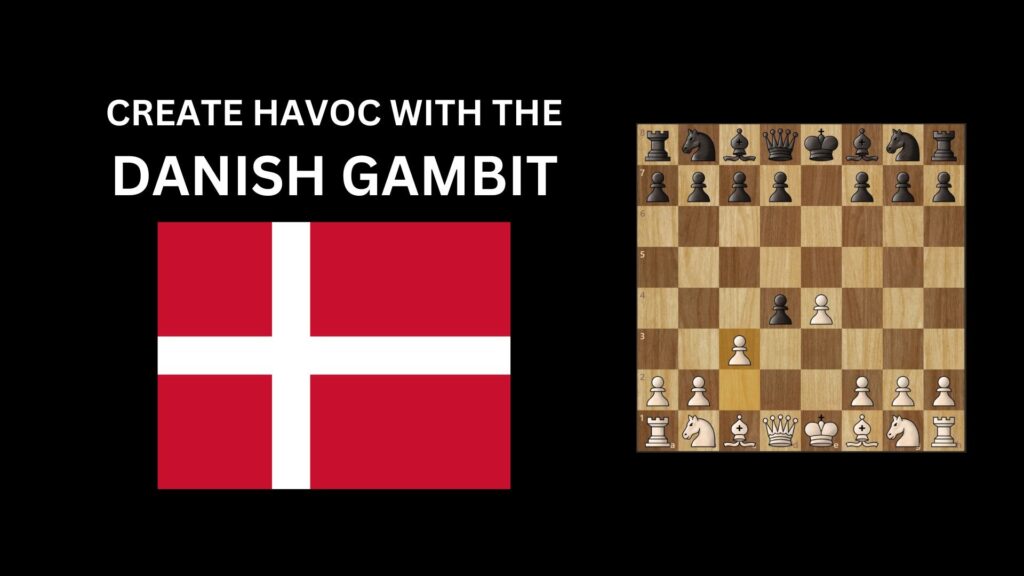
The Danish Gambit begins 1. e4 e5, 2. d4 exd4, 3. c3.
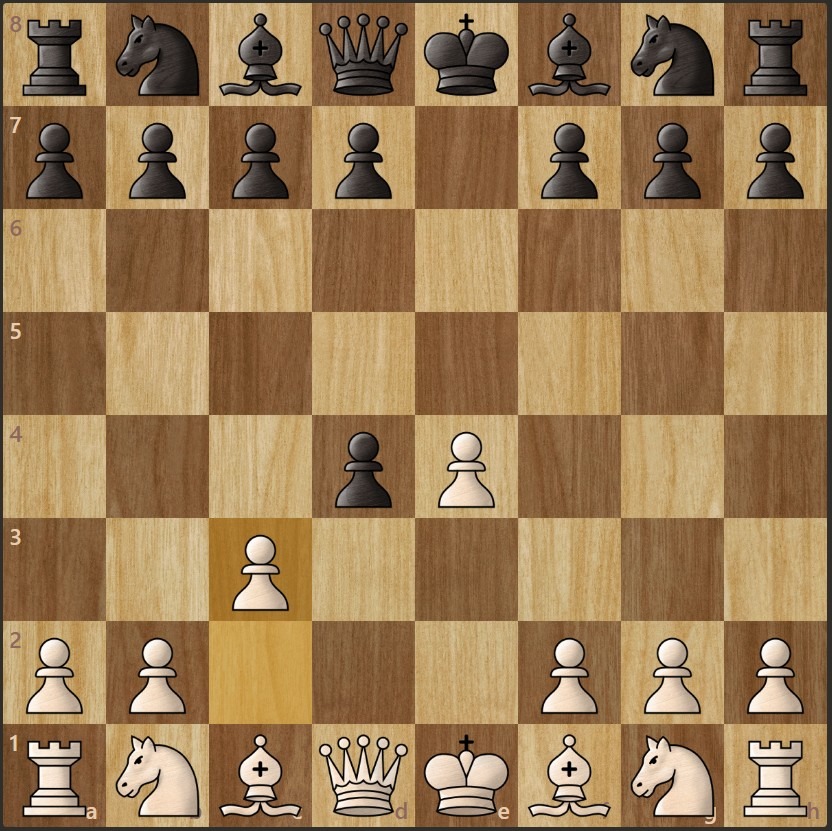
With the move 3. c3, White offers Black the chance to win a pawn. As with many chess gambits, the idea is to gain accelerated development in compensation.
The first World Chess Champion, Wilhelm Steinitz, once said, “The best way to refute a gambit is to accept it”. If Black takes on the challenge and grabs the pawn via 3. …dxc3, then the game becomes the Danish Gambit Accepted.

The Library Collection - The Anderssen Dropjaw Series Luxury Chess Pieces - 3'' King

E-DVD FOXY OPENINGS - VOLUME 21 - Dashing Danish

ZMart Pro Digital Chess Clock
White now has two main ways to continue:
The “One Pawn Danish”
If White wants to limit the material deficit to just one pawn, then recapturing immediately via 4. Nxc3 is the way to go.

With this move, White’s queenside knight gets to its most natural square. With a strong central pawn on e4 and a piece already developed, White enjoys a clear lead in development. This way of playing was favored by the fourth World Chess Champion, Alexander Alekhine.
Related: Learn from Alexander Alekhine’s games with My Best Games of Chess 1908-1937.
However, this position is not especially scary for Black. Black can play straightforward developing moves and should be able to get their king to safety without many problems. Black may also consider returning their extra pawn to accelerate their development.
If you are looking for something even more aggressive, then check out White’s other option:
The “Two Pawn Danish”
This line sees White gambit a second pawn by playing 4. Bc4. This targets Black’s naturally weak f7 pawn. If Black now captures again via 4. …cxb2, then White recaptures with 5. Bxb2.
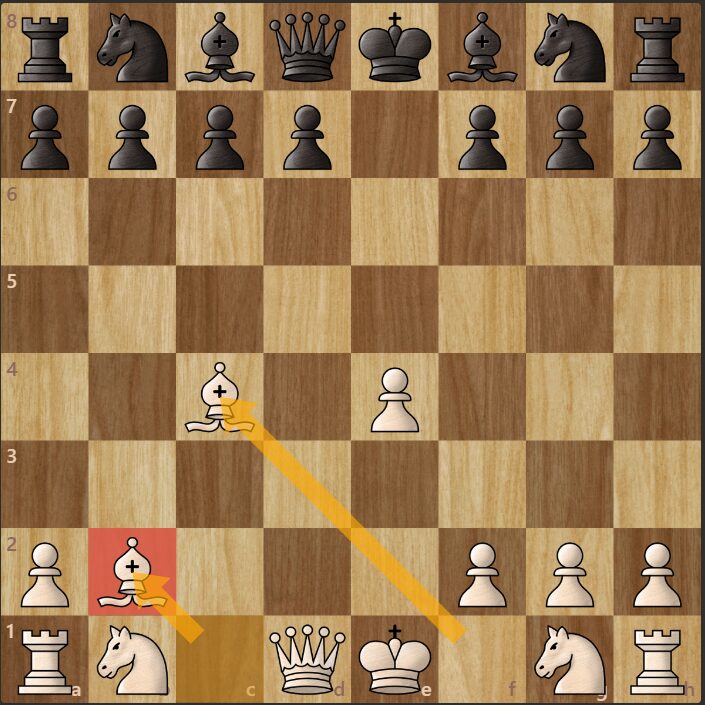
White gets both their bishops developed to threatening diagonals, pointing at the Black kingside across an open board. This makes the Two-Pawn Danish sharper than the One-Pawn Danish. Black is a couple of pawns up, but they face a stern test to emerge from the opening unscathed.
Why Play The Danish Gambit?
It is true that the engine evaluation of the Danish Gambit favors Black. Also, grandmasters almost never play the Danish Gambit in serious games under slow time controls. There is too much at stake for chess professionals to play the Danish Gambit against strong opposition.

The Burnt Golden Rosewood Reykjavik II Series Chess Pieces - 3.75" King

Premium Chess Box - Red Burl

The Millennium King Competition Chess Computer
However, at lower levels of chess (such as at club level) the Danish Gambit is definitely viable. The challenges posed in this opening are difficult for humans to navigate, and club-level players tend not have such extensive opening preparation.
Related: Check out more club-level openings that can be used to defeat stronger players.
Although the latest version of Stockfish evaluates the “Two Pawn Danish” starting position as a slight edge for Black, the Lichess opening database tells a different story.
- Under blitz and rapid time controls…
- For players rated 1400-2200 on their site…
The human results heavily favor White! White wins 57% of games, while Black wins just 39%.

One more reason to try the Danish Gambit is because it’s fun. Unless you make your living from playing chess, results aren’t everything. You should enjoy the game. As we all know, it is more fun to attack than to defend. The Danish Gambit gives White strong chances of winning quickly in the opening. Even if the Danish Gambit fails, the game is sure to be entertaining!
Thematic Tactics In The Danish Gambit
You need the right mindset to play the Danish Gambit. White must play energetically and be ready to pounce on tactical opportunities. If Black is allowed to consolidate, then Black’s material advantage will tell in the long run.
It is very useful to have studied the main tactical ideas to make it more likely you will be able to spot them in your own games. Here are some commonly occurring ones to watch out for:
The Loose Black Queen
Black’s lack of development along the back rank can often be exploited.
Take the position below where it is White to move.

White can begin with the stunning sacrifice 1. Bxf7+!!

Then, once Black captures with 1. …Kxf7, White has an amazing follow-up, 2. Ne5+!!
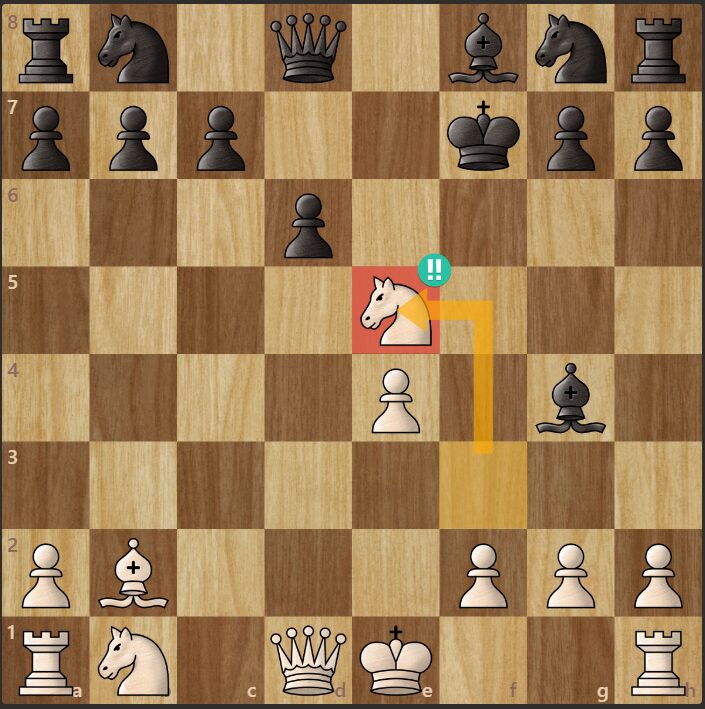
The point is that Black cannot capture the knight with 2. …dxe5?? because then Black would lose their queen to 3. Qxd8. Therefore, White will get to capture Black’s light-squared bishop via 3. Nxg4 on the next move, winning back the piece with Black’s king having lost castling rights.
Related: Stay tactically sharp with Your Complete Guide To Chess Puzzles.
The Qb3 Threat
One move that White should always be on the lookout for in the Danish Gambit is Qb3.
Depending on the exact position, this can attack Black’s b7 pawn (especially if Black’s light-squared bishop has left its starting square), or - as is the case here - add extra pressure against f7.
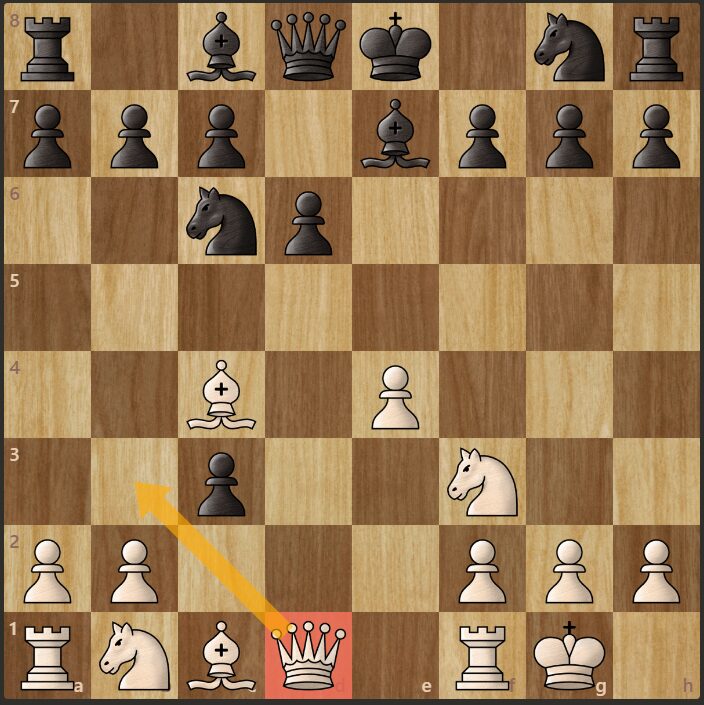
After 1. Qb3! Black is unable to adequately defend f7. Black could try 1. …Nh6, but in that case, White can simply chop the knight off via 2. Bxh6, and once again, f7 is indefensible.
Attacking The Castled Black King
Even if Black manages to successfully castle their king, they are still not out of danger. White’s pair of bishops aim menacingly at Black’s castled position.
In the position below, White has lost yet another pawn. So, White is now three pawns down, and Black’s king appears as though it has reached safety. Yet, appearances can be deceiving. In fact, White is winning!
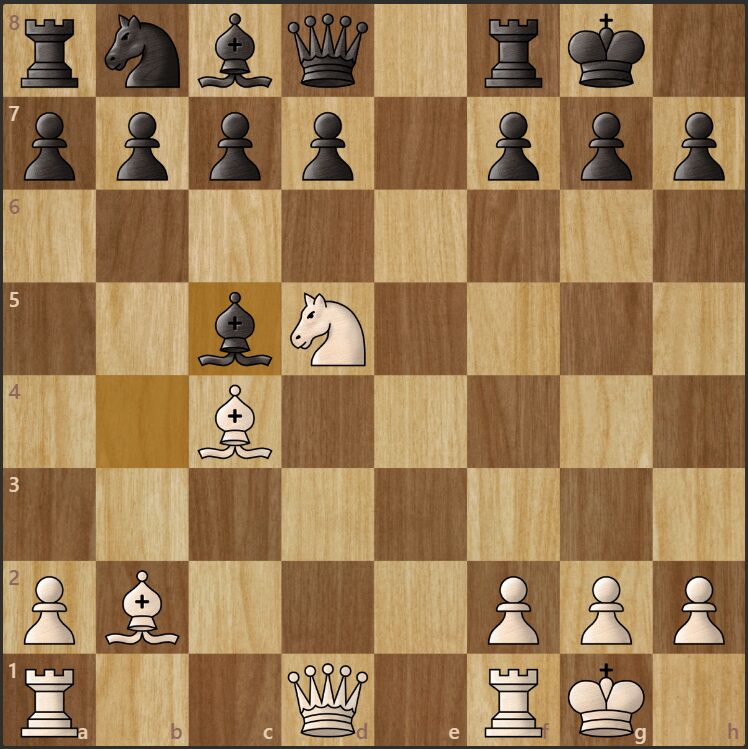
Black’s problem is that none of their queenside pieces are developed from their starting squares. Additionally, the two White bishops are aiming directly towards Black’s king.
White has many moves to begin a decisive attack in this position, but one of the most forcing starts with 1. Nf6+!!

Note that Black cannot capture the knight with their queen, since White’s dark-squared bishop defends the knight from afar.
After 1. …gxf6, White follows up with 2. Qg4+! and after the forced 2. …Kh8, 3. Qh4 threatens the decisive 4. Bxf6+.
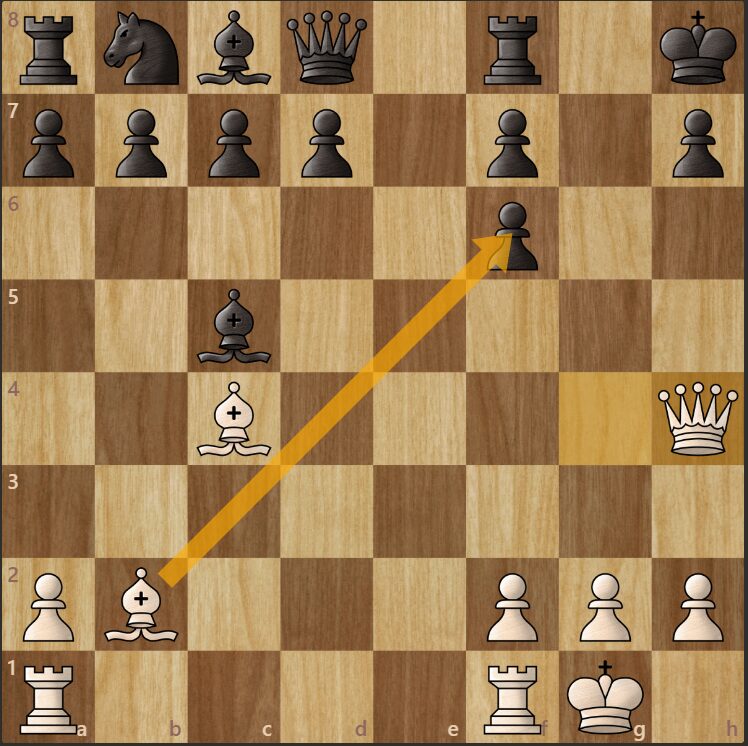
The only reasonable way for Black to attempt to prevent this is with 3. …Be7, but then White creates an even bigger threat via 4. Bd3, going for checkmate on h7. This is a threat which Black has no good way of stopping.

Next Steps: Continue Your Education In The Danish Gambit
This article has provided everything you need to get started with the Danish Gambit.
So, go ahead and give it a try in online blitz chess. This will help you gain practical experience with the Danish Gambit as quickly as possible. Before long, you will have several games of your own to see how your opponent responded in the opening and early middlegame. Use these games to select which lines deserve more attention in your further study.

The Fischer Spassky Series Chess Pieces - 6.0" King

The Camaratta Signature Master Chess Table
Also, with the help of a computer engine, you can identify any tactical opportunities that you may have missed in these games. Add these to your memory bank for use in the future.
If you want to really master the Danish Gambit, then we suggest furthering your education beyond this article.
GM Nigel Davies has created a short video training course titled Dashing Danish. With a run time of just 70 minutes, it is not a long watch - but it is packed full of ideas to take your understanding of the Danish Gambit to the next level.

Here is what you can expect if you choose to get this course:
- Part One: The Two Pawn Danish (gambiting two pawns, on both c3 and b2).
- Part Two: The One Pawn Danish (gambiting one pawn on c3).
- Part Three: What to do if Black declines the Danish Gambit via 3. …d5.
Summary: Is The Danish Gambit Right For You?
The Danish Gambit may be worth adding to your opening repertoire if:
- You like to take your opponent out of their comfort zone. The Danish Gambit isn’t seen very often, meaning that many of your opponents with the Black pieces will not have prepared heavily against it. It leads to games where both players have to think for themselves early on, rather than reciting memorized opening theory.
- You excel with an activity advantage. The Danish Gambit delivers immediate dynamic compensation for the sacrificed material. To justify the gambit, White must press this initiative energetically. Sharp tactical awareness and a taste for early complications are essential.
- You don’t mind playing “objectively dubious” openings. The Danish Gambit is not the computer’s top choice, but that should not bother you. Instead, you should embrace the Danish Gambit as a way to guarantee an exciting, attacking game. It may result in a few losses if Black knows the refutations - but either way, it will never be boring!
Does that sound like a chess opening for White that you would enjoy playing?
If so, then start creating havoc with the Danish Gambit today!
Frequently Asked Questions
The Danish Gambit can be an excellent surprise weapon, especially when playing under shorter time controls (such as blitz chess). The Danish Gambit is riskier to play under classical time controls or against highly prepared opponents.
The Danish Gambit begins with the moves 1. e4 e5, 2. d4 exd4, 3. c3. White offers a pawn in exchange for rapid development. If Black accepts the gambit with 3. …dxc3, then there are two main systems that White can continue with. The “One Pawn Danish” sees White recapture immediately while developing the queenside knight via 4. Nxc3. The “Two Pawn Danish” instead sees White offer a second pawn with 4. Bc4 cxb2, 5. Bxb2, in which case White is two pawns down but has a pair of powerful bishops pointing towards the Black kingside.
Today, the Danish Gambit is extremely rare in classical chess among elite grandmasters. This is because the top players know the exact move-by-move refutation of it. Historically, Jacques Mieses, Frank Marshall, and Alexander Alekhine were known for playing the Danish Gambit.
The best way to learn the Danish Gambit is through a combination of study and practical experience. We recommend the video training course Dashing Danish from GM Nigel Davies. In just 70 minutes, you will learn the most important opening lines and thematic tactical ideas within the Danish Gambit.