
Tips to Improve Your Endgame Chess Strategy
Nowhere is chess strategy more important than in endgames. While you might be able to ‘wing it’ in chess openings and middlegames on intuition and tactical opportunities alone, endgames demand strategic know-how to finish the job.
Endgames are often played on a razor’s edge. One false move can easily change the outcome of the game. Whether you’re aiming to convert a pawn advantage into a win or turning a losing position into a draw, here are six endgame strategies to help you finish in style.
Learn Endgame Checkmates
For beginners and intermediate chess players, one of the most important endgame techniques is how to checkmate with various combinations of pieces. Say you reach the endgame with just a king and rook left versus your opponent’s king. If you don’t know how to finish the job properly, you might needlessly lose on time!
Did you know it’s possible to force checkmate of a lone king with two bishops or a knight and a bishop, but not with two knights? Checkmates with minor pieces require deeper study, so for now, we’ll just cover the most common—a king and queen checkmate! Beginners often struggle with this since it’s surprisingly counterintuitive.
Curiously, the quickest way to force checkmate with a lone queen is not to check the king. Instead, imagine the queen is a knight to check the enemy king! In the diagram below, White needs to corner the king to achieve checkmate. Can you find the right square for the queen to move to?
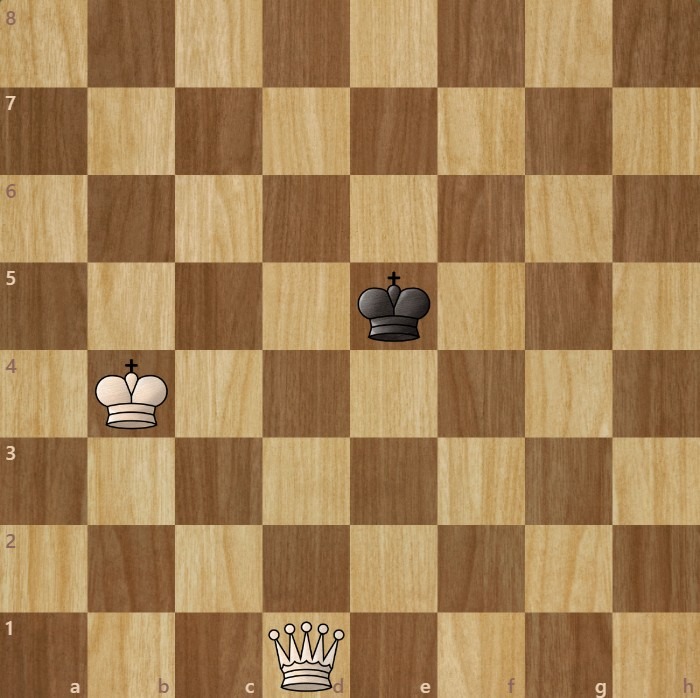
Answer: Qf3 or Qg4. Imagining the queen is a knight, both of these squares would check the king. The king is then forced toward the corner closest to your king.
Once the king is one square from the corner, be careful not to stalemate! Instead, move your king in to support checkmate. In this example, it’s checkmate in seven moves.

The Library Collection - The Anderssen Dropjaw Series Luxury Chess Pieces - 3'' King

Premium Chess Box - Brazilian Rosewood

Andriasian’s Tactical Workout Book: 700 Armenian Tactics - HARDCOVER
Activate Your King Promptly
During the opening and middlegame phases of a chess game, it’s crucial to keep your king tucked away safely. In the endgame, however, the king becomes a powerful piece that can wield much influence in the center of the board.
In rook and king endgames, the king is often of equal value to rooks in attacking and defending remaining pawns. Since the king can move in all directions, his value as a functional piece in endgames is approximately 4-5 points. When there are few pieces left on the board, it’s often the chess player who wields the king in the most timely, skillful way that will go on to win the game.
In the example, it’s Black to play. White has succeeded in winning material but will lose the game. Why? Black followed the more important endgame principles of pushing its passed pawn and activating its king promptly.
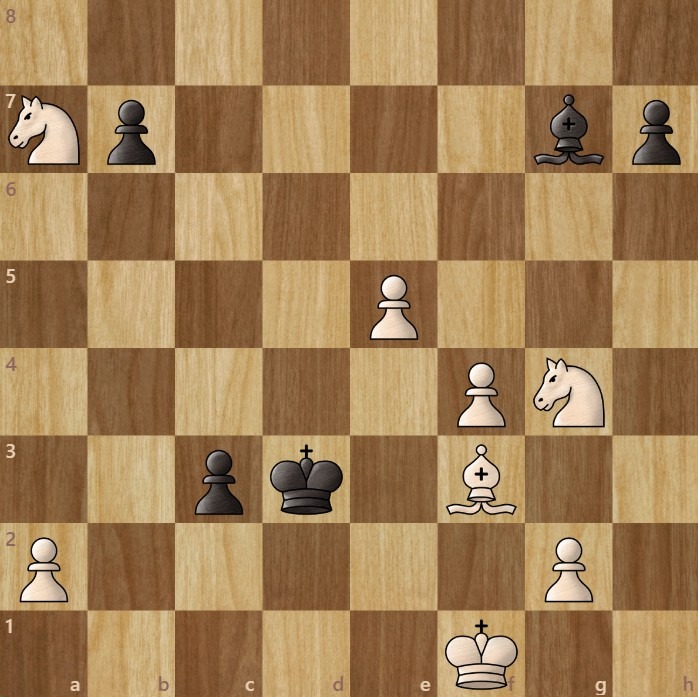
On the other hand, it’s important not to activate your king too quickly! If your king enters the center of the board while your opponent still has their queen, for example, it’s often all too easy for them to ruin you with tactical motifs like forks, pins, and skewers!
Gaining Opposition
You may know how to force checkmate with a king and queen, but what about winning the game with a king and pawn? It’s not always possible, and it all hinges on the principle of opposition.
In the position below, can White force a win, or can Black draw?
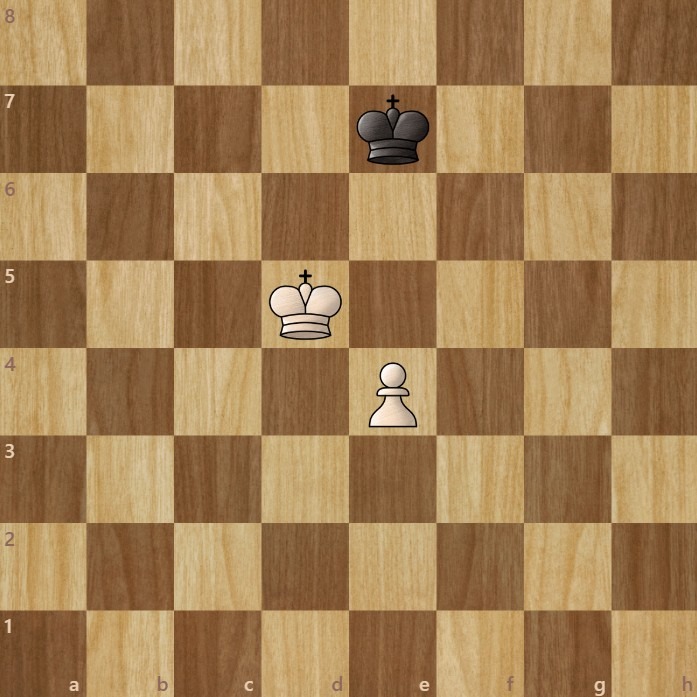
Answer: It all depends on whose move it is! Whoever can move their king in opposition to the enemy king will gain the desired outcome.
Now, if it’s Black’s move, its king can move to c6 to gain opposition. White can then do nothing to budge the enemy king to achieve pawn promotion. Black simply keeps placing its king in opposition to prevent the pawn from achieving promotion. The game is drawn.
On the other hand, if it’s White’s move, it can gain opposition by placing its king on e4 and forcing the enemy king to the side! Once the opponent’s king has shifted sideways, White’s king can advance diagonally to d5 on its way to the seventh rank (d7 or f7). Here, it rolls out the red carpet for its pawn to reach promotion!
While your opponent can force a draw if they have opposition, remember they won’t always know how to—or might slip up! In beginner and intermediate chess, there’s no harm in continuing to move your king around to see if your opponent will concede opposition back to you. It only takes one false move, and the game is yours!
Rooks Belong Behind Passed Pawns! (RBBPP)
Promoting a pawn is often your golden ticket to winning chess endgames. And for pawn promotion, you need to create passed pawns (pawns that cannot be captured by enemy pawns) and push them! Creating passed pawns becomes increasingly important in middlegame planning as you progress in chess.
Since rooks move in the same direction as pawns, they make the best pieces both to support your pawns toward promotion and to prevent enemy pawns from doing the same. A fundamental endgame principle that chess coaches frequently remind their students of is ‘rooks belong behind passed pawns.’ Not beside them, not in front of them—but behind them. This is also known as the ‘Tarrasch Rule,’ or simply ‘RBBPP.’
The following puzzle illustrates just how crucial the RBBPP rule is. White to play and win; can you find White’s one and only winning move?
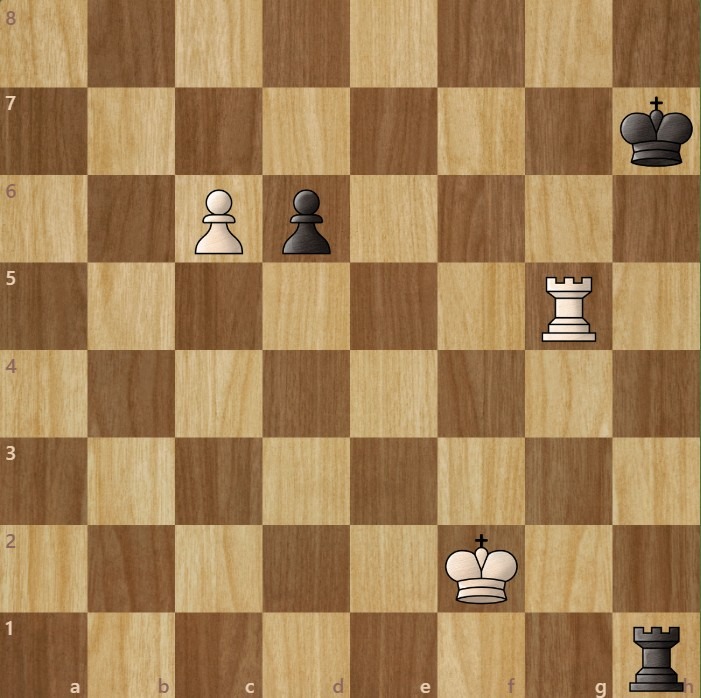
Answer: Rc5! Curiously, placing the rook behind the passed pawn is sometimes pivotal even when it will be sacrificed! Black is more or less forced to capture the rook, after which it cannot place its own rook behind the passed pawn. Consequently, White’s pawn will win promotion.
If White plays any other move (for example, Rg1), Black can get its own rook behind White’s passed pawn and achieve a draw. How? First, checking the king (...Rh2+) forces White to line up its rook on the same rank as its king. Now White cannot prevent ...Rh4 and ...Rc4, from where Black will win the passed pawn!

The Reykjavik II Series Tournament Chess Set and Tiroir Combination

Tap N Set Pro Digital Chess Clock - with DOUBLE DISPLAYS
Practice Endgame Chess Strategy Puzzles
If you ever make it as a chess grandmaster, you’ll see most of your games culminate in an endgame. While you’re still an amateur, however, your games will often be cut short by a middlegame checkmate! This can impede progress with endgame technique, since you won’t get to practice this phase of the game so frequently.
Instead, to master endgame chess strategies and tactics like those we’ve discussed here, you can’t beat endgame chess puzzles. By repeatedly solving endgame problems, you’ll hone your mind to recognize the tactical motifs and strategic patterns that will ultimately win you more games.
Here’s an example. White to play and there’s only one winning move.
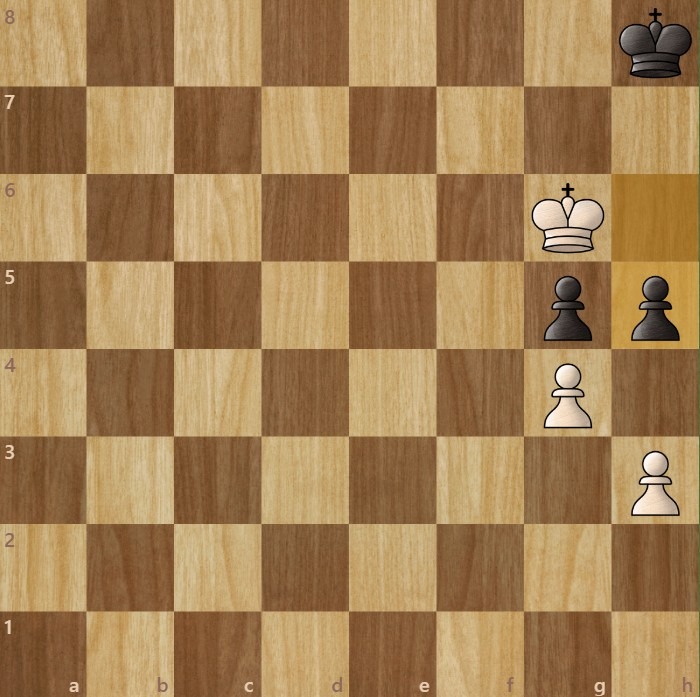
Answer: Kxh5. By capturing both pawns with the king, White lands two connected passed pawns - an unstoppable duo to win pawn promotion! gxh5 fails, since White’s doubled pawns on the rook file are very poor candidates for promotion and Black can attain a draw.
A fantastic place to practice endgame puzzles is the lichess.org puzzle database. Check out their puzzle themes page, and you’ll see chess puzzles neatly divided into various categories such as ‘Rook Endgame,’ ‘Pawn Endgame,’ and so on.
Remember, chess puzzles are not just a fun workout for the mind - they’re powerful training tools that even grandmasters use regularly to improve their skills!
Stay Cool, Calm, and Collected, Especially in Time Scrambles!
While theoretical knowledge is crucial for strong endgame combat, mindset is equally important. Endgames are the tightropes of chess matches—one false move, and it’s game over. To add to the intensity, the clock might be running low on time, too!
Playing your best game under such pressure requires the ability to stay calm and collected, as well as knowing how to take advantage of a flustered opponent who’s running out of time.
In this blitz game example below, Black is running out of time and is playing the endgame almost on autopilot. Can you see the way that White can try to salvage a draw against his rushing opponent?
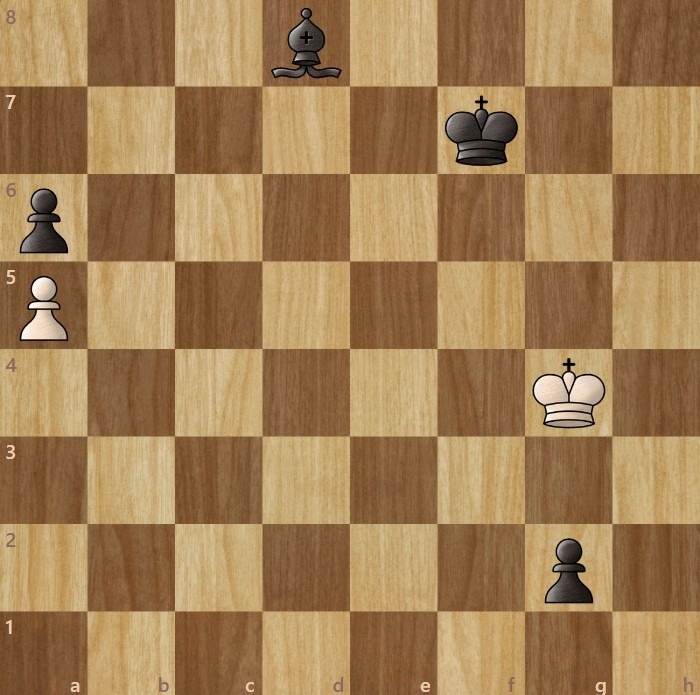
Answer: Kh3! Now, if Black promotes to a queen, the game ends in a draw! Did you hear your opponent yell?
When endgames are fought out at tight time controls, there are abundant opportunities to trip up your opponent and turn the game around at the last minute. Keeping your cool under pressure is paramount. Try practicing chess puzzles or endgame positions under time constraints to improve your poise!

The Burnt Golden Rosewood Zagreb '59 Series Chess Pieces - 3.875" King

The Millennium King Competition Chess Computer

DOWNLOAD - Komodo Dragon 3.2
Endgame Chess Strategy Summary
Endgame chess strategy is a precise science that even grandmasters frequently get wrong. By learning some basic principles and applying them in every endgame, however, you’ll stand a great chance of beating opponents who’ve done less homework than you!
Because endgames are often never reached in beginner to intermediate chess, don’t wait for real chess matches to strengthen your endgame skills! Instead, study endgame theory and practice endgame positions and puzzles as part of your chess training plan. That way, when your next crucial game rolls around, you’ll be primed for that winning maneuver that seals the game.
Endgame Chess Strategy FAQs
Practical exercises to improve endgame chess strategy include solving endgame chess tactics puzzles and playing out various endgame situations on a chessboard. Since the outcome of endgames can frequently spin on a dime, playing against a chess computer with an evaluation bar can be extremely helpful. This will give you immediate feedback move by move.
Connected passed pawns are often a golden ticket to winning endgames, as they’re extremely difficult to stop from winning promotion. Since they can support each other up the board without capture from enemy pawns, the opponent will often have to sacrifice pieces to prevent them from reaching the last rank. Creating connected passed pawns is part of long-term planning that will make endgames much easier!
The king becomes a powerful piece that often plays a decisive role in the endgame. Therefore, your goal should be to activate your king quickly and effectively, while limiting enemy king activity. For that purpose, cutting off an enemy king with a rook is a trademark of endgame positional play.
Fundamental principles of endgame chess strategy include creating and pushing passed pawns, activating the king promptly, rooks behind passed pawns, and favoring piece activity over material advantage.