
Chess Endgames: 10 Must-Know Patterns
Although chess endgames may appear simpler than openings and middlegames, they’re a lot less forgiving. Endgames frequently demand extremely accurate play to force a win or a draw—one false move will often flip the game on its head!
Because endgames are notoriously difficult to calculate, chess theory includes many commonly occurring endgame patterns and their solutions. By grasping these patterns, you’ll no longer have to risk slipping up at the last hurdle or lose on time while calculating your next crucial move!
In this article, we’ll explore 10 classic endgame patterns that every beginner and intermediate should know. We’ll start with the easiest before moving onto more intermediate-level patterns further down.

10 Chess Endgame Patterns for Beginner and Intermediate Players
Queen and King Checkmate
One of the simplest yet most essential endgame techniques is to know how to execute a queen and king checkmate. As with the other endgame patterns we’ll cover here, if you don’t know the right way to do it, your efforts will be clumsy if not disastrous!
With a king and queen, it’s no good giving random checks. The opponent’s king will likely succeed in dancing around the center of the board! Instead, you need to clear away any remaining enemy pieces, then skillfully force the enemy king into the corner where it can be checkmated.
Curiously, the technique for checkmating with a queen and king is to imagine your queen as a knight, delivering checks. Try this out on the board diagram below. In your mind, pretend your queen is a knight, and move it to a square where a knight would check the king.

If you would have moved your queen to either c4 or b5, you’re on the right track. Even though the enemy king is not really in check, this forces him to move toward the corner of the board. Do not touch your king, but keep repeating this until the king is cornered. Only then move your king into deliver checkmate!


King and Rook Mate—the Box Method
Just like with the queen and king checkmate, the rook and king checkmate is all about forcing your opponent’s king into a corner. You can do this using the ‘box method.’ By making an ever tighter ‘box’ with your rook, you squeeze the enemy king into the corner.

Once the king has moved one square toward the corner, simply make the box even smaller with the rook. Always be vigilant to keep the rook defended by the king. You may also need to play ‘waiting moves’ with your king to wait for your opponent to be forced toward the corner on the following move.
Once the king is in the corner, it’s a simple matter of combining the rook and king to execute the king and rook mate. Just be very careful to avoid stalemate on the final moves!
The Pawn Square Method
In chess endgames, you'll often be running low on time and might not always have time to calculate the moves ahead. That’s when it’s invaluable to have some methods to calculate at a glance.


In the ‘pawn square’ method, we can immediately calculate if the pawn can safely win promotion or whether it will be caught by the enemy king. With this method, count how many squares the pawn is from promotion—including the square the pawn is on. Now, in your mind, draw a box to the side with the same number of squares.
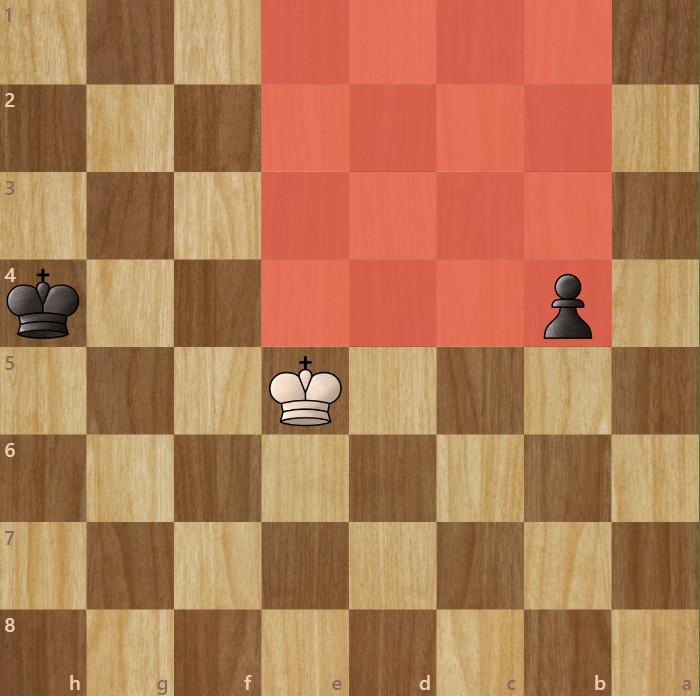
The rule is simple: if the enemy king is inside the box on your move, it will catch your pawn. If it is outside, you will succeed in promotion. Of course, this rule is extremely useful when defending against pawn promotion, too!
Outside Passed Pawn
Sometimes in an endgame, all that’s necessary to win is to distract the enemy king on the other side of the board. Nowhere is this better demonstrated than in the outside passed pawn pattern. In the endgame scenario below, White has an outside passed pawn on the h-file.

By simply advancing it and threatening promotion, Black’s king is forced to h8 to capture it. Once the pawn is captured, however, Black’s king is a long way from the action! With its pawns no longer defended, it’s all too easy for the White king to eat them up and send its two remaining pawns for promotion. Easy!
Restricting a Knight
In bishop vs. knight endgames, many chess players don’t realize there's a simple trick to trap an opponent’s knight on the edge of the board. In this method, you typically lure the opponent’s knight onto the edge of the board by offering a free pawn.
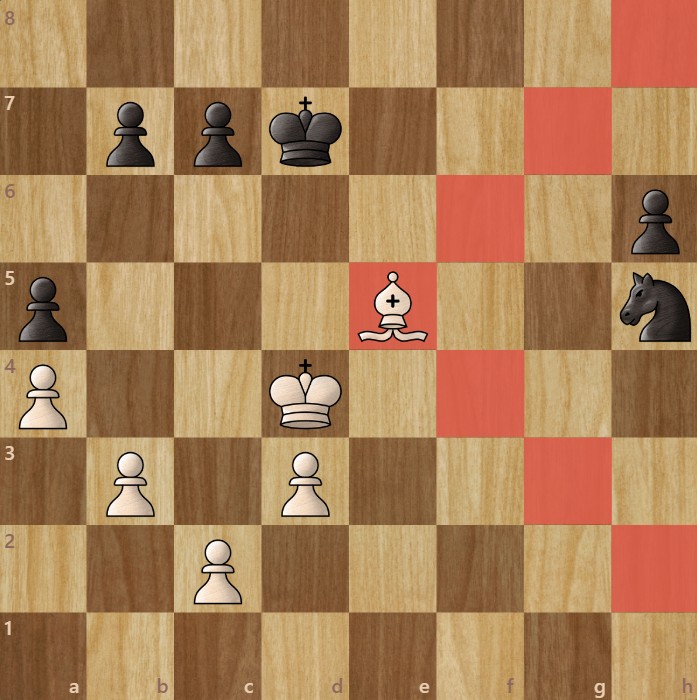
Now, although Black possesses the game’s only passed pawn, it can’t move! Black’s knight is blocking its path and is immobilized by White’s bishop on e5. If Black attempts to rescue its knight with its king, White’s king can move in to eat up the unprotected pawns. This simple trick will win White the game!
Just remember—if you have a light-squared bishop, you need to restrict the knight on a dark square. If you have a dark-squared bishop, you need to trap the knight on a light square!


Back Rank Mate Tactics
Back rank mates aren’t just the simplest checkmates in chess. There are many times when threatening back-rank mate can immobilize an opponent’s defender so you can win material.
In the example below, Black is winning on material, yet White can use back rank mate tactics to win a bishop and a rook! Can you see how? White to move.
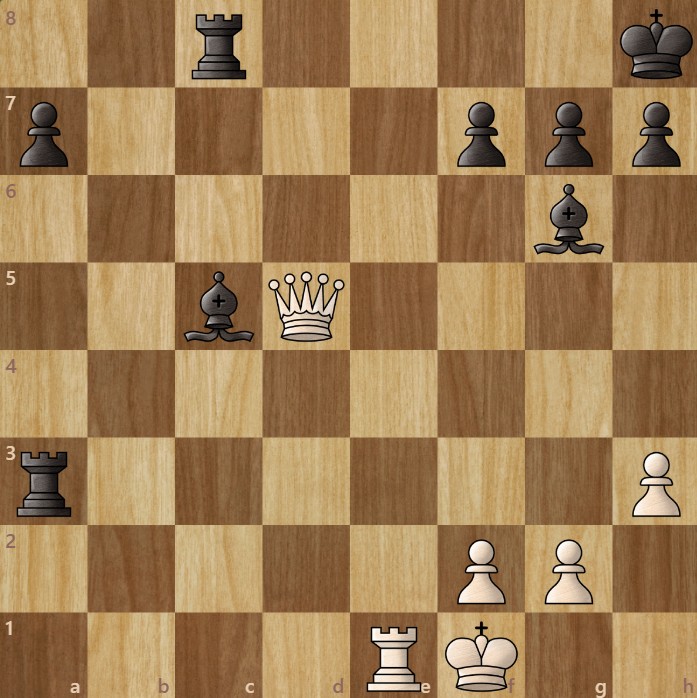
Answer: Firstly, White can capture Black’s bishop without risk since Black’s c8 rook must remain on the back rank to avoid back rank mate.
After the bishop is captured, the queen effectively forks both of Black’s rooks! Since the back rank rook is now attacked by the queen, it must move to safety elsewhere on the back rank. Now White’s queen can go ahead and capture the rook on a3.
Self-Stalemate
When you no longer have chances of winning a chess endgame, the next best thing is to shoot for a draw. In these instances, it can be extremely useful to know endgame patterns that force a stalemate.
In the chess game below, Black is a queen up, yet cannot win the endgame. Why not? White has cleverly cemented the game’s fate with this stalemate trick. By hiding in the corner, White’s king has a very restricted range of movement and can’t be forced out!
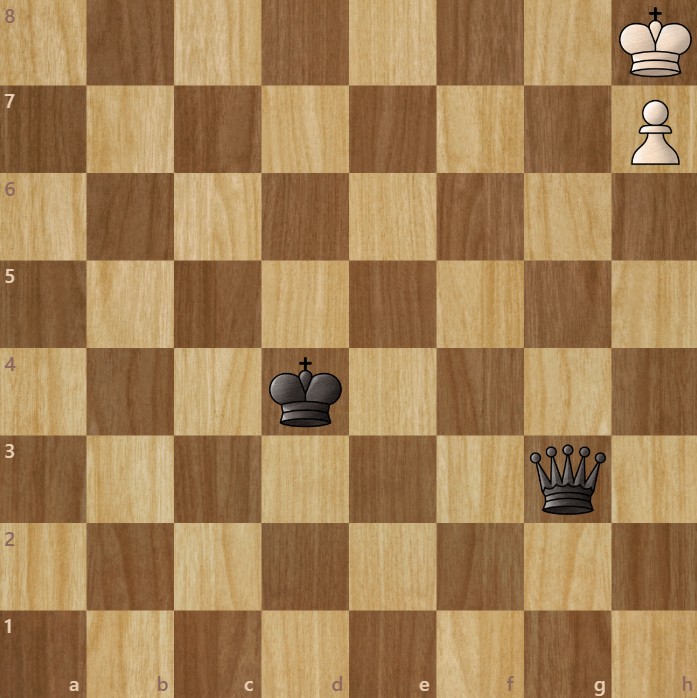
Now, if Black’s queen remains on the g-file or if Black’s king moves in too close, White’s king will have no square to move to—resulting in stalemate. On the other hand, if White allows Black freedom to promote its pawn, the sides will be equal. A queen swap will then result in a draw!
Queen vs. 7th Rank Pawn
In other instances, a queen can beat a 7th-rank pawn, but it’s a precarious business that takes real know-how! If a 7th-rank pawn is protected by the opponent’s king, you need to find a way to prevent the pawn from advancing while your king arrives to secure the capture. Not as easy as it sounds!
To prevent the enemy pawn from being promoted, you must force the enemy king to the square in front of the pawn so that it blocks the pawn from advancing. While the enemy pawn is blocked, your king has a spare tempo to advance and support the capture.

Here, White is checking the enemy king while also attacking the pawn. The only way Black can defend the pawn is to move in front of it. Since this blocks the pawn’s advance, White’s king has time to advance one square before the king moves again.
This technique must be repeated until the white king is one square from the pawn and threatening not only capture but checkmate, too!


3 vs. 3 Pawn Breakthrough
A classic endgame pattern that chess coaches teach intermediate players is the 3 vs. 3 pawn breakthrough. Pawn breakthroughs are where one or more pawns are sacrificed to create a passed pawn.
In the chess endgame below, Black is two pawns up, yet White will clear a path for a passed pawn to get promoted and win the game. Can you see how? White to play.

Answer: White begins with playing g6. Black is forced to capture with either its h-pawn or f-pawn. Whichever one captures—that’s the file you’ll create your passed pawn! Continue by sacrificing your other spare pawn, and now the path is clear!
Amazing how this pattern turns an unpromising-looking situation into a winning position! It also demonstrates how valuable advanced pawns are in the endgame and how pawn sacrifices can be key to creating passed pawns.
Gaining Opposition
One of the most important endgame principles in king and pawn endgames is the principle of opposition. Believe it or not, in the position below, White only has one move to force a win. Any other move and Black can force a draw. Which move will win White the game?

Answer: Ke5. By moving its king opposite Black’s king, White forces Black’s king to the side. From there, White’s king moves diagonally forward, laying out the carpet for his pawn to advance under his protection. It’s also useful to remember that if your king can reach the 6th rank in the same file as your pawn, your pawn will win promotion!


On the other hand, if it were Black to move in the example above, Black could force a draw by gaining opposition to White’s king! How? Kd7. Now it's Black who's in control. By maintaining opposition, it will be impossible for White’s pawn to win promotion. That's how decisive opposition can be!
Conclusion
From restricting flank-bound knights to brilliant pawn breakthroughs, learning chess endgame patterns can frequently be the difference between winning, losing, or drawing a chess match.
Now that you’ve learned these patterns, the secret to remembering them is to practice them repeatedly. For this purpose, setting up these positions against a chess computer, or simply playing against yourself, can work wonders to make these patterns permanent fixtures in your chess tool kit.
Chess Endgame Patterns FAQs
There are hundreds of endgame scenarios that require specific techniques to solve. While there is no specific number of endgame positions, master chess players often memorize several hundred theoretical positions!
The most common type of chess endgame is the rook and pawn endgame, characterized by both players battling to achieve pawn promotion with the help of their rooks and kings. The second most common type is king and pawn endgames. Since they’re usually traded off in the middlegame, minor piece endgames are less common.
There is no universal consensus on what constitutes an endgame in chess, although some chess theorists have tried to define it. A rough guide is that an endgame has definitely begun when each side has 13 points or less of material on the board.
The seven most common ways that a chess game can end are checkmate, resignation, timeout, draw by agreement, stalemate, threefold repetition, and draw by insufficient material. According to FIDE rules, games can also end via the 50-move rule, the 75-move rule, fivefold repetition, and forfeit due to cheating or illegal moves. This means there are, in fact, 11 ways to end a chess game, rather than 7.
Although it is conceivable for two knights to checkmate a cooperative lone king, it isn’t possible for them to force checkmate. Since it's extremely easy to avoid being checkmated by two knights, the game is usually agreed to be a draw.