
How Frank Camaratta Restored Historical Integrity to Modern Staunton Reproductions
How did a kid from Philly who learned chess in high school become “The Maestro” of chess equipment? Frank Camaratta did it by combining his love of chess and his engineering skills to bring better, more playable, more durable chess equipment to everyone.
A Brief History of the Staunton Chess Set
In 1849, a new chess set design was introduced in London. Although it took a couple of years to catch on, Jaques of London's Staunton design would eventually become the quintessential set of chess pieces. John Jaques, Howard Staunton, and Nathaniel Cooke collaborated to make the new chess set practical for players, with a simplified aesthetic. The knight, the only intricate piece, was modeled after the Parthenon frieze in the Elgin Marbles on display at the British Museum.
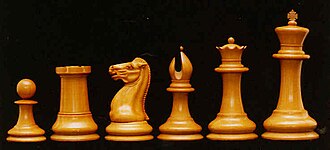
Photo used by permission of Frank A. Camaratta, Jr.; The House of Staunton, Inc.; houseofstaunton.com, Copyrighted free use, via Wikimedia Commons
The new pieces eschewed the ornate detail of earlier sets for simple turned pieces with a flared base and minimal detail. The bishop is notched, and the king and queen have finials. The pieces gained stability through lead weights. Howard Staunton, the foremost chess celebrity of the time, endorsed these new chessmen in the Illustrated London Times as “…incomparably superior to any others we have ever seen.” Staunton hand-signed sets between 1849 and 1853, with later sets bearing a facsimile of his signature. Thanks to their practicality, affordability, and celebrity endorsement, the Staunton chess design soon gained in popularity around the world.
The Find That Changed Everything

Fast-forward to 1986: Frank Camaratta and a buddy went to London to watch the world chess championship (Karpov vs. Kasparov). While exploring, Frank saw a brochure for antique Staunton chessmen for sale. When he asked about the set, he found it surprisingly affordable and bought it. Chess enthusiasts in the US were eager for these sets, and Frank was soon brokering antique chess equipment on eBay. Soon after, he launched his website, ChessAntiques.com.
Commercially available chess equipment of the second half of the 20th century was mostly terrible. If you had one of those hollow plastic sets that tipped over after a heavy sigh, you weren’t alone. In contrast, these antique sets were still in great condition. They were playable and often had few defects, even after 100+ years. This intrigued Frank. Could he bring this same quality back to chess equipment? He started experimenting, and by the mid-1990s, he was ready.

The Collector Series Luxury Chess Pieces - 4.0" King

The Camaratta Signature Master Chess Table

LIMITED EDITION - DGT 3000 Digital Chess Clock
Restoring the Staunton Legacy
Frank approached Christopher Jaques, then owner of Jaques of London, with a proposal. Jaques was following the market at the time, using cheap methods and materials to produce lower-quality items. Frank asked him if he’d like to make quality items like his predecessors. Jaques was skeptical it could be done profitably. Frank took six months to perfect his wooden set modeled on the original Staunton design and presented it. The quality and attention to detail impressed Jaques. From 1999 to 2008, Frank’s US chess company, The House of Staunton, manufactured the Jaques of London reproduction.
Creating an Even Better Staunton

Photo copyright: The House of Staunton
Not satisfied with restoring the quality and design of the original Staunton, Frank wanted to put quality chess pieces in every player's hands. For plastic chess pieces, the main manufacturing cost is the mold. A high-quality mold produces better impressions and a more faithful reproduction of the chess piece. Frank invested in good molding, knowing the upfront cost would pay off. He made solid plastic or weighted pieces rather than hollow ones. Frank raised the bar for all chess equipment in the US market.
Frank’s innovations to modern Staunton pieces were revolutionary enough to be patented, in fact. He holds three patents related to weighting methods. One issue with wooden chess pieces using traditional lead slugs inside was cracking. The wood piece would expand or contract over time with changes in its environment, but the lead inside would not. Eventually, cracks would mar the pieces. Frank’s patented chess piece weighting system uses powdered metal, allowing room for expansion. He also switched from lead to tungsten, a higher-density metal that provided more weight with smaller quantities.
Frank Camaratta is also a gifted designer in his own right. Building on the traditional aesthetic of the Staunton design, he has created many beautiful sets of his own. The Camaratta Signature Series sets elevate the Staunton form. They include original designs and meticulously researched reproductions of historically significant sets, such as The First American Chess Congress Series Luxury Commemorative Chess Pieces. As a historical chess collector and historian, Frank builds many of his historical designs from antique sets in his collection and World Chess Hall of Fame artifacts. He has even designed some conversation-worthy pre-Staunton playing set replicas, like these Biedermeier Series Luxury Chess Pieces.

The Burnt Dubrovnik Series Chess Pieces - 3.75" King

DGT 2500 Digital Chess Clock

Premium Chess Box - Brazilian Rosewood
Getting the Historical Details Right
While many chessmen produced over the last 185 years follow the Staunton design, many suffered from changes meant to make them cheaper to produce, or from being a “copy of a copy” many times over. Because Frank was first a historical chess set restorer, collector, and antiques dealer, he used the original pieces as his inspiration.

Photo copyright: The House of Staunton
While there are artistic variations, the key design elements of the Staunton stay the same. In Frank’s original designs, the primary artistic liberties are in the carving of the knight’s head. In reproductions, every fine detail follows the original pieces. For The Original Cooke 1849 Series Luxury Chess Pieces, the details are correct down to the kingside stamps on the rook and knight. These fine reproductions mean collectors and chess buffs can enjoy a piece of history in a new set that will last a lifetime.
The State of the Staunton
The Staunton chess aesthetic is the undisputed iconic design for chess pieces. Chess clip art is a recognizable Staunton clone. We do still see it in the mass-produced market and cheaper imports. What we see far less often, however, are chess sets so low quality they’re unplayable. Hollow pieces are no longer common, and most companies now include two extra queens, emulating this House of Staunton innovation.
While many types of chess pieces are available, the international standard is the Staunton design. In 1924, in fact, FIDE adopted the Staunton as the official tournament standard worldwide. Many famous matches have been played with Staunton-variant pieces, including the famous 1972 Reykjavik match between Fischer and Spassky.

The Bohemian Series Chess Pieces - 4.0" King - Lacquered

DOWNLOAD - CHESSBASE '26 - Premium Package

The Millennium King Competition Chess Computer
The House of Staunton has also recently introduced an exact replica of the original artisanal boxwood and ebony chess sets bearing Howard Staunton’s signature. The Original Cooke 1849 Series Luxury Chess Pieces have modern innovations, but they are true to the original design. No doubt the original designers would be delighted to see that their creation is still the most widely used and recognized chess set. We’d also need to introduce them to Frank. He recognized the potential for a revival in the quality and form of chess equipment in the 1990s, and he had the persistence and skills to see it through.
Enduring Simplicity and Elegance
When it’s right, it’s right. We take many things for granted once their design reaches its ultimate form. The Staunton chess pieces, with their immediate familiarity and practical shape, are another such design. Not only are they intuitively “right,” but Frank Camaratta has elevated them over nearly 40 years into playable, durable works of art. Long live the Staunton (literally)!