
Discover the Joy of the Immortal Game
Chess is unique among board games for many reasons, but how avidly players study games from the past is definitely one big reason. Only siblings are reliving a Monopoly game from 1989! Chess is different. Some chess games are so iconic that they live on for decades as exemplars of the game. One of these games is the Immortal Game, played by Adolf Anderssen and Lionel Kieseritzky in 1851. Read our overview to learn why you should know this game.
A Perfect Example of Romantic Era Chess
The London International was held in 1851, bringing together many of the top players in Europe for an event organized by Howard Staunton as a kind of "world championship" of chess. By this time, chess had moved out of the drawing rooms of the upper classes. The fresh coffee house game was more exciting, more daring, and played in a more intuitive style rather than expected gambits and counters. By 1851, the Romantic era, from the late 18th century to the mid-19th century, was coming to an end, and it had thoroughly changed both chess players and the game itself. This more adventurous version of the game attracted a new audience and ushered in the Golden Age of Chess.
The Immortal Game was a perfect example of the bold style of chess of 1851. Chess players were testing the limits of what could be played. Daring gambits, sacrifices, and experimentation were encouraged. Anderssen would probably struggle at the top levels if he were time-warped into today's engine-fueled analytical environment. Still, we don't have to play like a Romantic to appreciate the adventuresome spirit.
The Players
Anderssen and Kieseritzky were both elite chess players in London for the tournament. Let's get to know them a little better.
Adolf Anderssen

Illustration from the public domain via Wikimedia.
Adolf Anderssen (1818-1879) was a German chess master. He was born in Breslau, Kingdom of Prussia, and taught mathematics in Breslau to support his household, including himself, his sister, and his mother. As he had a "day job" in modern parlance, chess was something he pursued in his spare time. Despite his responsibilities, he rose to prominence at the London International by winning the single-elimination tournament in four rounds, including a 4-1 win over Staunton himself in the semi-final.

The Guardian Series Chess Pieces - 3.75" King

Premium Chess Box - Mahogany

Chronos GX Clock Carrying Bag
As the newly crowned world champion (or best in Europe, more accurately), he continued to improve, reaching his estimated peak rating of 2744 in 1870 (Chessmetrics). He was ranked #1 in the world by Chessmetrics for seven months around 1870. He died in 1879 in Breslau, which is now part of Poland. While he led a quiet life, his impact on chess was enormous. It's even more impressive as he achieved this during his career as a professor.
Anderssen was renowned for his aggressive, attacking style of play, much at odds with his quiet, agreeable demeanor. The German professor favored moves that seemed almost reckless at times, relentlessly attacking and sacrificing material without hesitation. Anderssen rattled his opponents with unexpected moves and earned a reputation for decisive victories.
Lionel Kieseritzky
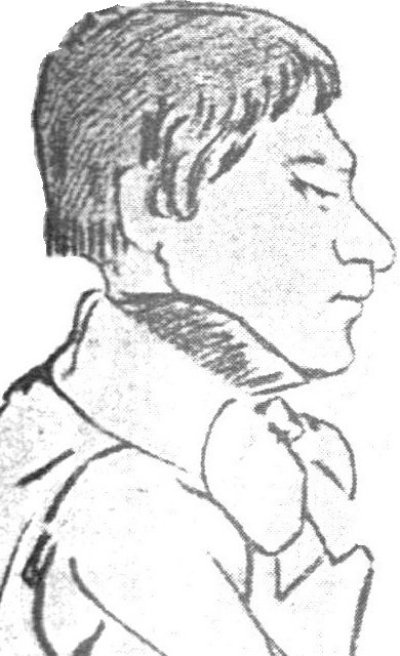
Anderssen's opponent, Lionel Kieseritzky (1806-1853), was a top chess master in France. Kieseritzky started his career in Russia as a mathematics teacher, but at age 33 he moved to France to teach and play chess full-time.Chessmetrics ranks Kieseritzky at #1 in the world for 23 months during 1849-1851, putting his peak estimated rating at 2734 in 1851. His chess ability was comparable to that of greats like Staunton and Anderssen, and to his French contemporaries Saint-Amant and Bourdonnais.
Unfortunately, Kieseritzky did not often find success in tournament play. Anderssen quickly eliminated the French master in the first round of the London International. Chess historians most often mention Kieseritzky for losing the Immortal Game to Anderssen between matches. His contributions to the sport included founding the French chess journal La Régence, an invaluable record of the Golden Age of Chess. He did not find great material success as a chess player and tutor, however, and he was buried in a pauper's grave in Paris in 1853. (We'll refrain from commenting about keeping one's day job like Anderssen, but it might be solid advice.)

The *NEW* Austrian Coffeehouse Series Chess Pieces - 4.0" King

DGT 3000 Digital Chess Clock

The Camaratta Signature Championship Chess Table - Dark Brown
The Immortal Game
It's important to note that this game wasn't part of the tournament. The Immortal Game was the equivalent of a skittles match between two players whose previous official match was a decisive Anderssen victory.
The Moves
Anderssen played white, and Kieseritzky played black. Anderssen began with a standard Romantic era opening, the King's Gambit, with material development progressing unremarkably until move 11. Kieseritzky then takes the bishop Anderssen left hanging.
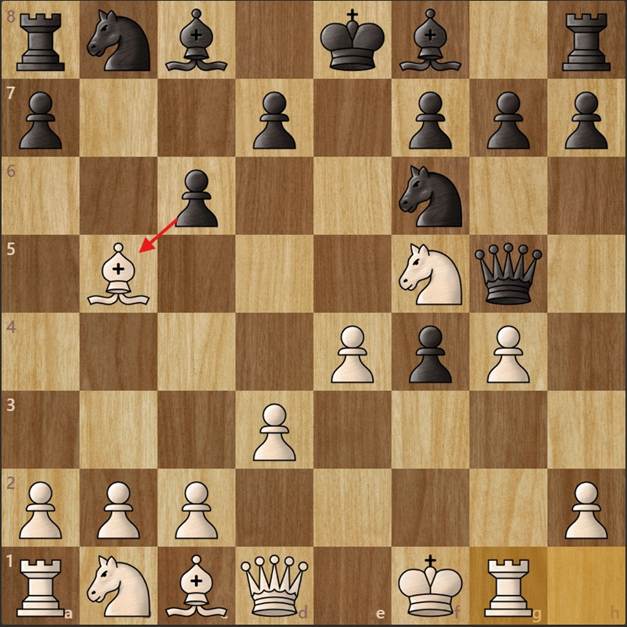
What appears to be a minor mistake is actually the beginning of Anderssen's brilliant attacking strategy. He moves his pieces across the board in his signature "heroic attacking style," practically dictating what Kieseritzky does for every move. What is the back rank doing? Nothing, and Kieseritzky couldn't resist the material gains from plundering it. After move 19, white has lost both rooks, and Kieseritzky has Anderssen in check, though not in real danger. Kieseritzky has only lost two pawns.
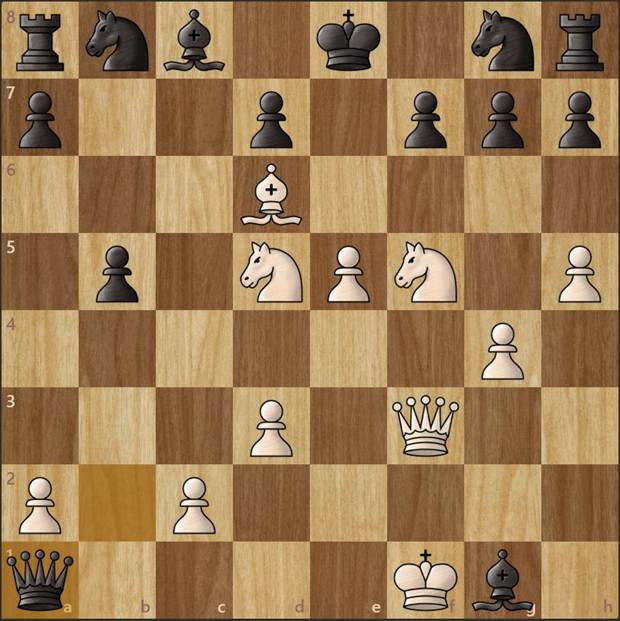
Anderssen is down 13 points of material after 19 moves! This is a disaster in traditional terms, but Anderssen isn't playing a traditional material-focused game. From the position above, he moves his king out of danger and then delivers his three-move ending: Nxg7+ for a pawn, and then Qf6+ are the first two moves.
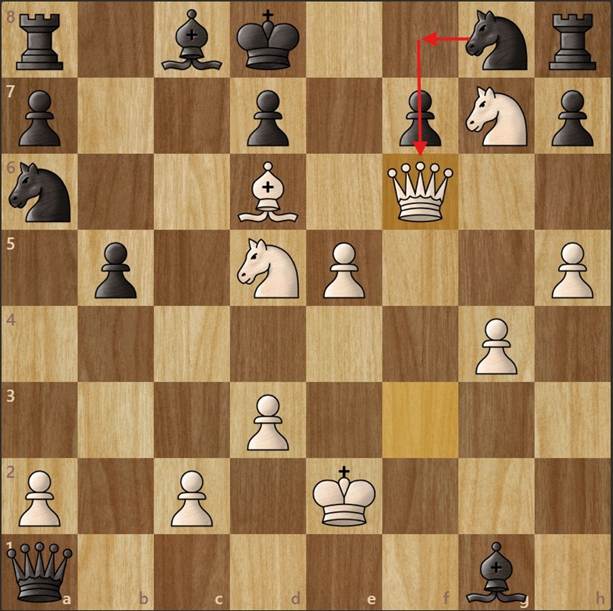
This forces Kieseritzky to take the white queen to escape check. Anderssen is down 21 points of material, but it also opens up his winning line with Be7#.
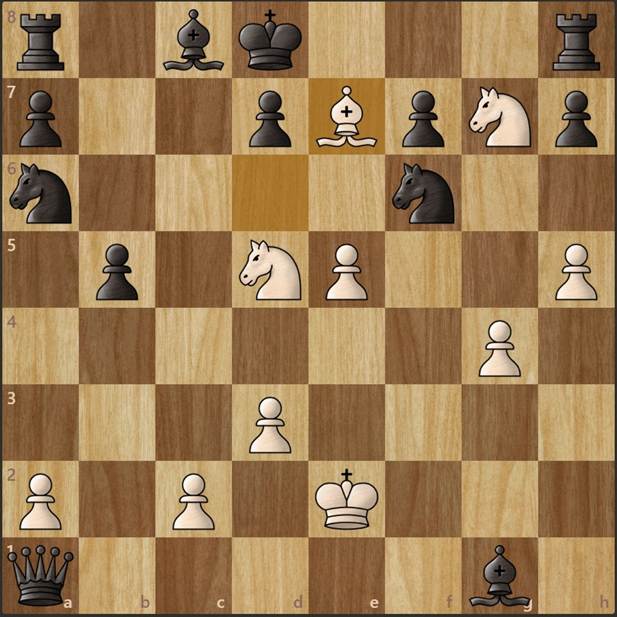
Anderssen wins by checkmate with three minor pieces after sacrificing all his major pieces. The Immortal Game ended in 23 moves, a showcase of Adolf Anderssen's aggressive style and nerves of steel.

The Modern Series Chess Pieces - 3.75" King

DGT Pegasus Chess Board (e-Board) - Wireless Bluetooth with USB Charger

Bobby Fischer Teaches Chess
Four Key Takeaways from the Immortal Game
Why would one casual game played between matches make the list of the greatest games of all time? There have certainly been games with higher stakes, but this one endures for some good reasons.
- From a historical standpoint, this game is a fantastic example of the height of Romantic-era chess. It has all the best aspects of the mid-19th century, with innovative and unconventional play, experimentation, intuition, and solid theory to start out. Players were exploring the potential of chess, and this particular experiment turned out to be a spectacular and surprising result.
- Anderssen was on the attack from the very beginning of this game, and Kieseritzky was forced to play defense. At no point did Kieseritzky have a viable offensive line. This is a pure example of the aggressive play for which Anderssen was known. Games that distill the essence of a master are precious, as they give us a window into how their minds work.
- Material was not on Anderssen's mind. He seemed to be throwing his pieces away, quickly sacrificing a bishop, both his rooks, and his queen, but he also lured his opponent into making exactly the moves he expected. He ended the game down 21 points of material, while Kieseritzky had only lost three pawns. As a masterclass on sacrificing material, the Immortal Game is a great study.
- It matters who is in the room. It's unlikely we would know about the Immortal Game if it hadn't involved the editor of a high-profile chess journal. Anderssen would go on to win the London International and make a name for himself in Europe over the next 20 years. Lionel Kieseritzky wanted the world to see this game, and he had editorial control over La Régence.

The Camaratta Collection - The Botvinnik Flohr Series Chess Pieces - 4.0" King

Leap Digital Classic Chess Clock

US Chess Premium Chess Box
A Legacy of Romantic Era Chess for Today
Chess engines and computer analysis have permanently changed modern chess. Any player can have the "best" move calculated for them in seconds. Even commentators at chess tournaments often rely on the computer to make them omniscient. What has all this endless analysis gained us? Many chess games today seem to be about "not losing," as too much information leads to defensive play.
What then can Romantic-era chess teach us today? First and foremost, chess is a game, and you should play for fun. The joy of trying something, being creative, and being playful should not be lost. Of course, the technical study of attacking lines and bold sacrifices will benefit most players, but can it inspire you to come up with your own strategy? Be bold! You might just play a beautiful game of chess.
Have we convinced you to study more historic games? A more in-depth study of the Immortal Game, as well as Anderssen's other famous triumph, the Evergreen Game, and many others, is available in The Mammoth Book of the World's Greatest Chess Games.